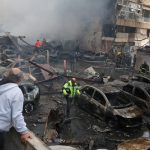
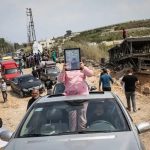
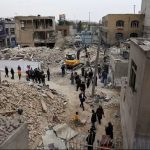
In a stunning military escalation on April 8, 2026, Israel launched what its armed forces called the largest coordinated strike across Lebanon since the start of the current conflict, killing hundreds and injuring many more across Beirut and southern Lebanon — despite a U.S.–Iran brokered two‑week ceasefire announced just hours earlier. The confrontation has raised global concerns over a widening Middle East war and sparked urgent calls for protection of civilians and renewed negotiations.
This surge comes amid confusion over the scope of the ceasefire deal, with Israel asserting that the agreement “does not include Lebanon or Hezbollah,” while mediators such as Pakistan had suggested otherwise. For more conflict developments, visit our internal World News category.
KEY HIGHLIGHTS
Largest Israeli air offensive in this phase of the conflict struck more than 100 sites in minutes.
Lebanese authorities report at least 112 killed, 800+ injured.
Ceasefire announced between U.S. and Iran is portrayed differently by conflicting parties.
Lebanese leaders condemn actions as violations of international norms.
On Wednesday morning, Israeli warplanes, artillery and drones struck multiple Lebanese regions simultaneously, including central Beirut, the Bekaa Valley and the south, targeting what the Israeli military described as Hezbollah facilities and infrastructure. Lebanese health officials reported dozens killed and hundreds wounded as residential areas and busy urban districts were hit without immediate warning, overwhelming emergency services.
According to military sources, more than 100 strategic locations were hit within approximately 10 minutes, marking the largest such offensive since the conflict expanded earlier this year.
A local Beirut resident, who declined to be named for safety reasons, told Star Struck Times:
“There was no warning. We heard explosions, and within minutes people were screaming for help. Hospitals are full and ambulances can’t keep up.”
Official Reactions: Conflicting Ceasefire Interpretations
The timeline of the strikes overlaps with global efforts to halt hostilities between the United States and Iran. U.S. officials confirmed the ceasefire deal, but stressed it did not apply to Israeli operations against Hezbollah, Iran’s Lebanese ally. Israeli Prime Minister Benjamin Netanyahu reinforced this stance, saying the truce “does not include Lebanon.”
In contrast, Pakistan’s mediation team suggested the ceasefire was intended to broadly stabilize the region — including Lebanese theaters — a contradiction that has left international diplomats scrambling to clarify the pact’s terms.
Lebanon’s Prime Minister Nawaf Salam condemned the bombardment as a blatant violation of the ceasefire’s spirit, calling on global allies — especially France and the U.S. — to intervene and protect civilians.
Amnesty International’s Regional Director for the Middle East and North Africa, Heba Morayef, said the escalation shows a “pressing need for civilian protection and international accountability.”
Why This Matters: Civilians, Ceasefire Credibility, and Regional Stability
The bombardment’s timing — immediately after a high‑profile ceasefire announcement — has undermined faith in diplomatic efforts and highlighted deep divisions over conflict priorities.
According to data from independent monitoring, tens of thousands of civilians have already been displaced in this war phase, with over one million people forced from their homes since fighting expanded earlier this year.
Regional experts warn that failure to honor negotiated truces can push local militias, including Hezbollah, to retaliate, potentially drawing in other state actors such as Iran and non‑state proxies across the Middle East.
Dr. Leila Haddad, a Middle East policy analyst based in London, told Star Struck Times:
“If ceasefires are seen as selective or negotiable, it emboldens hardliners on all sides. That risks broadening a localized clash into a more protracted regional conflict.”
Historical Context and Conflict Drivers
The current hostilities trace back to March 2, 2026, when Hezbollah began firing rockets at Israel in solidarity with Iran after Israeli attacks on Iranian territory. Israel responded with a series of air and ground operations in southern Lebanon, claiming the intention to neutralize threats against northern Israeli communities.
Over the past several weeks, central Lebanese cities, border towns and even civilian infrastructure have all been targeted in what analysts describe as the most intense escalation of the Lebanon war since 2006.
What Happens Next
As international actors digest the contradictions around the ceasefire deal, diplomatic pressure is expected to mount. France and the United Nations have signaled that a broader peace enforcement mechanism might be proposed, but without a clear consensus, hostilities in Lebanon may continue unabated.
For families caught in conflict zones, the next days are likely to bring continued uncertainty, scarce shelter resources, and rising demands for humanitarian support.
Frequently Asked Questions
1. Why did Israel strike Lebanon despite the US-Iran ceasefire? Israel maintains that the ceasefire between the U.S. and Iran does not include Lebanon or Hezbollah operations. Israeli officials argue the strikes target specific security threats, not the ceasefire agreement.
2. How many casualties have been reported from the latest strikes? Lebanese authorities report at least 112 dead and over 800 injured, with casualties concentrated in Beirut, the Bekaa Valley, and southern Lebanon.
3. What areas of Lebanon were hit by the airstrikes? The strikes targeted central Beirut, southern towns, and strategic Hezbollah facilities across multiple regions, causing widespread damage to infrastructure and civilian areas.
4. What has been the international response to the escalation? The United Nations, France, and human rights organizations have called for immediate protection of civilians, urging Israel and Hezbollah to respect humanitarian laws and negotiate conflict resolution.
5. Could this escalation trigger a wider regional war? Experts warn that if ceasefires are perceived as selective or ignored, it may embolden hardliners on both sides, potentially drawing in Iran and allied groups, and escalating the conflict beyond Lebanon and Israel.
6. How is the humanitarian situation in Lebanon after the strikes? Thousands of families have been displaced, hospitals are overwhelmed, and emergency services are struggling. Aid organizations are warning of a growing humanitarian crisis with urgent needs for food, shelter, and medical care.
Sources
Reuters reporting on Israeli strikes and ceasefire scope.
Associated Press on Beirut casualties and mediation disputes.
Amnesty International statement on civilian protection.
Monitoring of displacement and humanitarian impact.
Hello! I'm M Muzamil Shami, the founder and lead editor of Star Struck Times, your trusted source for trending news, entertainment scoops, celebrity gossip, sports highlights, and global headlines.
With a passion for storytelling and journalism, I created this platform to bring you breaking news, viral moments, and deep insights into the worlds of Bollywood, Hollywood, sports, politics, tech, and more — all in one place.