Introduction
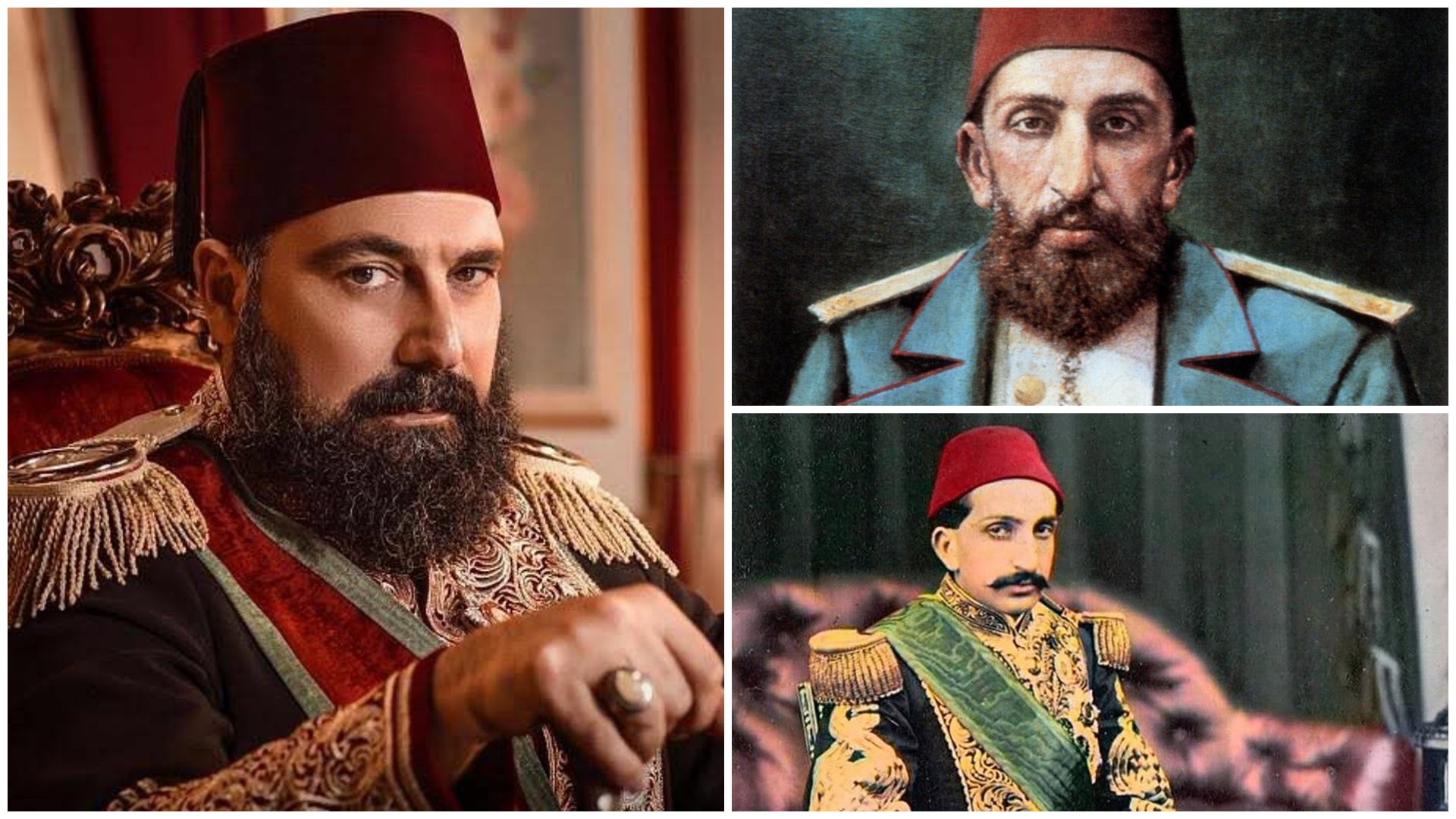
Few rulers in Islamic history remain as controversial, admired, and debated as Sultan Abdul Hamid II. To some historians, he was an authoritarian ruler who centralized power and restricted political freedoms. To others, he was the last great defender of the Ottoman Caliphate, a visionary statesman who struggled against European imperialism and sought to unite Muslims worldwide during one of the most dangerous periods in Ottoman history.
Ruling the Ottoman Empire from 1876 to 1909, Abdul Hamid II inherited a state burdened by debt, internal unrest, nationalist revolts, and increasing pressure from European powers. Despite these challenges, he managed to preserve the empire for more than three decades while launching major infrastructure projects, educational reforms, and diplomatic initiatives that left a lasting mark on the Muslim world.
His legacy continues to influence modern discussions about leadership, Islamic unity, Palestine, and the decline of empires.

Early Life and Family Background
Sultan Abdul Hamid II was born on September 21, 1842, in Constantinople (modern-day Istanbul), the capital of the Ottoman Empire.
He was the son of Sultan Abdulmejid I and Tirimüjgan Kadın. His mother passed away when he was still a child, and he was raised within the imperial palace by other members of the royal household.
Unlike many princes of his era, Abdul Hamid developed a strong interest in governance, economics, diplomacy, and international affairs. He received a comprehensive education that included:
- Ottoman Turkish
- Arabic
- Persian
- Islamic studies
- History
- Literature
- French
These studies helped shape his analytical mind and prepared him for the immense challenges he would later face.
Ascension to the Throne
The Ottoman Empire was in political turmoil during the 1870s.
In 1876, Sultan Abdulaziz was deposed, and Sultan Murad V briefly took the throne. However, Murad’s deteriorating mental health led to his removal after only a few months.
On August 31, 1876, Abdul Hamid II became the 34th Sultan of the Ottoman Empire.

At the time, the empire was facing:
- Economic bankruptcy
- Nationalist uprisings
- European intervention
- Military weakness
- Administrative instability
Many observers believed the Ottoman Empire was nearing collapse.
Constitutional Reform and Parliament
Soon after becoming Sultan, Abdul Hamid introduced the Ottoman Empire’s first constitution in 1876.
The new constitution established:
- A parliament
- Constitutional governance
- Legal reforms
- Greater administrative modernization
Initially, these reforms were welcomed by both Ottoman intellectuals and European governments.
However, the outbreak of the Russo-Turkish War created new challenges. In 1878, Abdul Hamid suspended parliament and ruled more directly.
This decision would later become one of the most controversial aspects of his reign.
The Russo-Turkish War
The Russo-Turkish War of 1877-1878 was one of the most devastating conflicts of Abdul Hamid’s early reign.
The Ottoman Empire suffered significant losses.
As a result:
- Bulgaria gained autonomy.
- Serbia and Romania strengthened their independence.
- Russian influence expanded throughout the Balkans.
The war dramatically weakened Ottoman control in Europe and forced the empire into a defensive position for the remainder of the nineteenth century.
The Pan-Islamic Vision
One of Abdul Hamid’s most significant political strategies was Pan-Islamism.
Recognizing the growing threat of European colonialism, he sought to strengthen the bonds between Muslims worldwide.
His policies aimed to connect Muslims across:
- The Ottoman Empire
- British India
- Central Asia
- North Africa
- Southeast Asia
As Caliph, Abdul Hamid promoted the idea that Muslims should remain united despite ethnic and national differences.
This strategy increased his influence far beyond Ottoman borders and made him a respected figure among many Muslim communities.
The Palestine Question and Theodor Herzl
One of the most discussed episodes of Abdul Hamid’s reign involves Palestine.
During the late nineteenth century, Zionist leader Theodor Herzl approached Ottoman authorities regarding Jewish settlement and state-building efforts in Palestine.
Historical accounts indicate that financial proposals were presented in exchange for greater settlement opportunities.
Abdul Hamid firmly rejected the idea of surrendering Palestinian territory.
He is widely quoted as saying:
“I cannot sell even a single inch of this land, for it does not belong to me but to my nation.”
Although historians continue to debate the exact wording and context of various accounts, Abdul Hamid’s opposition to transferring Palestinian territory became a defining part of his legacy.
The Hejaz Railway: His Greatest Achievement
Perhaps the most famous project associated with Abdul Hamid II was the Hejaz Railway.
Construction began in 1900.
The railway was designed to:
- Facilitate pilgrimage to the holy cities.
- Improve military mobility.
- Strengthen Ottoman authority in Arabia.
- Connect distant regions of the empire.
The railway eventually linked Damascus with Medina and became one of the most ambitious infrastructure projects in the Islamic world.
What made the project unique was that Muslims from across the world contributed donations to help finance it.
The Hejaz Railway remains one of the most celebrated achievements of Abdul Hamid’s reign.
Education and Modernization
Contrary to the stereotype that he opposed modernization, Abdul Hamid oversaw major educational and technological developments.
During his reign:
- Hundreds of schools were established.
- Teacher-training institutions expanded.
- Medical schools were developed.
- Engineering education improved.
- Telegraph networks expanded dramatically.
- Railways connected more regions of the empire.
Many historians acknowledge that significant modernization occurred under his rule despite political tensions.
Intelligence and Security Networks
Abdul Hamid was deeply concerned about conspiracies, foreign interference, and revolutionary movements.
As a result, he developed an extensive intelligence network throughout the empire.
Supporters argue that these measures helped preserve stability during a dangerous era.
Critics contend that the system restricted political freedoms and increased government surveillance.
This debate remains central to discussions of his legacy.
Yıldız Palace and Governance
Much of Abdul Hamid’s administration operated from Yıldız Palace in Istanbul.
The palace became the center of:
- State administration
- Foreign policy
- Security planning
- Reform initiatives
From this complex, Abdul Hamid personally monitored many aspects of government and maintained direct involvement in major decisions.
The Young Turk Revolution and Deposition
By the early twentieth century, opposition to Abdul Hamid’s rule had grown.
In 1908, the Young Turk movement forced the restoration of the constitution and parliament.
Political tensions escalated rapidly.
In 1909, following the events known as the 31 March Incident, Abdul Hamid was formally deposed.
His brother, Mehmed V, became the new Sultan.
This marked the end of Abdul Hamid’s thirty-three-year reign.
Exile and Final Years
Following his removal, Abdul Hamid was sent into exile in Thessaloniki.
After the Balkan Wars, he was returned to Istanbul and spent his remaining years under close supervision.
During this period, he devoted much of his time to:
- Reading
- Writing
- Carpentry
- Reflection on political events
Although no longer in power, he continued to follow developments within the empire.
Death and Burial
Sultan Abdul Hamid II died on February 10, 1918.
The Ottoman Empire was then in the final stages of World War I.
He was seventy-five years old.
He was buried in the Tomb of Sultan Mahmud II in Istanbul, where visitors can still pay their respects today.
Historical Legacy
Few Ottoman rulers inspire such sharply divided opinions.
Critics argue that Abdul Hamid:
- Restricted political participation.
- Suspended constitutional governance.
- Concentrated power in the palace.
Supporters argue that he:
- Preserved the Ottoman Empire during a period of crisis.
- Defended Muslim interests globally.
- Invested in education and infrastructure.
- Opposed foreign domination of Palestine.
- Promoted Islamic unity.
Modern historians increasingly view him as a complex statesman whose policies reflected the immense pressures facing the late Ottoman Empire.
Conclusion
Sultan Abdul Hamid II remains one of the most influential figures in modern Islamic and Ottoman history. He ruled during a time when powerful European empires sought to expand their influence, nationalist movements challenged imperial authority, and the Ottoman state faced existential threats from multiple directions.
Whether remembered as an authoritarian monarch or as the last great defender of the Caliphate, Abdul Hamid’s impact on history is undeniable. His efforts to preserve the empire, strengthen Islamic solidarity, modernize state institutions, and resist foreign pressures continue to be studied and debated more than a century after his death.
His story is not merely the story of a Sultan—it is the story of an empire struggling to survive in a rapidly changing world.
FAQs
1. Who was Sultan Abdul Hamid II?
Sultan Abdul Hamid II was the 34th Sultan of the Ottoman Empire and served as Caliph of the Muslim world from 1876 to 1909. He is known for his efforts to preserve the Ottoman Empire during a period of political turmoil and foreign pressure.
2. Why is Sultan Abdul Hamid II famous?
Sultan Abdul Hamid II is famous for promoting Pan-Islamism, modernizing the Ottoman Empire, building the Hejaz Railway, and opposing foreign influence in Ottoman territories, particularly in Palestine.
3. What was the Hejaz Railway project?
The Hejaz Railway was a major infrastructure project launched by Sultan Abdul Hamid II in 1900. It connected Damascus to Medina, making travel easier for pilgrims and strengthening communication across the Ottoman Empire.
4. Why was Sultan Abdul Hamid II removed from power?
Sultan Abdul Hamid II was deposed in 1909 following the Young Turk Revolution and the 31 March Incident. Political opponents accused him of authoritarian rule and sought to restore constitutional governance.
5. Where is Sultan Abdul Hamid II buried?
Sultan Abdul Hamid II is buried in the Tomb of Sultan Mahmud II in Istanbul, Turkey. His mausoleum remains a popular historical and cultural site visited by researchers, tourists, and admirers of Ottoman history.