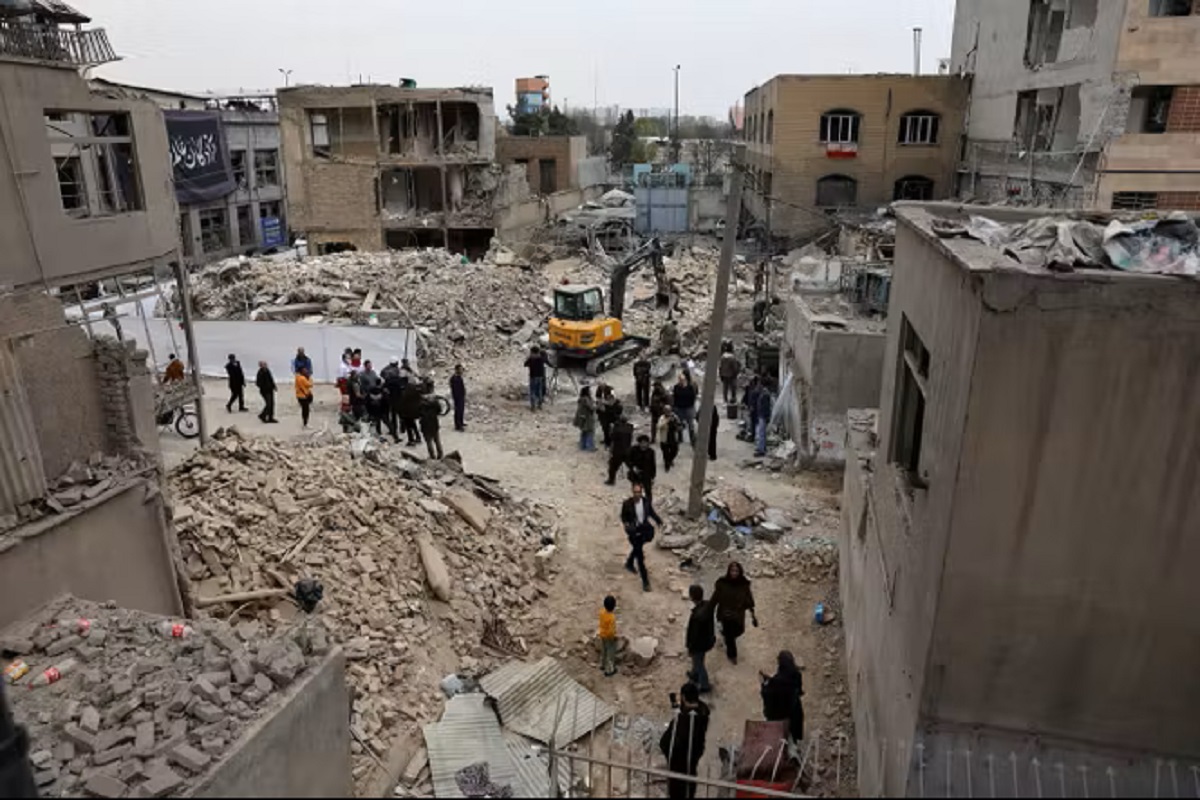
Emergency responders inspect damage after Israeli strikes in southern Lebanon amid rising Iran-US tensions.
Jerusalem, Israel / Tehran, Iran — May 10, 2026, 9:15 AM GMT — Star Struck Times
A fragile ceasefire across the Middle East appeared increasingly unstable on Saturday after Iran’s Islamic Revolutionary Guard Corps (IRGC) warned the United States against any attacks on Iranian-linked oil tankers while Israeli airstrikes reportedly killed dozens in southern Lebanon overnight. The escalating rhetoric has intensified fears of a broader regional conflict involving Iran, Israel, Hezbollah, and potentially the United States.
The rapidly developing crisis has pushed global attention back toward the region’s volatile security landscape, with analysts warning that even a single miscalculation at sea or along the Lebanon border could trigger a larger confrontation. Readers following ongoing global conflict coverage can also explore Star Struck Times’ Middle East latest news category for continuing developments.
Key Highlights
Iran warned the US against targeting oil tankers linked to Tehran.
Israeli air raids reportedly killed at least 24 people in southern Lebanon.
The strikes come despite a ceasefire arrangement announced weeks earlier.
Hezbollah and Israeli forces continue exchanging fire near border zones.
Global oil markets are closely monitoring tanker security threats.
Analysts fear the conflict could expand beyond Lebanon.
Israeli Airstrikes Shake Southern Lebanon
According to Lebanese state media and regional reports, Israeli warplanes launched multiple strikes near Saksakiyeh and surrounding villages in southern Lebanon late Friday night. Emergency crews were seen searching through rubble as casualties mounted.
Israeli officials said the operations targeted Hezbollah infrastructure and militant activity near the border. However, Lebanese authorities accused Israel of violating the ceasefire agreement announced last month.
The renewed attacks came after several days of heightened cross-border tension, including reported rocket launches and drone interceptions. Residents in southern Lebanon described panic and overnight evacuations as explosions lit up the sky.
One witness quoted by regional broadcasters described the strikes as “the heaviest bombardment since the ceasefire announcement.”
The Israeli military has not released a final casualty assessment, but security analysts believe the strikes were intended to pressure Hezbollah while signaling deterrence toward Iran.
Iran Issues Sharp Warning to Washington
The strongest geopolitical signal came from Tehran, where the IRGC publicly warned the United States against any military action targeting Iranian shipping routes or commercial tankers in regional waters.
Iranian officials argued that recent US naval movements in strategic maritime corridors risk escalating the crisis further. The warning follows months of tension involving Gulf shipping lanes and accusations of sabotage against commercial vessels.
Security experts say tanker threats immediately raise fears about global oil supply disruptions, particularly through critical routes such as the Strait of Hormuz.
A former regional security adviser speaking to international media noted that energy markets react quickly to tanker instability because nearly one-third of the world’s seaborne oil passes through the Gulf region.
The United States has not announced direct military action against Iranian vessels, but Pentagon officials have repeatedly emphasized protecting maritime navigation and allied interests.
Why This Crisis Matters Beyond Lebanon
While many reports focused only on the overnight bombings, the deeper concern is the convergence of three volatile fronts at once:
Israel-Hezbollah border escalation
Iran-US maritime tensions
Fragile regional ceasefire diplomacy
That combination significantly raises the risk of miscalculation.
Global markets are already responding cautiously. Oil traders and shipping companies are monitoring the situation for signs of disruptions to tanker movement or expanded sanctions pressure.
Diplomatic observers also point to the timing of the escalation. Several regional governments were quietly attempting indirect de-escalation talks in recent weeks. The latest strikes now threaten those efforts.
Another overlooked factor is domestic political pressure inside multiple countries involved in the crisis. Leaders facing internal criticism often adopt stronger military messaging during periods of instability, which can complicate diplomatic negotiations.
What Other Reports Missed
Most coverage has centered only on airstrikes and military statements. However, the shipping angle may ultimately prove more significant than the Lebanon front itself.
Historically, tanker security threats in the Gulf have triggered immediate international responses because they affect energy prices, trade insurance costs, and global inflation concerns.
Maritime analysts warn that even without direct attacks, aggressive naval positioning alone can increase commercial shipping risks. That could impact oil-importing economies worldwide, including parts of Europe and Asia already facing economic pressure.
Another underreported development is the psychological impact of “ceasefire fatigue.” Repeated breakdowns of temporary agreements weaken public confidence and increase the likelihood of retaliatory escalation by armed groups.
This broader instability is why international diplomats are closely monitoring not just Lebanon, but also shipping lanes and regional military deployments.
International Reaction Builds
The United Nations called for restraint from all sides, while European officials urged immediate de-escalation to prevent wider conflict.
Meanwhile, social media reactions reflected growing anxiety over another potential Middle East war. Several posts trending online questioned whether the region is approaching a direct Iran-Israel confrontation.
One user on X wrote: “Every ceasefire now feels temporary.”
Another commenter warned that tanker tensions could “hit global fuel prices within days” if the situation worsens.
Although online reactions often amplify fear, geopolitical experts agree that the current environment remains unusually sensitive.
Reuters, BBC, and Al Jazeera have all reported intensified regional monitoring as diplomatic channels continue behind closed doors.
What Happens Next
Military analysts expect the next 48 to 72 hours to be critical.
Key questions now include:
Will Hezbollah respond with larger attacks?
Will the US increase naval deployments?
Can mediators preserve the ceasefire framework?
Will tanker routes remain secure?
Any escalation involving shipping infrastructure or direct clashes between Iranian-linked forces and US assets could rapidly internationalize the crisis.
For now, diplomats are racing to contain the fallout before another flashpoint emerges.
FAQs
Why did Iran warn the US about tanker attacks?
Iran accused the United States of increasing military pressure near strategic shipping routes and warned against targeting Iranian-linked vessels.
What happened in Lebanon?
Israeli airstrikes reportedly killed dozens in southern Lebanon during operations targeting Hezbollah-linked areas.
Is the Israel-Hezbollah ceasefire over?
The ceasefire has not been formally canceled, but ongoing attacks and exchanges of fire have severely weakened it.
Why are oil tankers important in this conflict?
Tanker routes in the Gulf are critical for global oil supply. Any disruption could impact fuel prices and international trade.
Could this lead to a larger Middle East war?
Analysts warn that simultaneous tensions involving Iran, Israel, Hezbollah, and US naval forces increase the risk of broader escalation.
Hello! I'm M Muzamil Shami, the founder and lead editor of Star Struck Times, your trusted source for trending news, entertainment scoops, celebrity gossip, sports highlights, and global headlines.
With a passion for storytelling and journalism, I created this platform to bring you breaking news, viral moments, and deep insights into the worlds of Bollywood, Hollywood, sports, politics, tech, and more — all in one place.