


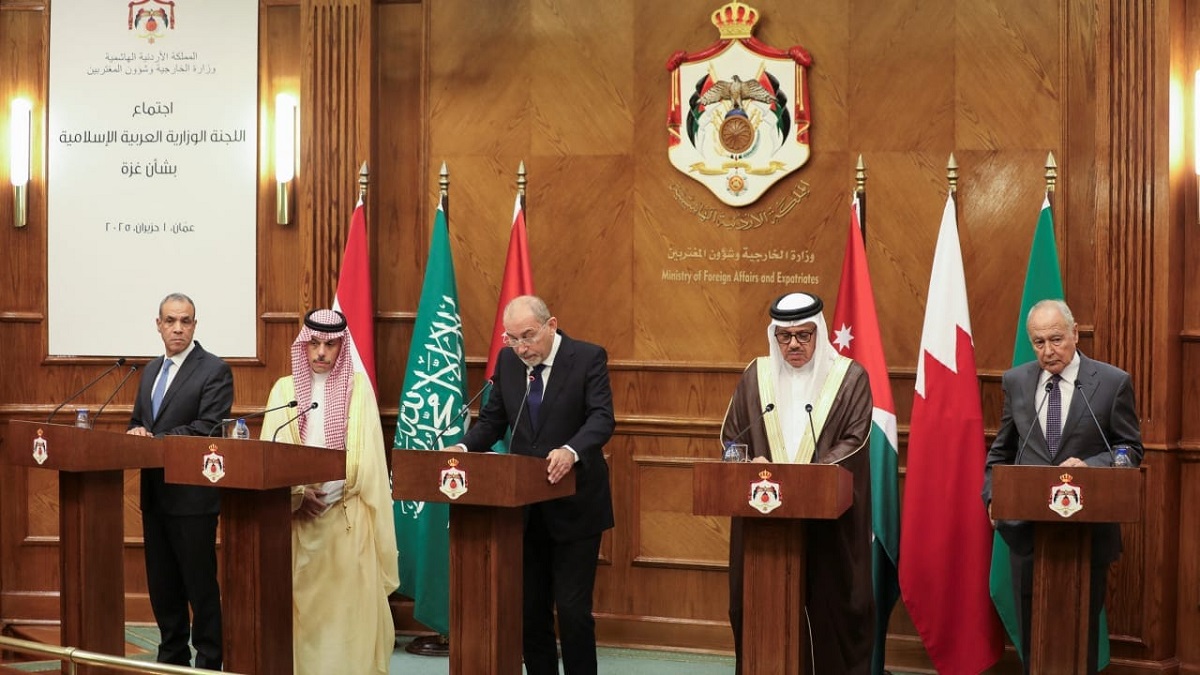
Shocking Unity: Arab & Islamic Leaders Rally Behind Qatar After Israeli Attack
Breaking Now — Qatar has become the center of global attention after an Israeli strike sent shockwaves across the Middle East. In a dramatic show of unity, leaders from across the Arab and Islamic world have gathered in Doha, sending a powerful message: “Qatar is not alone.” Fans, observers, and political analysts alike are calling this an unprecedented moment of solidarity in the region’s history.
Key Points
- Arab and Islamic leaders gathered in Doha to show solidarity with Qatar.
- Arab League Secretary General Ahmed Aboul Gheit: “Qatar is not alone.”
- Summit marks a rare moment of regional unity amid ongoing Middle East tensions.
- Leaders call for restraint but stress collective action if aggression continues.
- Analysts say the summit could reshape future alliances and power balances.
A Historic Gathering in Doha
Doha (Star Struck Times) — Doha has often hosted high-level summits, but this week’s Arab-Islamic Summit in support of Qatar has already been described as a turning point in Middle Eastern diplomacy. The trigger was an Israeli strike that rattled not only Qatar but also the entire region, reviving painful memories of past conflicts and raising concerns of wider escalation.

Inside the luxurious halls of the Doha International Convention Center, emotions ran high as delegates from over 30 Arab and Islamic nations arrived. From Gulf monarchs to North African presidents and Asian leaders, the atmosphere carried both tension and determination.
“Today we stand together to defend the sovereignty of Qatar, but more importantly, to defend the principle of justice in our region,” said a senior Gulf official, who spoke on condition of anonymity due to the sensitivity of the discussions.
Qatar at the Heart of Regional Politics
For years, Qatar has played an outsized role in regional politics. Whether through its Al Jazeera network, mediation in conflicts, or hosting international sporting events like the FIFA World Cup, Doha has maintained a unique influence on both Arab and global stages.
The Israeli strike, however, put Qatar in a vulnerable position. Analysts say it wasn’t just about one country—it was a symbolic attack that tested the entire Arab world’s resolve. This is why the response has been so forceful.
“Qatar is not isolated. What we saw today is proof that an attack on one is an attack on all,” declared Ahmed Aboul Gheit, Secretary General of the Arab League. His words drew a standing ovation from the summit attendees.
Regional Leaders Speak Out
From Riyadh to Ankara, from Cairo to Islamabad, speeches echoed a consistent theme: unity and resistance.
- Turkish President Recep Tayyip Erdoğan warned, “No state in this region will remain silent in the face of aggression.”
- Saudi Crown Prince Mohammed bin Salman emphasized that “regional stability depends on mutual respect of sovereignty, and Qatar’s sovereignty is non-negotiable.”
- Pakistani Prime Minister Shehbaz Sharif added, “The Muslim world must send a clear message to those who seek to destabilize us.”
Such strong rhetoric suggests that this is not merely symbolic. Behind closed doors, insiders reveal discussions about possible economic measures, joint defense strategies, and diplomatic campaigns against Israel’s actions.

Fans and Public Reactions
Social media erupted as soon as news of the summit broke. On X (formerly Twitter), hashtags like #QatarNotAlone, #ArabUnity, and #DohaSummit trended globally.
One user posted: “For the first time in decades, we see Arab and Islamic leaders truly united. History is being written in Doha.” Another wrote: “This could be the moment where the balance of power shifts.”
Meanwhile, Qataris filled the streets of Doha in emotional displays of pride and relief. Flag-waving crowds gathered outside key landmarks, chanting slogans of unity and peace.
Why This Matters Beyond Qatar
The summit’s significance goes beyond borders. Analysts argue that it may reshape Middle East alliances, especially at a time when global powers are recalibrating their interests in the region. The U.S., China, and Russia are all closely watching how this solidarity develops.
“This isn’t just about Qatar—it’s about proving that the Arab and Islamic world can present a united front when challenged,” explained political analyst Rania Khalil. “The long-term impact could alter the way regional diplomacy works.”
The Israeli Perspective
While Arab and Islamic leaders rallied in Doha, Israeli officials maintained that the strike was a “defensive measure” in response to what they described as “Qatari-backed threats.”
The statement, however, failed to ease tensions. Instead, it further inflamed regional anger, with leaders questioning whether Israel underestimated the backlash its move would spark.
“Israel wanted to send a message, but the unintended consequence is that it united its adversaries more strongly than ever,” commented Middle East journalist David Rosen.
What’s Next?
As the summit concluded, a joint declaration was issued, affirming support for Qatar, condemnation of Israel’s strike, and a pledge for future collective action. Though the statement stopped short of declaring military steps, it included provisions for increased coordination on defense and energy strategies.
Diplomats now expect follow-up meetings in Riyadh and Ankara to refine action plans. Experts say these steps could range from boycotts, sanctions, and coordinated lobbying at the United Nations to long-term defense cooperation.
FAQs
Q1: Why was the Arab-Islamic Summit in Doha called?
The summit was called after an Israeli strike on Qatar, with the aim of showing regional solidarity and condemning the attack.
Q2: Who attended the summit?
Leaders from over 30 Arab and Islamic countries, including Saudi Arabia, Turkey, Egypt, and Pakistan.
Q3: What was the main message of the summit?
The key message was that Qatar is not alone, and the region will collectively defend sovereignty and stability.
Q4: Will there be military action against Israel?
While no immediate military action was announced, discussions on joint defense strategies and coordinated diplomatic measures are ongoing.
Do you think this unity among Arab and Islamic nations will last? Or is it just symbolic? Share your thoughts below and join the discussion!




I don’t think the title of your article matches the content lol. Just kidding, mainly because I had some doubts after reading the article.
Thanks for sharing. I read many of your blog posts, cool, your blog is very good. https://www.binance.bh/register?ref=IHJUI7TF