Introduction
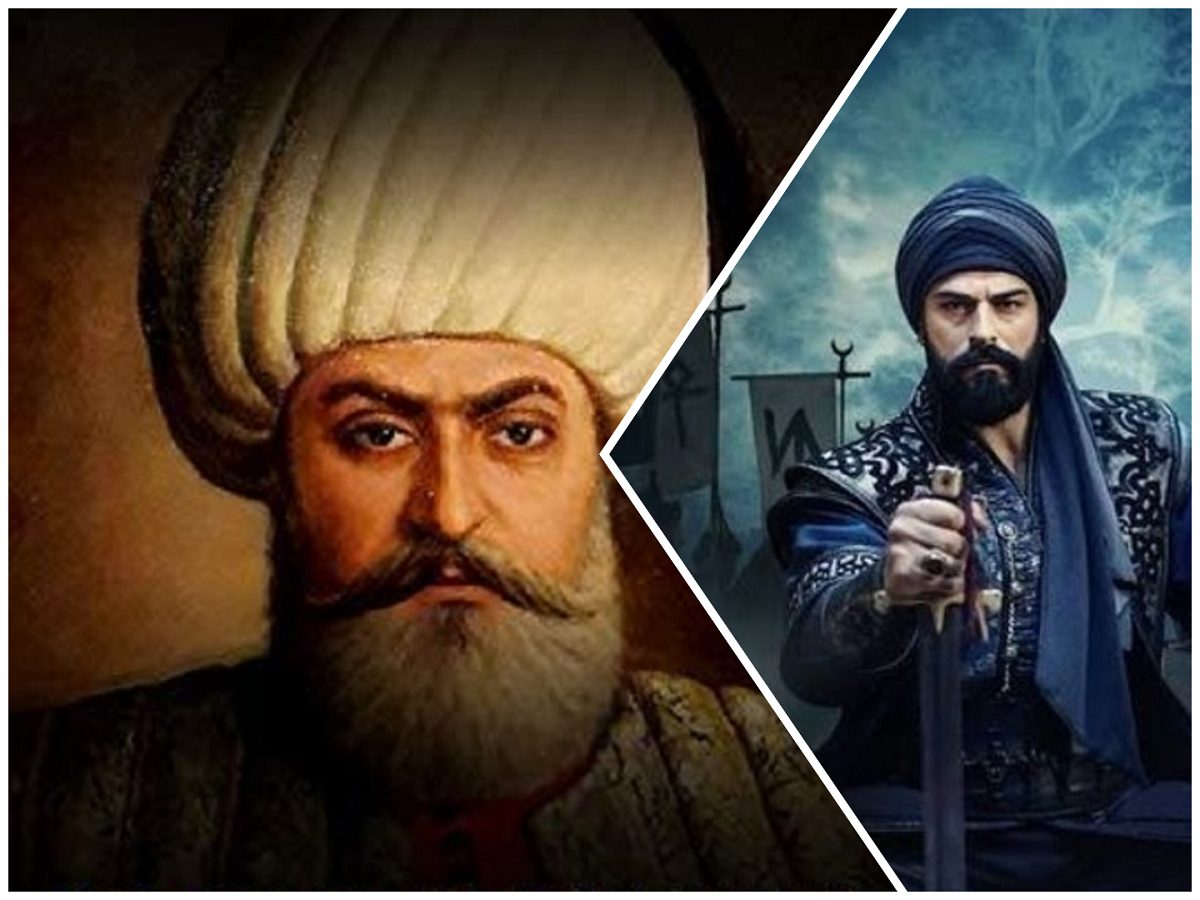
Few individuals in world history have left behind a legacy as enduring and transformative as Osman Ghazi, the founder of the Ottoman Empire. What began as a small frontier principality under his leadership would eventually evolve into one of the most powerful and influential empires in human history, ruling vast territories across Europe, Asia, and Africa for more than six centuries.
Osman Ghazi was not born into wealth, nor did he inherit a mighty empire. Instead, he emerged during a turbulent era marked by political fragmentation, foreign invasions, tribal rivalries, and the decline of established powers. Through determination, military skill, political wisdom, and strategic vision, he laid the foundations of a state that would outlive countless kingdoms and dynasties.
Today, Osman Ghazi is remembered not merely as a conqueror but as a nation-builder whose leadership transformed a small Turkic tribe into the nucleus of an empire that would shape global history.

Early Life and Family Background
Osman Ghazi was born around 1258 in the region of Söğüt, located in northwestern Anatolia (modern-day Turkey).
He belonged to the Kayı tribe, one of the prominent branches of the Oghuz Turks. The Kayı tribe had migrated westward from Central Asia during a period of great upheaval caused by Mongol expansion.
Osman’s father, Ertuğrul Ghazi, was the respected leader of the Kayı tribe and a loyal ally of the Seljuk Sultanate of Rum. Through military service and loyalty, Ertuğrul secured lands in Söğüt and the surrounding frontier regions.
Growing up on the Byzantine frontier exposed Osman to a world of constant conflict, shifting alliances, and opportunities for expansion. From an early age, he learned:
- Horsemanship
- Archery
- Swordsmanship
- Tribal leadership
- Diplomacy
- Islamic teachings
These experiences would later shape him into a capable warrior and statesman.
The Political Landscape of Anatolia
To understand Osman Ghazi’s success, it is important to understand the world he inherited.
By the late thirteenth century:

- The Seljuk Sultanate was weakening.
- Mongol influence dominated much of Anatolia.
- Byzantine authority in the region was declining.
- Numerous Turkish principalities competed for territory.
This created a political vacuum that ambitious leaders could exploit.
Many local rulers focused on survival. Osman, however, envisioned something larger.
He recognized that the decline of neighboring powers presented a historic opportunity to establish an independent state.
The Legacy of Ertuğrul Ghazi
When Ertuğrul Ghazi died around 1280–1281, leadership of the Kayı tribe passed to Osman.
At the time, the tribe controlled only a modest territory near the Byzantine frontier.
Many tribal leaders might have been content maintaining local authority, but Osman possessed broader ambitions.
He inherited from his father:
- A disciplined tribal force
- Strategic frontier lands
- Strong local alliances
- A reputation for courage and justice
These advantages formed the foundation upon which he would build his future state.
The Famous Dream of Osman
One of the most celebrated stories associated with Osman Ghazi is the “Dream of Osman.”
According to Ottoman tradition, Osman once stayed at the home of the respected scholar and spiritual leader Sheikh Edebali.
Out of respect for the Qur’an displayed in the room, Osman remained awake for much of the night.
During his sleep, he reportedly saw a remarkable vision:
A moon emerged from Sheikh Edebali’s chest and entered Osman’s own chest. From Osman grew a gigantic tree whose branches spread across continents, providing shade and prosperity to countless people.
Sheikh Edebali interpreted the dream as a divine sign that Osman and his descendants would establish a vast empire.
Although modern historians view the story as symbolic rather than strictly historical, it became one of the most important founding legends of the Ottoman dynasty.
Marriage to Malhun Hatun
Osman Ghazi eventually married Malhun Hatun, traditionally identified as the daughter of Sheikh Edebali.
This marriage strengthened both political and spiritual ties.
The relationship with Sheikh Edebali provided Osman with:
- Religious legitimacy
- Social prestige
- Support among local communities
- Access to influential networks
These connections proved highly valuable during the formative years of the emerging Ottoman state.
Rise Against the Byzantine Frontier
Unlike many Turkish rulers who fought primarily against rival Muslim states, Osman focused his attention on Byzantine territories.
The Byzantine Empire was experiencing internal struggles and declining control over frontier regions.
Osman launched a series of campaigns aimed at:
- Capturing strategic fortresses
- Securing trade routes
- Expanding agricultural lands
- Increasing his political influence
His victories attracted warriors from across Anatolia who sought wealth, land, and prestige.
As his military reputation grew, more tribes joined his cause.
The Conquest of Karacahisar
One of Osman’s earliest major successes was the capture of Karacahisar.
The conquest carried enormous symbolic significance.
Following the victory:
- Islamic courts were established.
- A local administration was organized.
- The Friday sermon was reportedly delivered in Osman’s name.
- His authority expanded considerably.
Many historians regard this event as one of the first clear signs of emerging Ottoman sovereignty.
Founding of the Ottoman State
The year 1299 is widely accepted as the formal beginning of the Ottoman Empire.
Although no grand declaration marked the occasion, Osman’s principality effectively became independent from Seljuk authority.
This moment represented more than political independence.
It marked the birth of a state that would eventually become:
- A global empire
- A center of Islamic civilization
- A major military power
- A bridge between East and West
For this reason, Osman is universally recognized as the founder of the Ottoman Empire.
Leadership Style
One reason for Osman’s success was his unique leadership style.
He combined military strength with practical governance.
His leadership emphasized:
Justice
Osman understood that lasting authority required fairness.
Many local populations reportedly preferred Ottoman administration because it offered stability and predictable governance.
Inclusion
Rather than relying solely on tribal loyalty, he welcomed talented individuals from diverse backgrounds.
Pragmatism
He often preferred strategic alliances when they offered greater benefits than conflict.
Religious Commitment
Islam played an important role in his worldview and state-building efforts.
Military Strategy and Expansion
Osman’s military campaigns were carefully planned.
His forces relied on:
- Mobility
- Frontier warfare tactics
- Local intelligence
- Strategic fortifications
Instead of seeking massive battles, he frequently targeted key strongholds and transportation routes.
This approach allowed his state to expand steadily without overextending its resources.
His military achievements laid the groundwork for future Ottoman expansion under his successors.
Relations with Neighboring Powers
Osman demonstrated remarkable diplomatic skill.
He maintained complex relationships with:
- Byzantine governors
- Turkish principalities
- Tribal leaders
- Religious authorities
Through a combination of warfare, negotiation, and marriage alliances, he strengthened his position while avoiding unnecessary conflicts.
This balanced approach contributed significantly to his long-term success.
Building Institutions
Osman’s greatest achievement may not have been conquest but institution-building.
He understood that military victories alone could not sustain a state.
Therefore, he focused on:
- Administrative organization
- Judicial systems
- Tax collection
- Security structures
- Community development
These institutions enabled future rulers to expand rapidly while maintaining stability.
The Siege of Bursa
During the final years of his life, Osman turned his attention toward Bursa.
Bursa was one of the most important Byzantine cities in northwestern Anatolia.
Capturing it would dramatically increase Ottoman prestige and resources.
Although Osman initiated the campaign, he did not live to witness its conclusion.
The siege continued under his son Orhan.
Death of Osman Ghazi
Historical sources differ regarding the exact date of Osman’s death, placing it between 1323 and 1326.
Most accounts suggest he died shortly before or around the time Bursa fell to Ottoman forces.
Before his death, he reportedly advised his son Orhan to govern with justice, humility, and devotion to faith.
These principles would remain central themes throughout Ottoman political culture.
Orhan Ghazi and the Continuation of the Legacy
Following Osman’s death, leadership passed to his son Orhan Ghazi.
Orhan proved to be a capable ruler who expanded and institutionalized the state founded by his father.
Under Orhan:
- Bursa became the first Ottoman capital.
- Administrative systems expanded.
- Military reforms were introduced.
- Territorial growth accelerated.
The success of later Ottoman rulers rested heavily upon the foundation established by Osman.
The Tomb of Osman Ghazi
Osman Ghazi’s tomb is located in Bursa, Turkey.
The mausoleum stands as one of the most important sites in Ottoman history.
Visitors from around the world travel to Bursa to pay tribute to the founder of the empire.
The tomb symbolizes the humble beginnings of a dynasty that would influence world history for centuries.
Historical Legacy
Osman Ghazi’s impact extends far beyond his own lifetime.
The empire he founded would eventually produce legendary rulers such as:
- Orhan Ghazi
- Murad I
- Bayezid I
- Mehmed the Conqueror
- Selim I
- Suleiman the Magnificent
The Ottoman Empire became a dominant force in global politics, trade, culture, and religion.
Its influence stretched from the Balkans to the Arabian Peninsula and from North Africa to the Caucasus.
All of this began with the vision and determination of Osman Ghazi.
What Made Osman Ghazi Exceptional?
Several qualities distinguished Osman from other frontier leaders:
- Strategic thinking
- Political flexibility
- Military competence
- Institutional vision
- Religious legitimacy
- Charismatic leadership
Many contemporary rulers achieved temporary victories.
Osman created a state capable of surviving for centuries.
That distinction places him among history’s most significant founders.
Lessons from Osman Ghazi’s Life
His story offers timeless lessons:
- Great achievements often begin with modest resources.
- Leadership requires both courage and wisdom.
- Institutions matter more than individual success.
- Vision can transform adversity into opportunity.
- Justice strengthens political legitimacy.
These lessons help explain why his legacy remains relevant more than seven hundred years after his death.
Conclusion
Osman Ghazi was more than the founder of a dynasty. He was the architect of a civilization that would shape world history for over six hundred years.
From the frontier town of Söğüt, he built the foundations of an empire that connected continents, influenced cultures, and transformed the political landscape of the medieval and early modern world.
His achievements demonstrate how determination, leadership, faith, and strategic vision can alter the course of history. While countless kingdoms disappeared into obscurity, the state founded by Osman Ghazi endured for centuries, making him one of the most important figures in Islamic, Turkish, and global history.
FAQs
1. Who was Osman Ghazi?
Osman Ghazi was the founder of the Ottoman Empire and leader of the Kayı tribe. He established the Ottoman state around 1299, laying the foundation for a dynasty that ruled for more than six centuries.
2. Was Osman Ghazi the son of Ertuğrul Ghazi?
Yes. Osman Ghazi was the son of Ertuğrul Ghazi, the leader of the Kayı tribe and a respected frontier commander in Anatolia.
3. Why is Osman Ghazi important in history?
He founded the Ottoman Empire, which became one of the longest-lasting and most influential empires in world history.
4. Where is Osman Ghazi buried?
Osman Ghazi is buried in Bursa, Turkey. His tomb remains one of the most visited Ottoman historical sites.
5. Who succeeded Osman Ghazi?
After his death, his son Orhan Ghazi became ruler and expanded the Ottoman state into a stronger and more organized empire.