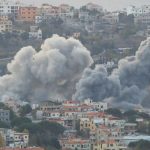
Smoke rises over the Beirut skyline following a massive wave of Israeli air strikes on April 8, 2026
Beirut, Lebanon, April 8, 2026 — Star Struck Times
The fragile hope for peace in the Middle East was shattered on Wednesday as Israel launched its largest coordinated air campaign against Lebanon to date, just hours after a U.S.-brokered ceasefire with Iran was intended to freeze hostilities. While the International News community celebrated the two-week truce between Washington and Tehran, the Israeli Defense Forces (IDF) deployed approximately 50 fighter jets to strike over 100 targets across Beirut, the Bekaa Valley, and southern Lebanon within a ten-minute window. This escalation raises urgent questions about the definition of “ceasefire” in a multi-front war, as Israel maintains that its campaign against Hezbollah remains entirely separate from its agreement with Iran.
Key Highlights
The Scale: Over 100 strikes were executed in 10 minutes, targeting central Beirut, the eastern Bekaa Valley, and southern Lebanon.
The Ceasefire Paradox: Israel and the U.S. claim the Iran truce excludes Hezbollah; mediator Pakistan and Lebanese officials argue it covers all fronts.
Casualties: Preliminary reports from Lebanon’s Health Ministry indicate dozens killed and hundreds wounded, including children.
Strategic Targets: The IDF claims it hit Hezbollah command centers and missile launchers; Lebanese officials report residential and commercial destruction.
Global Reaction: The UK and Pakistan have called for an immediate de-escalation, warning that the strikes could reignite a regional conflagration.
The 10-Minute Blitz: Strategic Necessity or Peace Sabotage?
The timing of the Israeli strikes has sent shockwaves through diplomatic circles. Precisely when the world expected a de-escalation following the announcement of a 14-day truce between the U.S. and Iran, the Israeli Air Force (IAF) executed a “mass-pulse” strike. According to the IDF, this operation was designed to dismantle Hezbollah’s intelligence infrastructure and ballistic capabilities before the group could consolidate under the cover of the Iran-U.S. agreement.
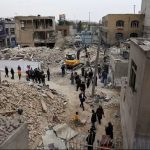
In Beirut, the strikes did not just hit the southern suburbs (Dahiyeh) but reached into central commercial districts without warning. Witnesses described a scene of absolute chaos as glass from high-rise buildings carpeted the streets and residents fled in panic. The IDF maintains that Hezbollah uses these civilian areas as “human shields,” a claim Lebanese Prime Minister Nawaf Salam vehemently denied, accusing Israel of “utter disregard for international law.”
The “Lebanon Loophole”: A Diplomatic Disconnect
The core of the current crisis lies in a significant disagreement over the scope of the ceasefire negotiated by Pakistan. While Pakistani Prime Minister Shehbaz Sharif stated the deal meant an “immediate ceasefire everywhere,” the White House and the Israeli Prime Minister’s Office have been quick to clarify their stance.
Press Secretary Karoline Leavitt confirmed that “Lebanon is not part of the ceasefire agreement,” viewing Hezbollah as a distinct entity from the Iranian state apparatus. This “Lebanon Loophole” allows Israel to continue its “Northern Arrows” operation while officially observing a truce with Tehran. However, sources close to Hezbollah have already signaled that if the strikes continue, they will not consider the ceasefire valid, potentially leading to the re-closure of the Strait of Hormuz by Iranian-backed forces.
Expert Insight: The Geometry of a Multi-Front War
Military analysts suggest that Israel’s aggressive posture is a calculated risk to force a “de-coupling” of the various fronts. By hitting Lebanon with unprecedented force now, Israel aims to establish a new status quo where Iran cannot protect its proxies through diplomatic bargaining with the West.
“Israel is sending a clear message: a truce with the patron (Iran) does not grant immunity to the proxy (Hezbollah),” says a senior regional defense analyst. “However, the intensity of today’s strikes in central Beirut suggests a shift from tactical degradation to a full-scale pressure campaign intended to force the Lebanese state to act against Hezbollah.”
Public Outcry: “A Dangerous Turning Point”
The human cost of the Wednesday strikes has been immediate. At the Rafik Hariri Public Hospital, MSF emergency coordinator Christopher Stokes reported a “mass influx of injured patients,” many with life-altering shrapnel wounds.
“We were told there was a peace deal,” said Amina, a resident of central Beirut who fled her apartment. “Then the sky turned black and the ground shook. Is this what a ceasefire looks like?” This sentiment is echoed by Lebanon’s Minister of Social Affairs, Haneed Sayed, who called the strikes a “very dangerous turning point,” noting that many of the areas hit were housing internally displaced persons (IDPs) who had already fled the south.
What Happens Next?
The next 48 hours are critical. If Hezbollah retaliates with a deep-strike missile barrage into Tel Aviv, the U.S.-Iran ceasefire may collapse before it even begins. Diplomats from Pakistan and the UK are reportedly working on a “side-letter” agreement that would extend the truce to the Lebanese border, but with Israel’s current momentum, a halt in operations seems unlikely without significant concessions regarding Hezbollah’s presence in southern Lebanon.
Internal Link Suggestion
For more on the diplomatic efforts behind the scenes, see our analysis on World News.
FAQ: Israel-Lebanon Conflict and the Iran Ceasefire
1. Why did Israel strike Lebanon if there is a ceasefire?
Israel contends that the ceasefire agreement signed with Iran does not apply to Hezbollah in Lebanon. They view the conflict with Hezbollah as a separate security necessity to return displaced citizens to northern Israel.
2. Was Beirut targeted in the latest strikes?
Yes. Unlike previous rounds that focused on the southern suburbs, the April 8 strikes hit central commercial and residential districts in Beirut, leading to high civilian casualties.
3. What does Iran say about the strikes?
While Iran has officially entered a two-week truce with the U.S., Tehran has signaled through diplomatic channels that the ceasefire is contingent on an end to “all regional aggression,” which they interpret as including Lebanon.
4. How many targets did the IDF hit?
The IDF reported striking over 100 targets in a 10-minute period, using approximately 50 fighter jets.
5. Is the Strait of Hormuz open?
The reopening of the Strait of Hormuz was a key component of the U.S.-Iran deal. However, Hezbollah-linked sources suggest it may remain closed if the bombardment of Lebanon continues.
Hello! I'm M Muzamil Shami, the founder and lead editor of Star Struck Times, your trusted source for trending news, entertainment scoops, celebrity gossip, sports highlights, and global headlines.
With a passion for storytelling and journalism, I created this platform to bring you breaking news, viral moments, and deep insights into the worlds of Bollywood, Hollywood, sports, politics, tech, and more — all in one place.