The volatile border between Israel and Lebanon has been granted a temporary reprieve, though geopolitical reality suggests the calm is entirely superficial. Following two days of intensive, closed-door negotiations mediated by American officials in Washington, Israel and Lebanon have formally agreed to a 45-day extension of their current truce. The extension prolongs the original framework established during the Trump April 16 truce, which was on the verge of expiring this Sunday.
While diplomats publicly celebrate the development as a significant step toward Middle East stability, regional security experts warn that the agreement functions primarily as a high-stakes stall tactic. Behind the scenes, the United States and Iran remain locked in tense, unpublicized negotiations over regional proxy boundaries. On the ground, the reality remains intensely perilous, with continued military positioning casting serious doubt on whether a long-term diplomatic resolution is genuinely achievable.
Key Highlights
The 45-Day Extension: Israel and Lebanon have agreed to prolong the April 16 cessation of hostilities by an additional 45 days following intense Washington mediation.
The Announcement: State Department Tommy Pigott confirmed the diplomatic breakthrough on social media, describing the two-day bilateral talks as “highly productive.”
Dual-Track Diplomacy: A military-led security track will launch at the Pentagon on May 29, followed by political negotiations reconvening at the State Department on June 2-3.
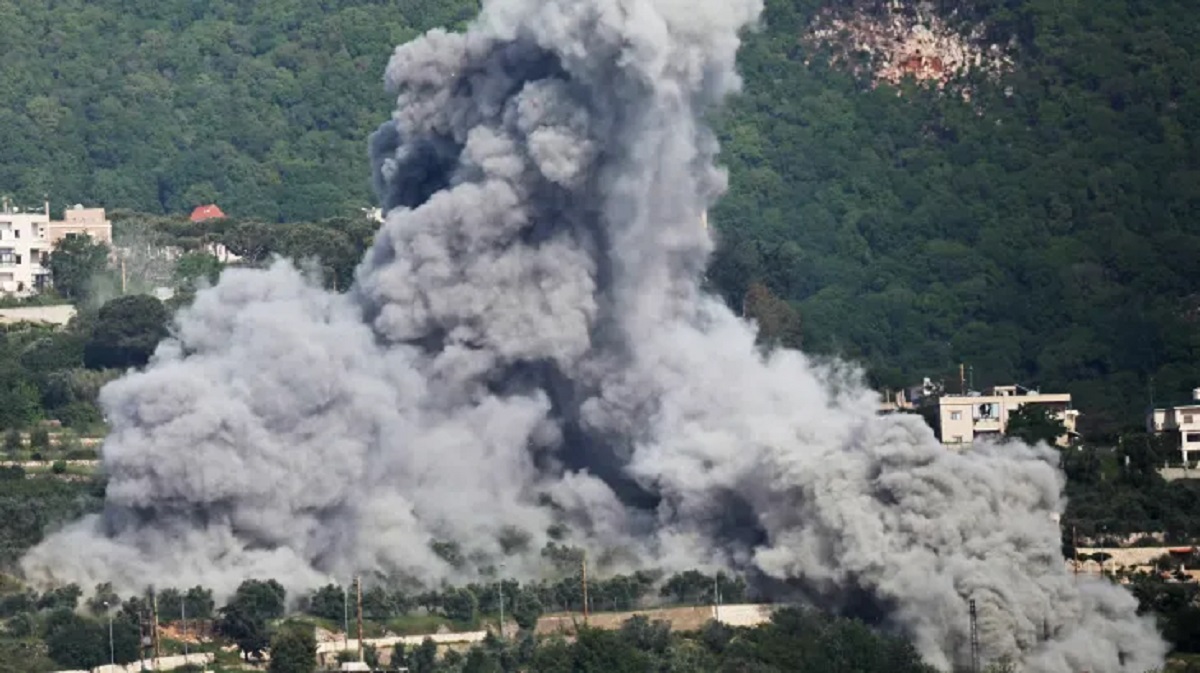
Violations and Fragility: Low-level skirmishes, intensive drone activity, and localized strikes continue to plague southern Lebanon despite the formal agreement.
The Hidden Conflict: Analysts suggest the truce extension is a strategic maneuver to buy time while Washington and Tehran negotiate broader terms.
Inside the Washington Breakthrough: The Dual Diplomatic Tracks
The announcement of the Israel Lebanon ceasefire extension came late Friday from US State Department spokesperson Tommy Pigott. In an official statement shared on the social media platform X, Pigott confirmed that the framework initially brokered under the Trump April 16 truce would be extended to prevent an immediate reversion to full-scale war.
“The April 16 cessation of hostilities will be extended by 45 days to enable further progress,” State Department Tommy Pigott stated, acknowledging that the agreement was achieved after a third round of arduous, US-mediated negotiations. “We hope these discussions will advance lasting peace between the two countries, full recognition of each other’s sovereignty and territorial integrity, and establishing genuine security along their shared border.”
The diplomatic architecture of the extension is structured around two distinct operational tracks designed to address deep-seated military and political distrust:
The Security Track (May 29, 2026): Hosted at the Pentagon, this track will bring military delegations from the Israel Defense Forces (IDF) and the Lebanese Armed Forces (LAF) together to outline a verifiable demilitarization zone in southern Lebanon.
The Political Track (June 2-3, 2026): Reconvening at the State Department, this track will focus on border demarcation, sovereign guarantees, and long-term enforcement mechanisms.
The high-level talks in Washington saw active participation from prominent diplomatic entities, including State Department Counselor Michael Needham, US Ambassador to Israel Mike Huckabee, and US Ambassador to Lebanon Michel Issa. Representing the Middle Eastern nations were Israeli Ambassador Yechiel Leiter, Lebanese Ambassador Nada Hamadeh Moawad, and Lebanese presidential envoy Simon Karam.
While Ambassador Leiter described the negotiations as “frank and constructive,” he openly acknowledged the difficult path ahead, writing on social media that “there will be ups and downs, but the potential is there.”
Hidden Context: What Other Reports Missed
While mainstream international press outlets have framed this 45-day extension as a standard diplomatic success story, a deeper look reveals an incredibly fragile reality. Moments after State Department officials concluded the press brief, report updates from southern Lebanon detailed localized military actions that contrast sharply with the public narrative of peace.
According to regional health workers, low-level exchanges of fire and targeted strikes continue to impact logistics hubs in southern Lebanon. The Israeli Air Force confirmed it targeted more than 440 structures linked to the Iran-backed armed group Hezbollah over the preceding week, neutralizing over 220 militants in a preemptive effort to degrade the group’s operational capacity before the extended freeze takes full effect. Conversely, Hezbollah carried out 17 distinct drone, missile, and artillery operations targeting Israeli armor and troop positions along the border perimeter immediately preceding the Washington conclusion.
Intelligence insiders suggest that the 45-day window is not simply a bilateral cooling-off period between Israel and Lebanon. Instead, it serves as a critical diplomatic lifeline and a deliberate stall tactic orchestrated by Washington. The true objective is to secure necessary diplomatic breathing room while the United States and Iran engage in backchannel negotiations concerning regional influence, the maritime border, and the ultimate containment of proxy militias. Without a grand bargain between Washington and Tehran, the local truce between Israel and Lebanon remains a temporary band-aid on a volatile systemic wound.
Public and Official Reactions: A Nation Divided
The extension has triggered starkly contrasting reactions within Lebanon, highlighting the deep political fractures running through Beirut. Lebanese Prime Minister Nawaf Salam offered an implicit but sharp rebuke of Hezbollah’s unilateral military actions during an address in Beirut.
“Lebanon has had enough of these reckless adventures serving foreign projects or interests,” Prime Minister Nawaf Salam declared, emphasizing that the conflict was “a war we did not choose but was forced upon us.”
Conversely, the Lebanese civilian population views the extension with a mix of exhaustion and profound skepticism.
“We are living our lives in 45-day increments,” said Tariq Mansour, a resident of Tyre who was displaced during the heavy fighting in March. “They sign papers in Washington, but the skies over southern Lebanon never truly empty of drones. We want a permanent peace, not a scheduled pause before the next bombardment.”
What Happens Next
The immediate focus shifts to the Pentagon on May 29, where military officials must solve the near-impossible logistical riddle of border enforcement. The success of the Trump April 16 truce relies heavily on the Lebanese Armed Forces expanding their presence south of the Litani River to act as a buffer. However, with Hezbollah maintaining an extensive underground network of over 1,000 recovered heavy weapon systems and deep structural influence, the capability of the Lebanese state to enforce compliance remains unproven.
If the Pentagon security talks collapse, the political negotiations scheduled for June 2-3 will be dead on arrival, setting the stage for a massive escalation when the 45 days expire in late June.
Frequently Asked Questions
What is the Israel Lebanon ceasefire extension?
The Israel Lebanon ceasefire extension is a diplomatically mediated 45-day prolongation of the cessation of hostilities originally established on April 16, 2026. It aims to prevent active combat and allow room for long-term peace talks.
Who announced the extension of the truce?
The extension was officially announced by US State Department spokesperson Tommy Pigott following two days of highly productive, US-facilitated negotiations in Washington, D.C.
What is the connection to the Trump April 16 truce?
The current 45-day extension builds directly upon the foundational terms laid out during the Trump April 16 truce, which sought an immediate halt to the intense cross-border escalation that began earlier in the year.
Where will the next rounds of peace talks take place?
Negotiations will proceed along two distinct tracks: a military security track launching at the Pentagon on May 29, 2026, and a political track reconvening at the US State Department on June 2-3, 2026.
Is Hezbollah participating in the ceasefire negotiations?
No, the official negotiations are conducted between the sovereign governments of Israel and Lebanon. Hezbollah has officially opposed negotiations involving Israel, creating severe internal political tension within the Lebanese state leadership.
Hello! I'm M Muzamil Shami, the founder and lead editor of Star Struck Times, your trusted source for trending news, entertainment scoops, celebrity gossip, sports highlights, and global headlines.
With a passion for storytelling and journalism, I created this platform to bring you breaking news, viral moments, and deep insights into the worlds of Bollywood, Hollywood, sports, politics, tech, and more — all in one place.