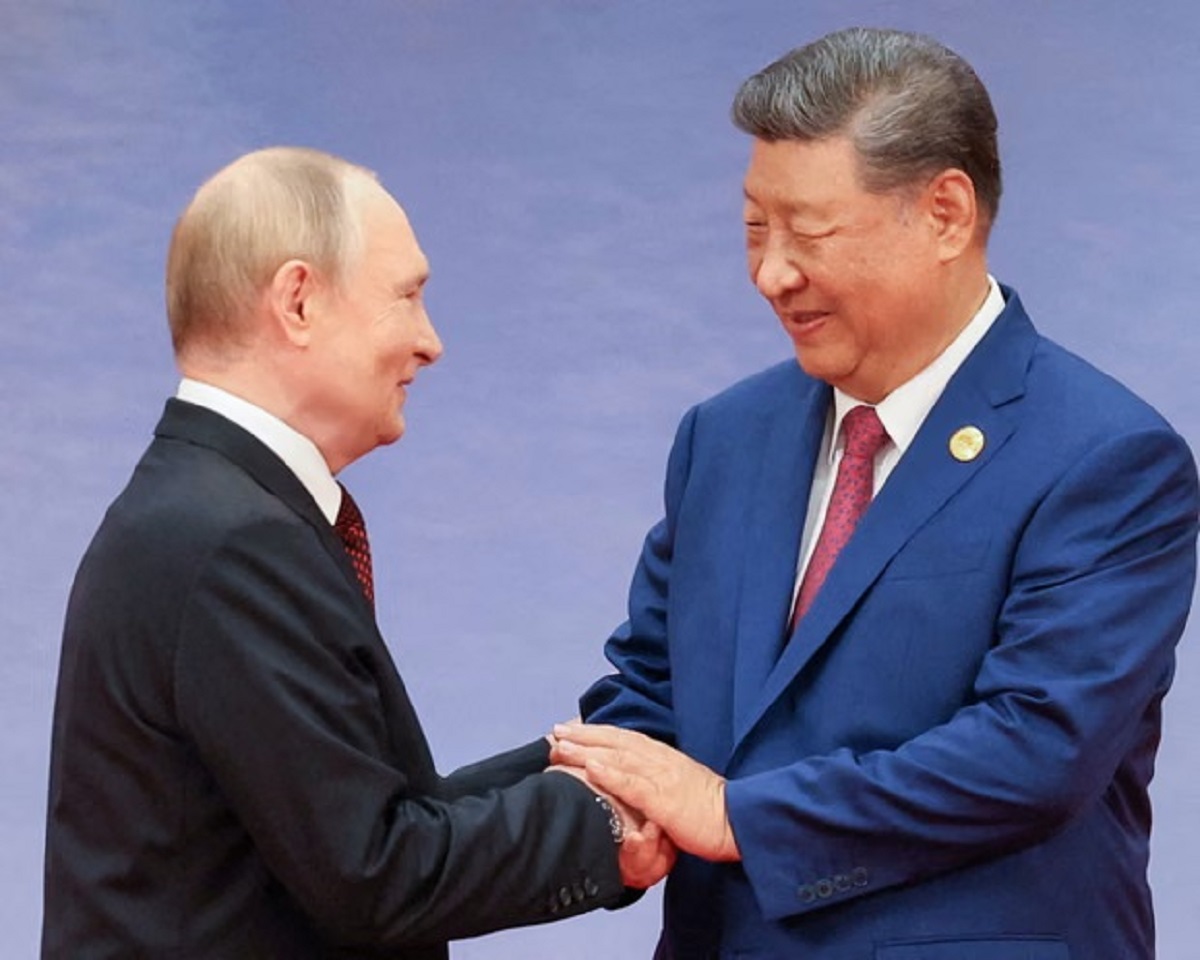
Xi Jinping, Putin, and Kim Jong Un together at the Victory Day parade — redrawing global influence.
Breaking Now: In a stunning display of unified power, Chinese President Xi Jinping hosts Russian President Vladimir Putin and North Korea’s Kim JongUn at Beijing’s grand military parade — marking a dramatic tilt in world order that’s sidelining Trump’s U.S.-led narrative and shocking global audiences.
Xi Jinping hosts Putin and Kim Jong Un in Beijing for a historic military parade, marking their first public stage appearance together.
The event signals a new global order, directly challenging Trump’s U.S.-led influence.
Kim Jong Un’s rare trip via his bullet-proof train underscored North Korea’s growing visibility on the world stage.
Xi used the summit to push his “Global Governance Initiative”, proposing multipolar cooperation through the SCO bloc.
Western leaders absent, reinforcing the East vs. West divide in global influence.
Analysts describe the alliance as an “axis of upheaval” that could reshape geopolitics for decades.
Citizens in China showed mixed reactions — national pride vs. outrage at parade costs.
Experts warn this trilateral unity may escalate global tensions, particularly in the Indo-Pacific.
The moment symbolizes China’s emergence as the central hub of power, redefining alliances beyond rhetoric.
A Stage Set for History
This week, Beijing transforms into the epicenter of a geopolitical spectacle. Xi Jinping, the architect of an emerging multipolar world, stands shoulder-to-shoulder with Vladimir Putin and Kim Jong Un on stage — a first-of-its-kind public alliance, dramatically reshaping the global narrative.
The occasion? A mammoth military parade in Tiananmen Square, commemorating the 80th anniversary of Japan’s WWII surrender. Loathed in some quarters — lauded in others — the event underscores, in military might and political pageantry, China’s message: a new order is dawning.
Emotional Undercurrents & Human Story
This isn’t merely statecraft. Imagine civilians gazing up, hearts pounding, as fighter jets streak the sky. Some celebrate national pride; others quietly wrestle with unease over a $5 billion price tag and days of disruption.
Meanwhile, Kim Jong Un, riding his iconic bullet-proof train — a “moving fortress” — traverses into China, a rare journey steeped in symbolism and secrecy. His arrival evokes both curiosity and concern — a man who seldom leaves home now front-and-center at a global event.
The Big Reveal: What Just Happened
Trilateral show of force: Xi invites Putin and Kim to signal cooperation beyond mere rhetoric.
Xi’s alternative narrative: At Tianjin’s SCO summit, he unveiled a “global governance initiative,” calling for a multipolar alliance built on sovereign equality.
Western absence, Eastern assertion: Western leaders notably absent, while China positions itself as champion of the Global South.
Weaponry on parade: Hypersonic missiles, drones, armored battalions — this was the language of strength.
Insider Insights & Geopolitical Context
Experts liken this to a “memory war,” where competing WWII narratives are used to assert modern dominance. Analysts note the Beijing display implicitly challenges U.S. credibility.
Kim’s presence is strategic — a subtle but telling shift. North Korea, once isolated, now leverages its alliances like never before. His prior missile factory inspections hint at deeper military collaboration.
Meanwhile, Xi’s SCO proposal includes an AI hub, development loans, even lunar research participation. It’s a soft power blends with steel power.
FAQs
Q: Why did Kim travel by armored train? He prefers security and convention. His bullet-proof train, dubbed a “moving fortress,” reflects both tradition and safety.
Q: How is the SCO evolving? Xi proposes a development bank, AI initiatives, and lunar cooperation — pivoting SCO from a security forum to a global alternative power bloc.
Q: How have citizens responded? Reactions are mixed — pride, unease over costs, but overall, a common acknowledgment: “something has changed.”
Q: Does this alter the Russia-North Korea alliance? It reaffirms it—already reinforced by their 2024 defense pact — but now with added visibility on the global stage.
Q: Is this the first time Xi, Putin, and Kim appear together? Yes, this is their first time sharing a public stage in tandem.
Q: Is there a confirmed private meeting between the three? Not yet. While bilateral talks between pairs are possible, no trilateral session has been officially confirmed.
Q: What is the broader impact on U.S. diplomacy? The parade underscores a shifting power balance — Trump’s unilateral stances are being directly countered by this emerging bloc.
Q: What does the military hardware on display signify? It’s a dual message: domestic pride in advanced tech, and international deterrence, reminding rivals that China isn’t just talking; it’s capable.
Want in-depth analysis, expert commentary, and daily updates on this shift in global dynamics? Read our full report now — your front-row seat to history. What do you think — is this the rise of a new global coalition? Tell us in the comments below!
Hello! I'm M Muzamil Shami, the founder and lead editor of Star Struck Times, your trusted source for trending news, entertainment scoops, celebrity gossip, sports highlights, and global headlines.
With a passion for storytelling and journalism, I created this platform to bring you breaking news, viral moments, and deep insights into the worlds of Bollywood, Hollywood, sports, politics, tech, and more — all in one place.