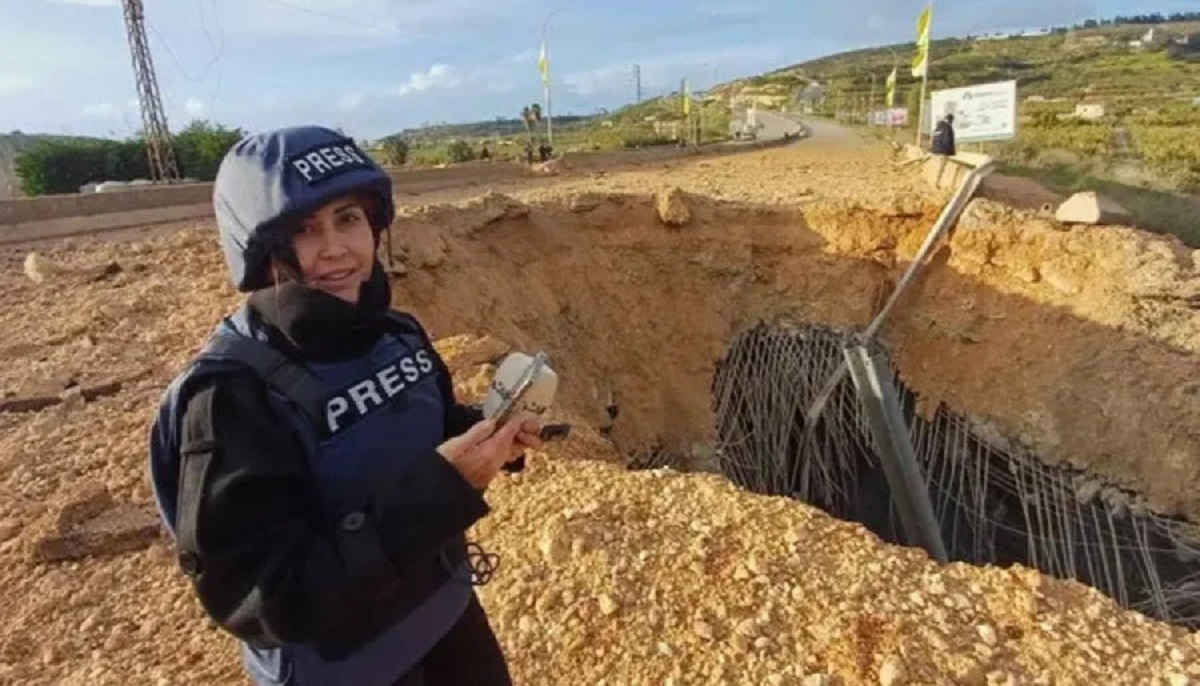
A fresh wave of Israeli air strikes in southern Lebanon has killed at least five people, including journalist Amal Khalil, raising urgent concerns over a fragile ceasefire in the region. The attacks reportedly targeted vehicles and a building in the village of at-Tiri, where journalists had gathered to cover earlier strikes. The incident has intensified global scrutiny, with Lebanon accusing Israel of deliberate targeting, while Israel maintains it does not target media personnel.
For ongoing conflict updates, visit our WorldNews section on Star Struck Times.
Key Highlights
Israeli air strikes killed at least five people in southern Lebanon
Journalist Amal Khalil died after being trapped under rubble
Another journalist, Zeinab Faraj, critically injured
Lebanon accuses Israel of targeting journalists and blocking rescue efforts
Israel denies allegations, citing efforts to avoid civilian harm
According to Lebanon’s National News Agency, the first strike targeted a vehicle in at-Tiri, killing two individuals. The Israeli military later confirmed it had struck vehicles allegedly linked to a Hezbollah military structure.
Shortly after, a second strike hit a nearby building where journalists had assembled to report on the earlier attack. Among them was Amal Khalil, a reporter for Al Akhbar, who was later found dead beneath the rubble.
Rescue operations were severely hampered. As reported by Al Jazeera, emergency teams and the Red Cross struggled for hours to reach Khalil and her colleague Zeinab Faraj due to continued bombardment in the area.
Conflicting Claims and Global Reaction
Lebanon’s Health Ministry has accused Israel of deliberately targeting journalists and obstructing rescue operations—claims that could constitute violations of international humanitarian law. Prime Minister statements, echoed by global media including BBC News, have described the incident as a potential “war crime.”
Israel, however, has firmly rejected these accusations. In an official statement, the Israeli military said it “does not target journalists and acts to mitigate harm,” emphasizing that the strikes were aimed at militant infrastructure.
An expert in conflict reporting told Star Struck Times: “Journalists increasingly find themselves in high-risk zones where distinguishing between civilian and military targets becomes blurred. This incident underscores the urgent need for enforceable protections.”
Public reaction across social media has been intense. One user wrote, “Journalists are not targets—this is unacceptable.” Another commented, “Truth is the first casualty in war.”
Why This Incident Matters Now
This escalation comes at a critical moment when ceasefire negotiations between Israel and regional actors are already under strain. The deaths in at-Tiri risk derailing fragile diplomatic efforts and could trigger further retaliatory actions.
Historically, cross-border tensions between Israel and Hezbollah have periodically escalated into broader conflicts. However, targeting or harming journalists adds a new dimension, drawing sharper international condemnation and increasing pressure on global institutions to intervene.
The situation also raises serious questions about press freedom and the safety of journalists in conflict zones—an issue that organizations like the Committee to Protect Journalists have repeatedly highlighted.
What Other Reports Missed
While most reports focus on casualty figures, a deeper issue is emerging: the timing and location of the second strike. The fact that journalists had gathered openly suggests their presence was known, raising concerns about intelligence accuracy and engagement protocols.
Additionally, the delay in rescue access due to continued strikes highlights a critical humanitarian gap—the inability to secure safe corridors during active operations. This aspect remains underreported but could become central in future international investigations.
What Happens Next?
The aftermath of this incident is likely to unfold rapidly. International calls for investigation are expected to intensify, while diplomatic channels may attempt to salvage the ceasefire. The condition of Zeinab Faraj remains critical, and her survival could further shape global response.
If tensions continue to rise, the region may see renewed escalation—making the coming days crucial for both political stability and humanitarian safety.
FAQs
1. Who was Amal Khalil? Amal Khalil was a Lebanese journalist working for Al Akhbar, covering conflict developments in southern Lebanon.
2. Where did the air strikes occur? The strikes took place in the village of at-Tiri in southern Lebanon.
3. How many people were killed? At least five people were killed, including one journalist.
4. What is Israel’s response to the allegations? Israel denies targeting journalists and says it aims to minimize civilian harm.
5. Why is this incident significant? It threatens the already fragile ceasefire and raises serious concerns about journalist safety in war zones.
Hello! I'm M Muzamil Shami, the founder and lead editor of Star Struck Times, your trusted source for trending news, entertainment scoops, celebrity gossip, sports highlights, and global headlines.
With a passion for storytelling and journalism, I created this platform to bring you breaking news, viral moments, and deep insights into the worlds of Bollywood, Hollywood, sports, politics, tech, and more — all in one place.