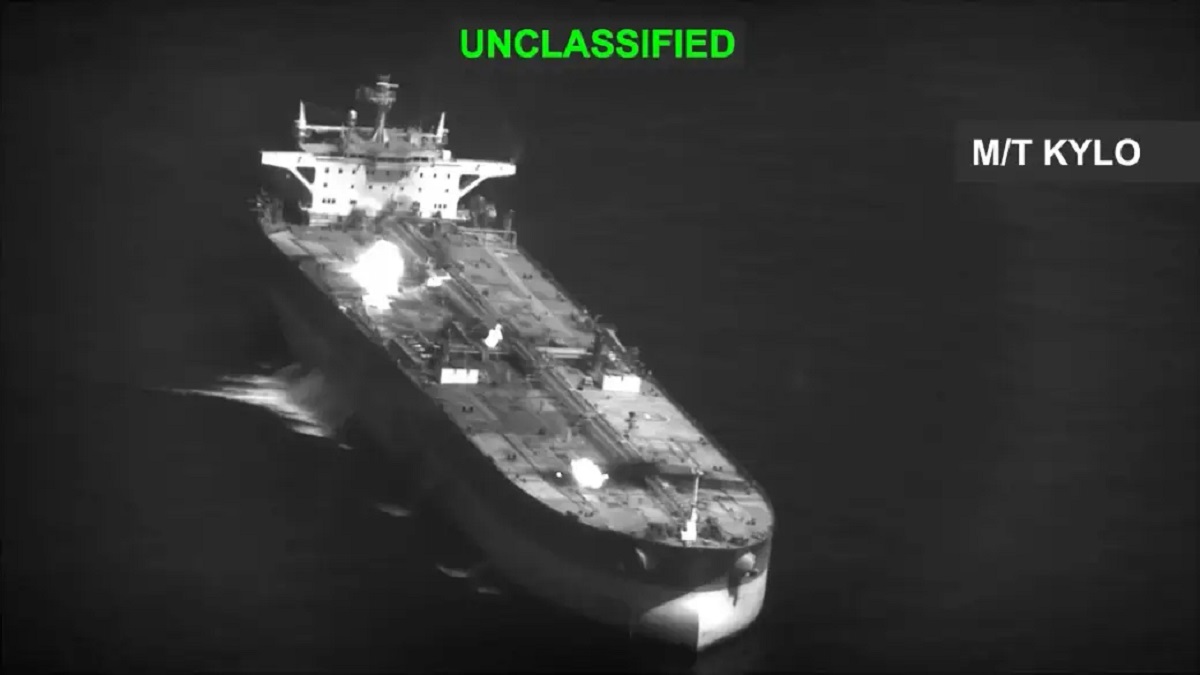
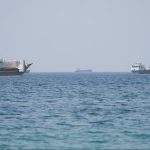
U.S. forces struck three Iranian oil tankers after Washington said Iranian missiles targeted two American Navy vessels.
The U.S.-Iran conflict took a dangerous turn Saturday as American forces struck three Iranian-linked oil tankers after Tehran allegedly targeted two U.S. Navy ships with ballistic missiles. The escalation threatens to put even more pressure on shipping through the Strait of Hormuz and global oil markets.
The U.S. strikes on Iranian oil tankers mark one of the clearest signs yet that the latest phase of the U.S.-Iran conflict is moving beyond battlefield exchanges and deeper into the economic lifeline that keeps Iran’s oil industry functioning.
U.S. Central Command (CENTCOM) said Saturday that American forces permanently disabled two tankers and destroyed a third, following what it described as multiple Iranian attacks against a U.S. aircraft carrier and a guided-missile destroyer. No American personnel were injured, according to CENTCOM.
The strikes occurred near some of the most strategically sensitive waters in the Middle East, including the coast of Kharg Island, Iran’s principal oil-export hub.
Iranian state media confirmed that a tanker near Kharg Island had been hit and reported that its crew survived. Tehran subsequently warned that continued American attacks on Iranian shipping could trigger a stronger military response.
Key Points
Three Iranian oil tankers were struck by U.S. forces, according to CENTCOM.
Two vessels were described as permanently disabled, while another was destroyed.
The U.S. says the action followed Iranian ballistic-missile attacks against two American Navy vessels.
No U.S. personnel were reported injured.
One strike occurred near Kharg Island, Iran’s major crude-export terminal.
Iran has warned of harsher reprisals if attacks on its shipping continue.
The escalation comes as commercial traffic through the Strait of Hormuz remains sharply below normal levels.
Why the Iranian Oil Tanker Strikes Matter
This was not simply another exchange of missiles.
Oil tankers represent one of Iran’s most vulnerable economic assets, and Washington is increasingly treating Tehran’s energy network as a pressure point in the conflict.
CENTCOM commander Adm. Brad Cooper said the targeted vessels were connected to what the U.S. described as a multibillion-dollar shadow network supporting Iran’s Islamic Revolutionary Guard Corps and regional allies. CENTCOM said Washington would not hesitate to impose additional costs on Iran’s oil fleet.
That message carries particular weight because of Kharg Island.
The island is home to Iran’s main crude-export terminal, making it central to the country’s ability to sell oil internationally. Any sustained disruption around the island could therefore have consequences well beyond the immediate military confrontation.
Reuters reported that the latest escalation has already pushed Brent crude higher, with markets increasingly focused on the possibility of further disruption to Middle Eastern energy supplies.
Iran Warns of a Stronger Response
Tehran has not indicated that it intends to absorb the attacks without retaliation.
Iranian military officials warned Saturday that attacks against U.S. vessels could become more severe if Washington continues targeting Iranian shipping. Iranian state media also reported that crews from two tankers in the Gulf of Oman were evacuated in lifeboats.
That creates a potentially dangerous cycle.
An attack on a U.S. warship prompts an American strike on an Iranian economic target. Tehran then faces pressure to respond, potentially against U.S. forces or commercial shipping. Any new attack could invite another American response.
The danger is that the conflict becomes harder to contain even if neither side wants a broader regional war.
Strait of Hormuz Becomes the Critical Flashpoint
At the center of the crisis is the Strait of Hormuz, the narrow waterway connecting the Persian Gulf with the Gulf of Oman.
For decades, the strait has been one of the world’s most important energy corridors. Its security is therefore closely watched by governments, shipping companies and energy traders around the world.
Recent shipping data shows how severely the conflict has already affected maritime traffic. Reuters reported that only four commodity vessels passed through the strait on Thursday, far below the recent 10-day average of roughly 15.
That decline matters because even without a complete closure, uncertainty can raise shipping costs, increase insurance premiums and force vessels to wait or take alternative routes.
For consumers, the consequences can eventually appear at the fuel pump.
Reuters reported that oil prices had already climbed to fresh six-week highs earlier in the week as traders assessed the renewed U.S.-Iran confrontation and the threat of supply disruptions.
A War That Refuses to Cool Down
The latest tanker strikes come after months of conflict punctuated by periods of relative calm.
Reuters reported that fighting intensified again in early September after a lull, with the United States carrying out fresh strikes while Iran launched attacks against American positions across the region.
CENTCOM has said its broader campaign has targeted Iranian military infrastructure, including air defenses, radar systems, maritime capabilities and facilities connected to mine-laying operations.
The pattern shows how the conflict is expanding across multiple fronts: military bases, maritime routes, commercial vessels and now oil tankers.
That makes diplomacy increasingly urgent but also more difficult.
What Happens Next?
The immediate question is whether Iran retaliates directly against U.S. naval forces or chooses another target.
A second question is whether commercial shipping can continue operating through the Strait of Hormuz without suffering even greater disruption.
The stakes are global.
A prolonged reduction in tanker traffic could put upward pressure on crude prices and fuel costs, while another attack involving a commercial vessel could further discourage shipping companies from entering the region.
For Washington, the tanker strikes demonstrate a willingness to impose direct economic costs on Tehran. For Iran, they represent another threat to an already pressured economy.
And for the rest of the world, the concern is increasingly simple: how far can the U.S.-Iran escalation go before the damage reaches far beyond the battlefield?
Frequently Asked Questions
Why did the U.S. strike Iranian oil tankers?
The U.S. military said the strikes were retaliation for Iranian ballistic-missile attacks against two U.S. Navy vessels. CENTCOM also alleged that the tankers were connected to a network financing Iran’s Revolutionary Guard and regional proxies.
Were there casualties in the tanker strikes?
CENTCOM said no American personnel were injured. Iranian state media reported no casualties aboard the tanker struck near Kharg Island, while crews from two other tankers were reported to have reached shore in lifeboats.
Why is Kharg Island important?
Kharg Island contains Iran’s main crude-export terminal and is therefore one of the country’s most important energy infrastructure sites.
Could the strikes affect oil prices?
Yes. Any further disruption around the Strait of Hormuz or Iran’s oil-export infrastructure could increase concerns about global supply. Oil prices had already risen amid renewed U.S.-Iran tensions.
Could Iran retaliate?
Iranian military officials have already threatened a stronger response if American attacks on Iranian shipping continue.
The Bigger Picture
The US-Iran conflict is entering a particularly volatile phase. What began as military pressure is increasingly intertwined with energy security, commercial shipping and the global economy.
The three tanker strikes send a blunt message from Washington: attacks on American naval forces may now bring consequences for Iran’s oil infrastructure.
Tehran’s response will determine whether Saturday’s strikes remain a contained exchange or become the beginning of another, more dangerous escalation.
What do you think—will the latest tanker strikes force Iran back toward negotiations, or push the U.S.-Iran conflict into an even wider confrontation? Share your view below.
For continuing coverage of the U.S.-Iran conflict, Strait of Hormuz tensions and global breaking news, follow Star Struck Times.
Hello! I'm M Muzamil Shami, the founder and lead editor of Star Struck Times, your trusted source for trending news, entertainment scoops, celebrity gossip, sports highlights, and global headlines.
With a passion for storytelling and journalism, I created this platform to bring you breaking news, viral moments, and deep insights into the worlds of Bollywood, Hollywood, sports, politics, tech, and more — all in one place.