By Star Struck Times | October 19, 2026 | Paris, France
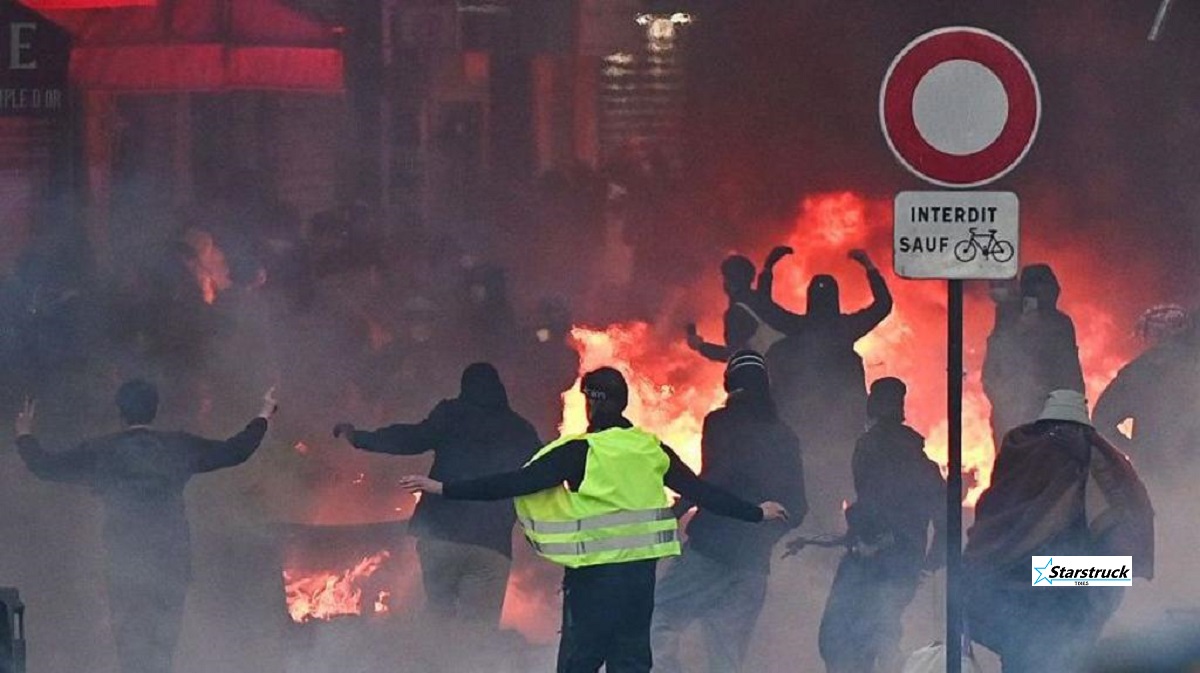
French Prime Minister Sébastien Lecornu has asked local authorities in some French cities to introduce partial curfews after a weekend of violent protests, looting and damage to businesses and public buildings, as President Emmanuel Macron’s government faces mounting questions over security failures and its response to public anger.
Key Points
- Prime Minister Sébastien Lecornu has requested targeted, partial curfews in affected areas, rather than a nationwide shutdown.
- Protests over the cost of living and public services escalated into clashes, vandalism and looting.
- Thousands of arrests have been reported, with the latest figures higher than initial weekend estimates.
- Local leaders are demanding answers about whether security forces were adequately prepared.
- The unrest is adding pressure on Macron’s government as France approaches its next presidential election.
 Reuters+2
Why the curfew decision matters
Lecornu said the government remained committed to restoring public order but considered targeted restrictions more appropriate than immediately declaring a nationwide state of emergency. He ruled out placing all of Paris under curfew and said restrictions should remain local and limited.

As of Monday, the government had not publicly identified every city or area that would face the proposed curfews. The practical impact will therefore depend on where local authorities impose restrictions, when they take effect and how long they remain in place.
The distinction matters because a request for curfews is not the same as a confirmed nationwide restriction. Residents, businesses and visitors should look for announcements from the relevant local authorities before making assumptions about movement restrictions.
Macron faces questions over security failures
The unrest has triggered a wider debate about police preparedness and the government’s handling of demonstrations.
Interior Minister Laurent Nuñez offered to resign on Sunday, saying he accepted responsibility for the events. Macron rejected the offer and instructed him to ensure transparency about failures in planning and intelligence-gathering, according to a statement from the president’s office reported by The Associated Press.
Nuñez acknowledged that authorities had lost control in some major cities during Saturday’s violence. Mayors of several of France’s largest cities also demanded answers about what they described as inadequate preparation by security forces, Reuters reported.
The dispute shifts attention beyond the immediate damage to a central question for the government: whether police and intelligence services had sufficient information and resources to anticipate the scale of the unrest.
Thousands of businesses affected
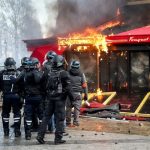
The violence has left shops, public buildings and streets damaged across several French cities. In Limoges, flames engulfed the historic city hall on Saturday, causing its roof to collapse and bringing the building close to destruction, according to AP.

French authorities estimated on Monday that at least 3,000 businesses had been damaged or looted during the weekend, AP reported. The figure reflects a broader assessment than earlier estimates and illustrates the scale of the economic disruption.
The demonstrations followed weeks of student protests and wider public discontent over rising living costs and poor conditions in schools. The subsequent violence has made it harder for authorities to address those grievances without also confronting looting, vandalism and attacks on public property.
At least 2,400 people were arrested across France, according to AP’s report.
Political pressure grows ahead of election
The unrest is unfolding roughly six months before France’s next presidential election, adding to pressure on a government already facing economic challenges and mounting public debt, Reuters reported.
For Macron’s administration, the immediate challenge is to restore public order while explaining how the security response fell short. The proposed curfews may provide local authorities with an additional measure to contain further violence, but they do not resolve questions about preparedness or the underlying causes of public anger.
The next important developments will be the official identification of areas subject to curfews, any further changes to policing measures and the findings of the promised review of security and intelligence failures.
Sources: Reuters, October 19, 2026; The Associated Press, October 19, 2026.