Putin Meets US Envoys as Ukraine Peace Talks Take a High-Stakes Turn
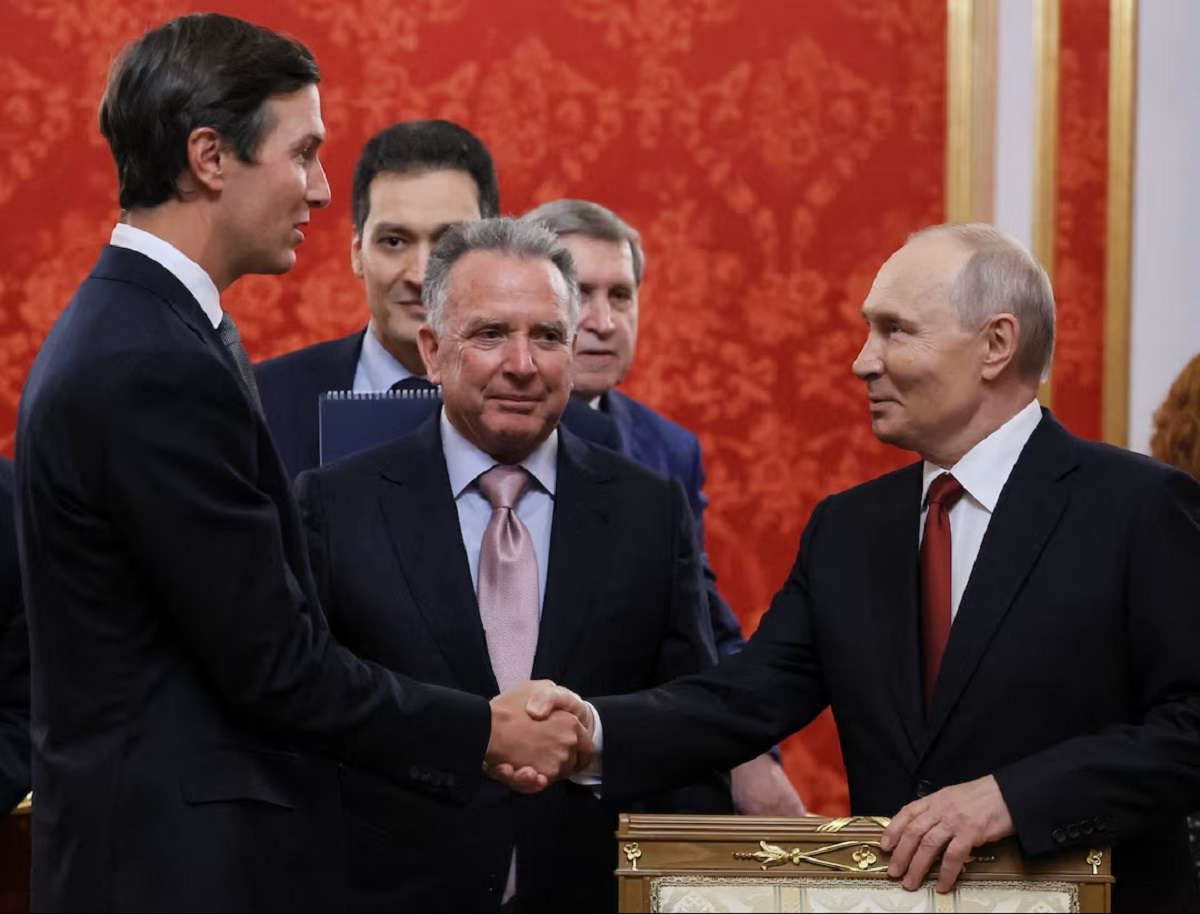
A potentially pivotal diplomatic moment unfolded in Moscow on Saturday as U.S. envoys Steve Witkoff and Jared Kushner met Russian President Vladimir Putin to discuss a possible path toward ending the war in Ukraine. The Kremlin meeting comes as Russia and Ukraine have agreed to temporarily refrain from striking each other’s capitals around the envoys’ diplomatic mission, creating a rare pause amid an intensifying aerial war.
The talks are being closely watched because U.S. President Donald Trump has said his negotiators are carrying a new proposal aimed at ending the conflict. But beneath the carefully staged diplomacy lies a difficult reality: Moscow and Kyiv remain far apart on territory, NATO membership and security guarantees.
Putin himself set the tone at the start of the meeting, describing the situation as difficult while saying continued contact between Moscow and Washington was useful.

For Ukraine, the stakes are enormous. For Russia, the talks offer another opportunity to test whether Washington can bridge the differences that have kept negotiations from producing a lasting settlement.
Key Points
- Steve Witkoff and Jared Kushner met Vladimir Putin in Moscow.
- Trump says the U.S. team is carrying a proposal intended to end the war.
- Russia has ordered a temporary halt to strikes on Kyiv during the diplomatic mission.
- Volodymyr Zelenskyy says Ukraine is prepared to pause strikes on Moscow through Monday.
- Witkoff and Kushner are expected to travel to Kyiv for talks on Sunday.
- Major disagreements over territory and Ukraine’s security guarantees remain unresolved.
A Temporary Ceasefire Surrounds a Dangerous Diplomatic Mission
The unusual security arrangement surrounding the visit may be just as significant as the talks themselves.
According to Reuters, Kremlin spokesman Dmitry Peskov said Putin had ordered Russian forces not to strike Kyiv for three days beginning at midnight Saturday. Zelenskyy, meanwhile, said Ukraine was prepared to refrain from attacks on Moscow through Monday.
That limited pause does not amount to a broad ceasefire.
It is, instead, a narrowly defined diplomatic window designed to allow the American negotiators to move between two countries still actively at war.
That distinction matters.
Only days earlier, Kyiv had endured another wave of Russian attacks. Reuters reported that a Russian drone struck the headquarters of Ukraine’s Security Service in central Kyiv on September 4, injuring people and damaging buildings near the historic Saint Sophia area. The attack came as diplomatic preparations were accelerating.

The contrast is striking: diplomats are attempting to create a path toward peace while missiles and drones continue to shape events on the ground.
Witkoff Thanks Putin for the Pause
At the Kremlin, Witkoff thanked Putin for agreeing to halt strikes on the Ukrainian capital during the visit.
Putin said Russia would do what it could to ensure the safety of the American mediators and praised Trump’s continuing attempts to broker an agreement. Reuters reported that Putin stopped short of accepting a wider three-day ceasefire.
The Kremlin meeting was held behind closed doors, leaving the substance of the proposal unclear.
That secrecy is likely to fuel intense speculation over what Washington is actually offering — and what Moscow might be prepared to accept.
Trump said Friday that Witkoff and Kushner were traveling with a proposal to end the war, but the administration has not publicly released its full details.
Why the Ukraine Peace Talks Face an Uphill Battle
The biggest obstacle is not getting the two sides into the same diplomatic conversation. It is finding terms both governments can live with.
Russia continues to demand major territorial concessions from Ukraine and has maintained that Kyiv should abandon its NATO ambitions. Reuters reported that the Kremlin has described that position as effectively unshakeable.
Ukraine rejects surrendering territory it has defended at enormous human and military cost.
That leaves the central question hanging over the Witkoff and Kushner Ukraine peace talks: can Washington find a compromise between Moscow’s territorial demands and Kyiv’s insistence on sovereignty and meaningful security guarantees?
So far, previous rounds of U.S.-backed diplomacy have failed to close that gap.
The front line has also remained largely static despite continued Russian pressure, while both sides have increasingly relied on long-range drones and missiles.
Zelenskyy Prepares for the American Delegation in Kyiv
The diplomatic pressure now moves toward Ukraine.
Zelenskyy said he had already spoken with Witkoff and Kushner and that preparations for their visit had been approved. He said Kyiv was ready for a substantive discussion.
The planned journey is particularly notable because, although Witkoff and Kushner have previously visited Russia several times, this would be their first trip to Ukraine, according to Reuters.
How exactly they will travel remains unclear.
Ukraine’s airspace has been closed since Russia’s full-scale invasion in February 2022, meaning any American diplomatic journey into Kyiv carries an unusual level of logistical and security risk.
That is why the temporary restrictions on strikes around the capitals are more than symbolic. They are part of the practical arrangements needed to make the diplomatic mission possible.
The Human Cost Behind the Diplomacy
The talks are taking place against a backdrop of intensifying attacks rather than calm.
Reuters reported that Russian drone attacks around Kyiv had continued for days, disrupting ordinary life and damaging residential and infrastructure sites. Earlier attacks in the Kyiv region also caused significant casualties.
The war’s humanitarian consequences are also extending to essential aid infrastructure. Reuters reported that a World Health Organization warehouse containing medical supplies near Kyiv was struck during an overnight attack, with assessments of the damage continuing.
That makes the diplomatic push feel particularly urgent.
Every additional week of fighting brings another round of casualties, damaged infrastructure and political pressure on both governments.
What Happens Next?
The next major test comes when the U.S. delegation reaches Kyiv.
If Witkoff and Kushner can carry meaningful messages between Washington, Moscow and Kyiv, the visit could help restart negotiations that have been stalled for months.
But a temporary halt in attacks should not be mistaken for a peace agreement.
The fundamental disagreements remain enormous. Russia wants territorial concessions and restrictions on Ukraine’s strategic alignment. Ukraine wants its territorial integrity protected and credible guarantees against another invasion.
For now, the diplomatic channel is open — but the distance between the two sides remains wide.
Common Questions About the Ukraine Peace Talks
Why are Witkoff and Kushner meeting Putin?
They are representing the Trump administration in an effort to advance negotiations aimed at ending the war between Russia and Ukraine. Trump has said they are carrying a proposal for peace.
Will there be a ceasefire in Ukraine?
Not yet. Russia has agreed to a temporary halt in strikes on Kyiv connected to the diplomatic visit, while Ukraine has said it will refrain from striking Moscow through Monday. This is not a comprehensive ceasefire.
Are Witkoff and Kushner going to Ukraine?
Yes. Zelenskyy has said the U.S. envoys are expected in Kyiv on Sunday for further discussions.
What are the biggest obstacles to peace?
Territory, Ukraine’s future security arrangements and NATO membership remain among the most difficult issues separating Moscow and Kyiv.
Does this mean a Russia-Ukraine peace deal is close?
There is renewed diplomatic activity, but there is not yet evidence of an agreed settlement. The major political and territorial disputes remain unresolved.
The Bigger Picture
The significance of Saturday’s Kremlin meeting lies less in the possibility of an immediate breakthrough than in the fact that the diplomatic machinery is moving again.
For a war that has repeatedly frustrated negotiators, even a temporary reduction in attacks to make diplomacy possible is notable.
But the real measure of progress will come later — when the cameras are gone, the delegations have returned home and negotiators have to confront the hardest questions.
What territory would change hands? What security guarantees would Ukraine receive? What would Russia accept? And, ultimately, what kind of peace would both sides consider better than continuing the war?
Those answers remain elusive.
For now, Witkoff and Kushner’s Ukraine peace talks have created a narrow opening. Whether that opening becomes a genuine route to peace or another diplomatic dead end will depend on what happens behind the closed doors.
What do you think — could this latest U.S. diplomatic push finally produce a breakthrough in the Russia-Ukraine war, or are the differences still too deep? Share your view.