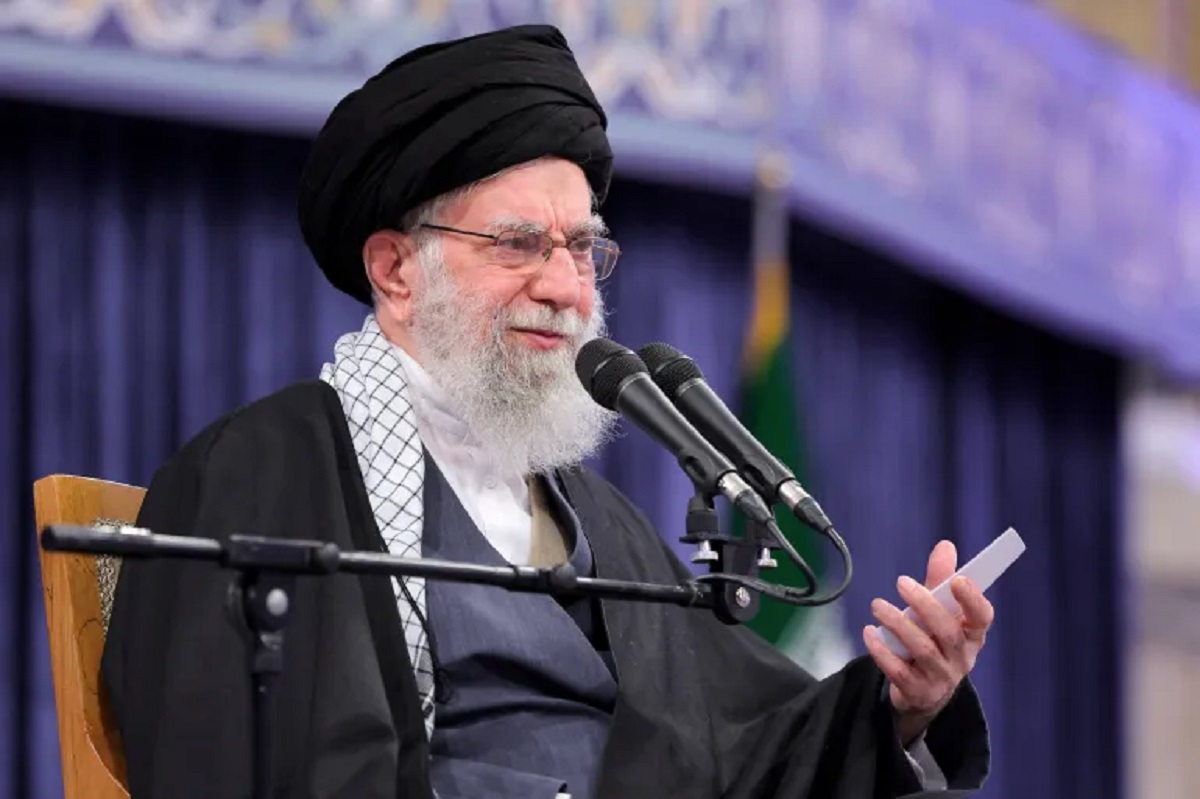
Aftermath visuals following US-Israel strikes in Iran, February 27, 2026
Tehran, Iran — Star Struck Times
In a dramatic escalation of Middle East tensions, the United States and Israel launched coordinated air and missile strikes on Iran on 27 February 2026, targeting strategic military and political sites in Tehran and other major cities. Iranian state-linked outlets and multiple regional reports claim that Iran’s Supreme Leader Ayatollah Ali Khamenei was killed during the strikes, along with senior Revolutionary Guard commanders. The development, if officially confirmed, marks one of the most consequential geopolitical events in decades and could reshape regional power dynamics overnight.
Key Highlights
US and Israel conducted joint aerial and missile strikes on 27 February 2026
Targets included Tehran and key military command centers
Iranian reports claim Supreme Leader Ayatollah Ali Khamenei was killed
Global leaders urge restraint amid fears of wider conflict
What Happened: Timeline of the Iran Strikes
According to early defense briefings and reports from Reuters and BBC monitoring desks, the coordinated strikes began late evening on 27 February 2026, with waves of fighter jets and long-range missiles hitting high-value targets.
Primary targets reportedly included:
Military command infrastructure in Tehran
Revolutionary Guard facilities
Nuclear-linked strategic sites
Communications hubs
Multiple missile launches were detected across the region. Airspace closures were immediately implemented in parts of the Gulf and Levant, disrupting international travel routes.
Iranian media reported that Ayatollah Ali Khamenei was present at a secured facility in Tehran when one of the strikes occurred. While official Iranian government confirmation is pending, several regional intelligence analysts cited by Al Jazeera indicated that “high-level leadership casualties are highly probable based on strike precision.”
The air campaign followed tense diplomatic negotiations between Washington and Tehran regarding Iran’s nuclear program. US officials had pushed for stricter constraints, and talks reportedly stalled days before the escalation.
Official Reactions and Global Response
The White House confirmed the military operation but did not initially comment on specific casualties. A senior US defense official stated, “The strikes were aimed at neutralizing imminent strategic threats.” Israeli defense authorities echoed that the action targeted “critical infrastructure linked to destabilizing activities.”
Iran responded swiftly, launching retaliatory missile operations under the name “Operation Fath-e Khyber.” Iranian state television declared the move a “defensive response against aggression.”
International reaction was immediate:
The United Nations called for urgent Security Council consultations.
The International Campaign to Abolish Nuclear Weapons (ICAN) condemned the escalation, warning that “direct conflict between major powers in the region raises catastrophic risks.”
European leaders urged de-escalation and diplomatic channels.
A Middle East security analyst told Sky News, “If the reported death of the Supreme Leader is confirmed, this would represent a political earthquake inside Iran and across the region.”
On social media, reactions ranged from fear to anger. One Tehran resident reportedly posted, “We woke up to explosions and chaos. No one knows what happens next.” Another user wrote, “This changes everything for Iran’s future.”
Why It Matters: Regional and Global Impact
The reported killing of Iran’s Supreme Leader carries enormous consequences:
1. Political Power Vacuum in Iran
The Supreme Leader holds ultimate authority over Iran’s military, judiciary, and foreign policy. A sudden vacancy could trigger internal power struggles among clerical and military factions.
2. Nuclear Program Uncertainty
Media analysts believe nuclear negotiations are now effectively frozen. Escalation may accelerate regional arms race concerns.
3. Energy Markets at Risk
Iran issued petroleum security alerts following the strikes. Oil markets reacted with volatility as investors feared supply disruptions in the Strait of Hormuz.
4. Broader Middle East Instability
Airspace closures and missile exchanges indicate potential for wider regional conflict involving proxy groups.
Context: Rising Tensions Before the Strike
This escalation follows months of heightened friction:
Alleged cyberattacks targeting Iranian state news agencies
Maritime security incidents in Gulf waters
Intelligence warnings of potential strike scenarios
Stalled diplomatic talks between Washington and Tehran
The last comparable geopolitical shock occurred during the 2020 killing of Iranian General Qassem Soleimani, which temporarily brought the US and Iran to the brink of open war.
However, the targeting of a sitting Supreme Leader represents an unprecedented shift in military engagement norms.
Unique Angle: Cyber Warfare Layer
Shortly after the airstrikes, Iranian state news agencies experienced significant cyber disruptions. Digital security experts believe coordinated cyber operations may have accompanied the military action to disable communications and media control.
A cybersecurity analyst noted, “Modern warfare now includes synchronized cyber offensives designed to paralyze narrative control and infrastructure.”
This dual kinetic-cyber dimension could redefine how future conflicts unfold.
What Happens Next
Several key developments are expected:
Emergency session of Iran’s Assembly of Experts
Possible appointment of an interim religious authority
Continued missile exchanges if de-escalation fails
Intensified diplomatic efforts from global powers
Military analysts warn the next 48–72 hours will be critical in determining whether the conflict remains contained or expands regionally.
For more global updates, visit our World News category.
FAQs
1. When did the US and Israel launch the strikes on Iran? The coordinated strikes began on 27 February 2026.
2. Was Iran’s Supreme Leader confirmed killed? Regional reports claim his death, but official full confirmation is still awaited.
3. What is Operation Fath-e Khyber? It is Iran’s declared retaliatory military operation following the strikes.
4. Are airspaces closed in the Middle East? Yes, multiple countries temporarily restricted airspace for security reasons.
5. Could this lead to wider war? International leaders are urging restraint to prevent broader escalation.
Conclusion
The reported killing of Iran’s Supreme Leader during US-Israel strikes marks a defining moment in modern geopolitics. As missile exchanges continue and diplomatic channels intensify, the world watches closely. Stability in the Middle East now hinges on the decisions made in the coming hours.
Stay informed with verified updates on Star Struck Times.
Hello! I'm M Muzamil Shami, the founder and lead editor of Star Struck Times, your trusted source for trending news, entertainment scoops, celebrity gossip, sports highlights, and global headlines.
With a passion for storytelling and journalism, I created this platform to bring you breaking news, viral moments, and deep insights into the worlds of Bollywood, Hollywood, sports, politics, tech, and more — all in one place.