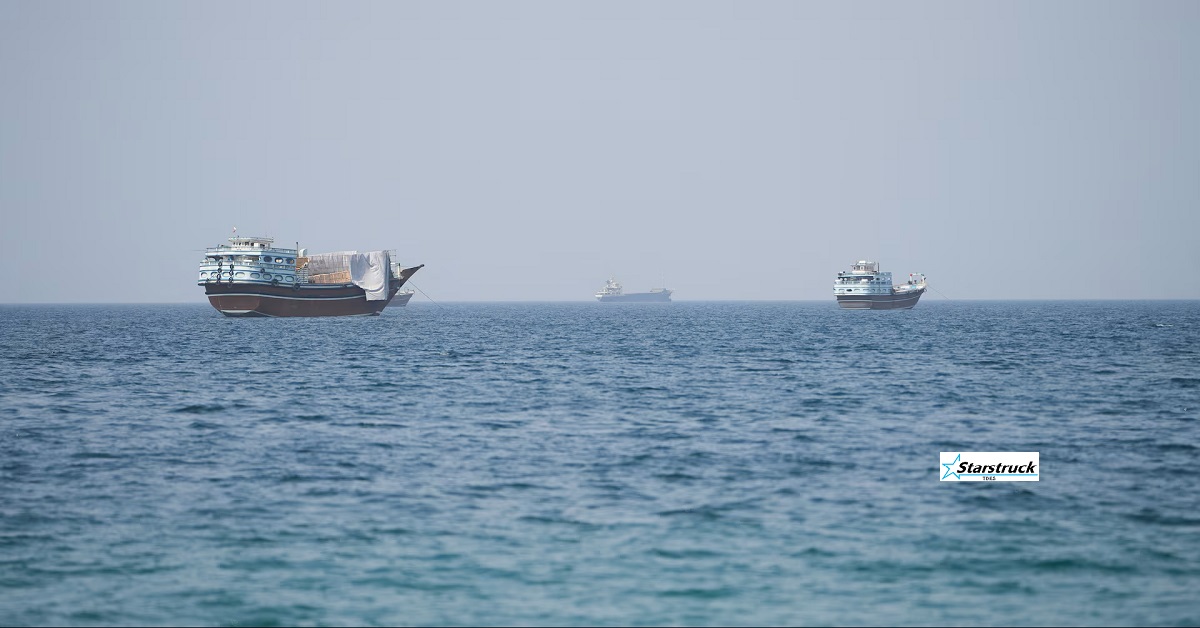
The Strait of Hormuz handles over 20% of global oil shipments, making the Iran-Oman maritime agreement pivotal for global energy security.
TEHRAN, Iran, August 8, 2026 — Star Struck Times. In a dramatic geopolitical shift that has sent shockwaves through global energy markets and diplomatic corridors from Washington to Muscat, Iranian Foreign Minister Abbas Araghchi announced that Tehran and Oman are “very close” to finalizing a landmark maritime agreement. The proposed Iran-Oman Strait of Hormuz deal promises to establish a new, co-managed transit framework through the world’s most crucial oil chokepoint. However, in a startling twist that crushed immediate hopes of a complete economic thaw, Iranian leadership warned that the bilateral arrangement will not automatically reopen the waterway. With U.S. Treasury Secretary Scott Bessent hinting at a potential 30- to 60-day ceasefire and Secretary of State Marco Rubio citing significant progress, the world sits on the edge of its seat as Tehran demands an immediate end to Washington’s naval blockade and compensation for alleged treaty violations.
Key Points
The Bilateral Split: Iran and Oman have agreed in principle to a split-traffic system where inbound commercial ships enter through Iranian territorial waters and outbound ships exit via Omani waters.
The Catch: Iranian officials, including Foreign Minister Abbas Araghchi and Deputy Foreign Minister Kazem Gharibabadi, emphasize that this agreement creates a “new maritime model,” not a full reopening.
Washington’s Stance: U.S. officials maintain that the Strait of Hormuz is an international waterway where no single nation can mandate approvals, while U.S. Joint Chiefs Chairman Gen. Dan Caine has urged the White House toward a diplomatic off-ramp.
Economic Stakes: Over 20% of the world’s daily oil supply remains severely constrained, pushing global crude prices into volatile territory and spiking U.S. gas prices above $4 per gallon.
Internal Frictions: Iranian President Masoud Pezeshkian faces severe political infighting in Tehran over the deal, amidst reports of high-level security resignations.
High-Stakes Diplomacy: Inside the Iran-Oman Maritime Negotiations
According to senior diplomatic reporter Sarah Jenkins, the Strait of Hormuz crisis has reached its most delicate inflection point since hostilities erupted on February 28, 2026. For five exhausting months, military exchanges involving U.S., Israeli, and Iranian forces have strangled maritime trade in the Persian Gulf.
The emerging bilateral framework between Tehran and Muscat represents the first concrete structural attempt to restore order to maritime shipping. Under the draft arrangement negotiated with Omani mediators, incoming commercial vessels would pass through a designated corridor inside Iranian territorial waters, while outgoing ships would navigate closer to Oman.
“We are very close to an accord on a new shipping route,” Iranian Foreign Minister Abbas Araghchi stated in Tehran on Saturday, confirming that technical delegations from both nations had practically finalized the route layout.
+-------------------------------------------------------------------+
|               PROPOSED STRAIT OF HORMUZ TRANSIT MODEL             |
+-------------------------------------------------------------------+
|                                                                   |
|   [ PERSIAN GULF ]                                                |
|                                                                   |
|     <=== OUTBOUND TRAFFIC corridor (Omani Territorial Waters)      |
|     ==========================================================    |
|     ===> INBOUND TRAFFIC corridor (Iranian Territorial Waters)    |
|                                                                   |
|   [ GULF OF OMAN / INDIAN OCEAN ]                                 |
|                                                                   |
+-------------------------------------------------------------------+
|  * Joint Coordination Center (Iran & Oman) to manage telemetry.   |
|  * Disagreements remain over transit fees, tolls, & naval blockades|
+-------------------------------------------------------------------+
Yet, despite enthusiasm from market traders hoping for cheap energy, the diplomatic reality is vastly more complex. Iranian Deputy Foreign Minister Kazem Gharibabadi made it clear that this setup does not mean a return to pre-war normalcy.
“This understanding does not mean the complete opening of the Strait of Hormuz, but rather a new and different model,” Gharibabadi cautioned during an address carried by state news agency IRNA.“Full reopening hinges on the United States ending its unlawful naval blockade of Iranian ports and addressing its violations of previous memorandums.”
What Other Reports Missed: The Hidden Context Behind the Muscat Deal
While mainstream outlets focus strictly on official press briefings, insider intelligence reveals two critical dimensions that most reports have overlooked:
1. The Disarmament & Lebanon Nexus
The negotiations in Muscat are not happening in a vacuum. Regional officials confirm that Washington is quietly pushing for the Iran-Oman Strait of Hormuz deal to be tethered to a broader “Trilateral Framework”. This framework includes verified disarmament measures regarding Hezbollah in southern Lebanon and synchronized troop redeployments. Iran, conversely, insists that maritime management must remain decoupled from its regional security alliances, viewing any foreign attempt to police the strait as a direct violation of its sovereignty.
2. The Battle for Toll Authority & Service Fees
Behind closed doors, the financial architecture of the agreement remains heavily contested. While public statements from the U.S. State Department insist that any temporary route must feature “no fees, tolls, or mandatory approvals”, diplomatic sources indicate Iran has lobbied for a 5% to 7% “environmental and security service fee” on commercial cargo. Oman, fearing that formalizing Iranian fee collection would permanently alter international maritime law, has resisted becoming a co-signatory to any mandatory taxation scheme.
Washington’s Off-Ramp vs. Tehran’s Political Fractures
In Washington, the Trump administration finds itself navigating severe internal and external pressures. U.S. Treasury Secretary Scott Bessent voiced optimism on financial news networks, suggesting a 30- to 60-day temporary ceasefire could be finalized “within days” to relieve global inflationary spikes.
At the same time, top military leadership is urging caution. General Dan Caine, Chairman of the Joint Chiefs of Staff, reportedly advised the White House to secure a diplomatic off-ramp, warning that further military escalation in the Persian Gulf carries unacceptable risks to global economic stability.
+--------------------------------------------------------------------+
|               WASHINGTON VS. TEHRAN: KEY STICKING POINTS           |
+--------------------------------------------------------------------+
| ISSUE                 | U.S. POSITION         | IRAN POSITION      |
+-----------------------+-----------------------+--------------------+
| Strait Access         | Open Int'l Waterway   | Sovereign Corridor |
| Transit Fees          | Absolutely Prohibited | 5-7% Service Fee   |
| Naval Blockade        | Conditional Leverage  | Must End First     |
| Regional Security     | Linked to Hezbollah   | Strictly Separated |
+--------------------------------------------------------------------+
Meanwhile, in Tehran, political fault lines are growing wider. Iranian President Masoud Pezeshkian has been forced to publicly manage internal dissent from hardline factions who oppose any concessions to Western powers. Reports surfaced this week that Mohammad-Bagher Zolghadr, Secretary of Iran’s Supreme National Security Council, tendered his resignation over diplomatic disagreements—a report President Pezeshkian implicitly acknowledged by noting that “there are internal differences we are actively trying to resolve.”
Frequently Asked Questions
What is the Iran-Oman Strait of Hormuz deal?
The Iran-Oman Strait of Hormuz deal is a proposed bilateral maritime management agreement between Iran and Oman designed to establish dedicated, split shipping corridors through the Strait of Hormuz. Inbound traffic would transit through Iranian territorial waters, while outbound traffic would navigate through Omani waters.
Why won’t the Strait of Hormuz fully reopen immediately?
Although Iran and Oman are close to agreeing on routing logistics, Iran insists that a full reopening depends on the United States lifting its naval blockade of Iranian ports and fulfilling specific diplomatic conditions under previous memorandums.
How does the Strait of Hormuz crisis affect global oil prices?
The Strait of Hormuz handles roughly 20% of the world’s petroleum supply. Blockades or military disruption in the waterway reduce available global crude, driving up retail gas prices and reigniting international inflation.
What Do You Think?
Will the temporary Iran-Oman Strait of Hormuz deal bring lasting peace to the Persian Gulf, or will U.S.-Iran tensions ignite another shutdown?
Join the conversation below in our comments section and share your perspective!
Hello! I'm M Muzamil Shami, the founder and lead editor of Star Struck Times, your trusted source for trending news, entertainment scoops, celebrity gossip, sports highlights, and global headlines.
With a passion for storytelling and journalism, I created this platform to bring you breaking news, viral moments, and deep insights into the worlds of Bollywood, Hollywood, sports, politics, tech, and more — all in one place.