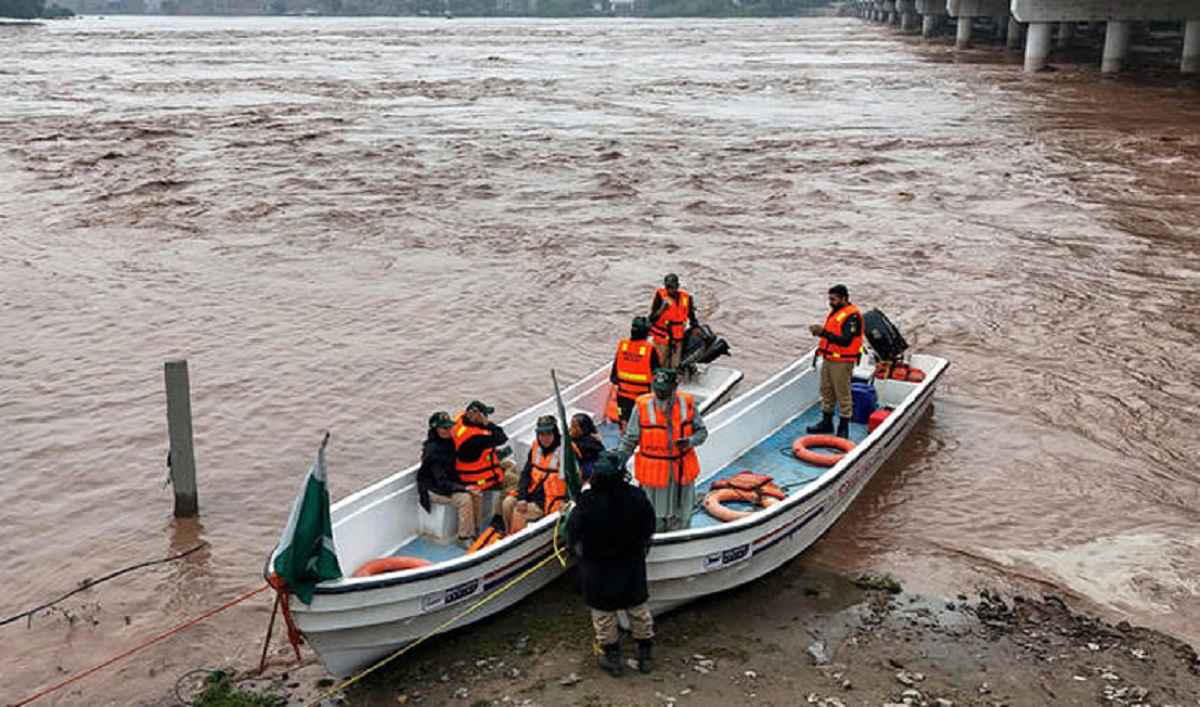
Drones deployed in Punjab to save stranded families amid record floods.
Breaking Now:Pakistan’s Punjab province is facing its worst flooding in decades, leaving families stranded on rooftops as relentless monsoon rains and dam water releases from India swell rivers to record highs. With over 900,000 people already evacuated, officials are now turning to drone technology to save lives. But the true scale of this catastrophe is only just emerging…
Punjab, Pakistan, hit by record floods due to monsoon rains & dam water releases.
900,000+ people evacuated; thousands still trapped in submerged villages.
Drones deployed for rescue and real-time mapping of disaster zones.
Thousands of homes destroyed; crops and livestock losses worsening food security.
Humanitarian crisis unfolding — displaced families in urgent need of shelter & aid.
A Human Story Behind the Headlines
When dawn broke over Punjab’s flood-ravaged plains, villagers in Muzaffargarh clung to whatever pieces of land were still above water. Mothers held children tightly as helicopters roared overhead, dropping food parcels. Boats ferried the sick and elderly through what were once bustling markets, now swallowed by muddy floodwaters.
The scene is heartbreaking, yet tragically familiar. Every monsoon season, Pakistan braces for heavy rains — but this year’s disaster is unlike anything in recent memory.
Why Punjab Is Drowning
Experts say the perfect storm of climate change, extreme monsoons, and upstream dam releases from India triggered the crisis. The Sutlej and Ravi rivers have breached multiple banks, forcing entire towns to flee overnight.
Officials confirmed over 900,000 evacuations so far, but ground reports suggest many more remain stranded without access to clean water or electricity.
Technology Meets Tragedy — The Drone Lifeline
For the first time in a major disaster in Pakistan, drones are being deployed at scale.
Thermal drones scan floodwaters at night to locate stranded families.
Mapping drones provide real-time imagery for military and civilian rescuers.
Supply drones deliver emergency kits to areas boats and helicopters can’t reach.
Officials say drones have already helped rescue over 5,000 people in the last 48 hours, proving to be a game-changer in disaster response.
The Humanitarian Crisis
Entire farming communities have lost crops, cattle, and livelihoods. With thousands of acres of agricultural land destroyed, food shortages are already hitting relief camps.
“I watched my home sink into the water,” said Rashida Bibi, a mother of four from Bahawalpur. “We left with nothing but the clothes on our backs. If not for the rescue boat, we wouldn’t be alive.”
UN agencies warn that the displacement crisis could worsen, especially for women and children, who make up the majority of evacuees.
The Global Climate Warning
This disaster is not just Pakistan’s tragedy — it’s a stark reminder of the global climate emergency. Punjab’s floods mirror similar catastrophes in Bangladesh, India, and China, where extreme monsoons are breaking records.
Climate scientists warn:
Glacier melt + erratic monsoons = more mega-floods ahead.
South Asia could face climate migration on a massive scale.
International cooperation is vital, especially regarding dam water releases.
FAQs
Q1: Why are the floods in Punjab so severe this year? A: Heavy monsoon rains combined with dam water releases from India have swelled rivers beyond capacity, submerging towns and villages.
Q2: How many people have been affected so far? A: Over 900,000 people have been evacuated, with millions indirectly affected due to crop and infrastructure loss.
Q3: Are drones really helping in the rescue? A: Yes, drones are being used for mapping, locating stranded victims, and delivering emergency supplies in hard-to-reach areas.
Q4: What happens next for the victims? A: Relief camps, food aid, and international assistance will be critical. Long-term, climate adaptation and river management policies must change.
This is not just Punjab’s story — it’s a warning for the world. As climate change intensifies, disasters like this will only grow.
What do you think should be done to prevent such tragedies in the future? Comment below and share this story to raise awareness.
Explore more updates on our News and Meteorological Insights categories.
Hello! I'm M Muzamil Shami, the founder and lead editor of Star Struck Times, your trusted source for trending news, entertainment scoops, celebrity gossip, sports highlights, and global headlines.
With a passion for storytelling and journalism, I created this platform to bring you breaking news, viral moments, and deep insights into the worlds of Bollywood, Hollywood, sports, politics, tech, and more — all in one place.