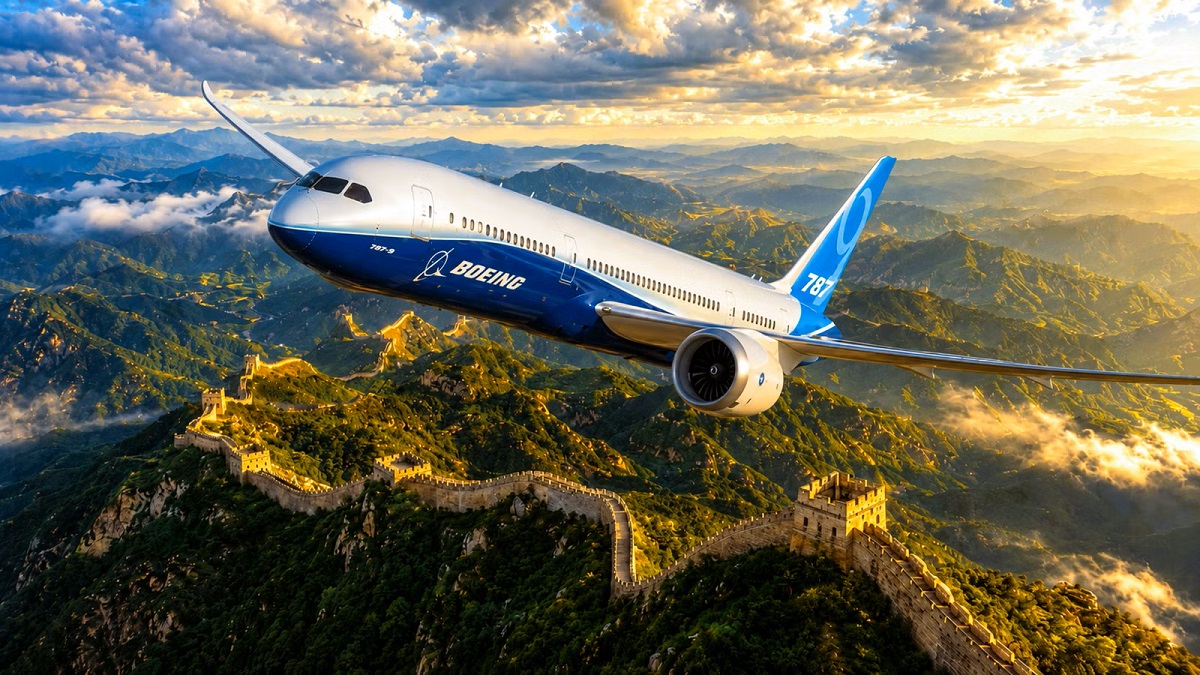
Beijing, China, May 16, 2026 — Star Struck Times
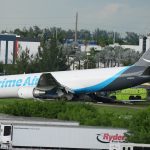
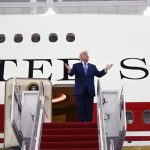
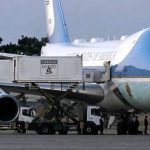
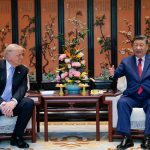
An industrial breakthrough has emerged from the high-stakes diplomatic summit in East Asia. US President Donald Trump announced on Friday that the Chinese government has officially agreed to purchase more than 200 American commercial aircraft powered by GE Aerospace engines. Speaking to reporters aboard Air Force One following his two-day bilateral meeting with Chinese President Xi Jinping, Trump heralded the multi-billion-dollar transaction as a structural renaissance for American manufacturing.
However, beneath the political triumphalism, a stark disconnect has materialized on Wall Street, where industrial stocks tumbled sharply in the wake of the announcement. To explore how parallel defense adjustments are complicating these financial breakthroughs, readers can review our real-time regional analysis on the World News category.

Key Highlights
- The Announcement: US President Donald Trump confirmed that Beijing has placed an initial order for roughly 200 Boeing commercial jets, marking the company’s first major breakthrough in the Chinese market since 2017.
- The Scale: Trump signaled that the broader framework includes a tentative political commitment that could eventually balloon to 750 aircraft if long-term trade relations normalize.
- The Engine Component: The fleet expansion will directly benefit GE Aerospace, with Chairman and CEO H. Lawrence Culp confirming plans to supply 400 to 450 jet engines to power the incoming Chinese fleet.
- The Market Whiplash: Despite the historic headline, Boeing shares slid 4.7% during New York trading as institutional investors reacted to a missed “mega-order” projection.
Inside the Trade Breakthrough: Reopening the Chinese Aviation Corridor
The newly minted aviation agreement represents a vital commercial pivot for the American aerospace sector, which has been largely starved of Chinese capital for nearly a decade. Prior to the onset of systemic trade wars and the global grounding of the 737 MAX platform, China historically absorbed roughly one-third of all commercial aircraft manufactured in Washington state.
According to an official statement released by Boeing late Friday, the company accomplished its primary tactical goal for the Beijing summit: reopening a critical commercial pipeline. Boeing CEO Kelly Ortberg, who accompanied the president alongside an elite contingent of American corporate executives, had previously informed institutional investors that any stable commercial resolution with President Xi Jinping would serve as a meaningful operational opportunity for the company.
Financial analysts at investment firms estimate the baseline market value of the confirmed 200-aircraft commitment to rest between $17 billion and $19 billion. The final valuation remains fluid, heavily dependent on the specific ratio of single-aisle 737 MAX jets to widebody 777 and 787 Dreamliner variants.
What Other Reports Missed: The Secret Whispers and Wall Street’s Disappointment
While mainstream financial networks are framing the transaction as a pure victory for Washington’s trade representatives, a deeper investigation reveals why institutional investors executed an immediate sell-off. On the eve of the summit, prominent investment banking analysts at Jefferies disclosed that behind-the-scenes negotiations were actually centered on a massive “mega-order” encompassing up to 500 firm aircraft orders and an additional 250 options.
By finalizing a concrete baseline of only 200 units, the actual immediate order volume fell short of the aggressive targets baked into pre-summit options trading. This programmatic disappointment caused Boeing shares to plunge 4.7% on Thursday, with an additional 0.9% drop extending into pre-market trading on Friday.
Furthermore, global macro-analysts note that the Chinese state-backed manufacturer, COMAC, has quietly suffered massive assembly delays with its domestic C919 aircraft due to persistent titanium supply constraints. Beijing’s sudden willingness to return to the American aerospace market is not merely a diplomatic concession to Trump; it is a calculated operational necessity to prevent China’s internal aviation infrastructure from hitting a hard capacity ceiling by 2028.
The Strategic Windfall for GE Aerospace and US Labor
Beyond the fuselage assembly lines, the secondary economic winner of the bilateral summit is GE Aerospace. Under the parameters detailed by the White House, the incoming Chinese fleet will be powered exclusively by American-made propulsion systems, translating to an immediate manufacturing order of 400 to 450 commercial jet engines.

Trump emphasized this dynamic during a televised address, stating:
“We have achieved fantastic trade deals, including over 200 planes for Boeing with a clear path toward 750 total aircraft. If they execute effectively on this initial batch, it will transform into the largest industrial order in global history. And that means billions for General Electric for the engines, securing thousands of high-wage jobs in America’s industrial heartland.”
The agreement serves as an essential stabilizer for the US manufacturing base following a tumultuous period marked by an intense eight-week machinists’ strike that paralyzed narrowbody assembly lines throughout the Pacific Northwest.
Geopolitical Friction and Public Skepticism
Despite the absolute scale of the commercial figures being reported, seasoned foreign policy analysts advise viewing the announcements with a degree of caution. Historically, Chinese state airlines execute aircraft purchases via centralized government buying agencies, allowing Beijing to slow down or completely freeze actual deliveries if geopolitical tensions over regional security flare up.
Bonnie Glaser, managing director of the Indo-Pacific program at the German Marshall Fund, highlighted the underlying fragility of the agreement during a media briefing:
“The broader summit has concluded with an intense layer of structural uncertainty. Outside of the aerospace declarations and a parallel 25-million-tonne soybean purchasing framework, the Chinese state apparatus has remained remarkably quiet. We have yet to see matching public confirmations from Beijing’s foreign ministry regarding long-term tariff reliefs or modifications to technology export controls.”
Public reactions across financial forums reflected a similar split between industrial optimism and geopolitical realism:
- “A 200-plane order is a massive lifesaver for American manufacturing jobs, but let’s see how many of these jets are actually flying in Chinese airspace before we celebrate,” observed one market strategist on LinkedIn.
- “The market dropped because the whisper numbers were expecting a historic 500-plane sweep. The actual deal shows Xi Jinping is still holding his cards very close to his chest,” noted a prominent day trader on X.
What Happens Next
As President Trump’s delegation returns to Washington, trade officials under US Trade Representative Jamieson Greer are scheduled to begin technical consultations with their Chinese counterparts to finalize the delivery timelines and model configurations for the first tranche of 200 aircraft. Concurrently, the US Treasury Department will begin exploring the creation of a specialized bilateral board to monitor non-sensitive corporate investments. However, the true test of this trade truce will manifest over the next three years, during which Washington expects Beijing to expand its purchases of American agricultural goods, liquefied natural gas, and oil by double-digit billions. Any escalation in regional maritime security could instantly freeze this fragile economic bridge.
Frequently Asked Questions
Why did Boeing shares fall if China agreed to buy 200 planes?
Wall Street investors had priced in a much larger “mega-order” of up to 500 aircraft based on pre-summit banking analyses from institutional firms like Jefferies. When the official initial commitment was capped at 200 planes, disappointed traders triggered an immediate 4.7% stock sell-off.
When was the last time China placed a major aircraft order with Boeing?
The last significant commercial aviation agreement between Beijing and Boeing occurred in November 2017 during Donald Trump’s first presidential term, when China signed an intent to purchase 300 aircraft valued at approximately $37 billion.
Which American companies benefit directly from this trade agreement?
The two primary corporate beneficiaries are Boeing, which secures a vital reentry into the world’s fastest-growing aviation market, and GE Aerospace, which is slated to manufacture and supply 400 to 450 commercial jet engines to power the new fleet.
Is the 750-aircraft figure confirmed by the Chinese government?
No. The 750-aircraft figure represents a long-term potential maximum outlined by President Trump based on verbal understandings. The Chinese Foreign Ministry has notably withheld explicit public confirmation of the long-term options, leaving the definitive order at 200 jets.
Why is China returning to Boeing instead of buying domestic COMAC planes?
While China continues to develop its domestic COMAC C919 aircraft, the state-backed program faces severe production delays and structural bottlenecks. To meet surging domestic travel demands that require nearly 9,000 new planes by 2045, China must continue sourcing hulls from global giants like Boeing and Airbus.
Sources
- The Associated Press Business Wire: https://apnews.com
- The Financial Times Market Reports: https://www.ft.com
- Reuters Global News Service: https://www.reuters.com
- The Diplomatic Insight News Desk: https://thediplomaticinsight.com