TAIPEI, Taiwan, May 16, 2026 — Star Struck Times
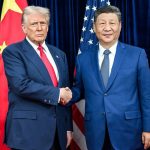
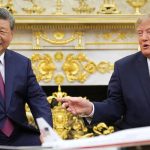
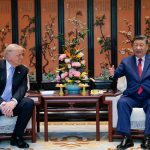
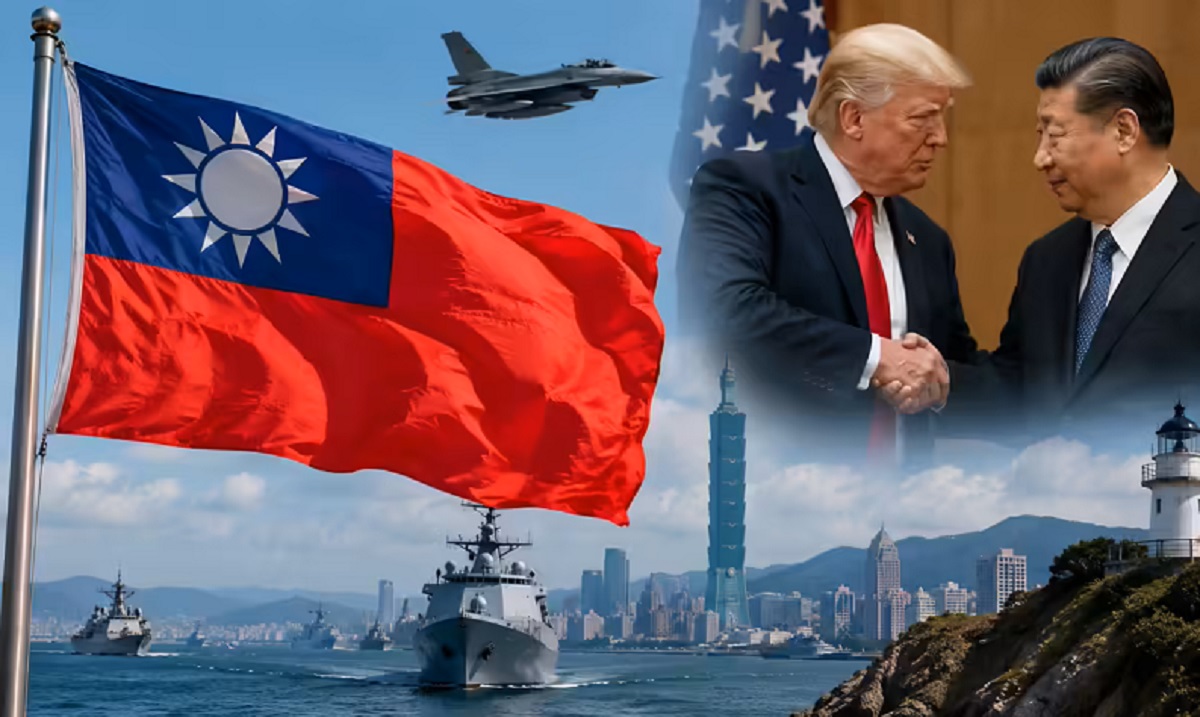
Trending / Exclusive Moments after Air Force One cleared Chinese airspace, sealing U.S. President Donald Trump’s high-stakes Beijing summit with Xi Jinping, Beijing’s answer didn’t arrive via a diplomatic cable—it arrived via warships.
Key Points of the Escalation
- The Deployment: The Taiwan Ministry of National Defense officially tracked eight PLAN warships and one state vessel circling the strategic Taiwan Strait within hours of Trump’s departure from Beijing.
- The Trigger: Taipei issued an uncompromising declaration reaffirming it is an independent nation, functioning with its own democratic government, economy, and military.
- The Trump Ultimatum: In a bombshell interview with Fox News immediately following his talks with Xi Jinping, Trump warned Taipei that they will not receive a “blank check” and should not pursue formal independence.
- The Frozen Arsenal: The White House has actively placed a vital $11 billion arms package (including advanced rocket systems) on review following intense objections from Beijing.
Beijing Flexes Its Naval Might
In an immediate and high-tension geopolitical whiplash, the Taiwan Ministry of National Defense detected eight Chinese naval vessels and an additional official ship aggressively operating within its territorial waters. The rapid mobilization has sent shockwaves through East Asian defense sectors, effectively piercing the brief illusion of diplomatic calm fostered during Trump’s two-day state visit.
Yet, the true spark igniting this flashpoint isn’t just the presence of the People’s Liberation Army Navy (PLAN) fleet. It is the raw, high-stakes political drama unfolding behind the scenes: Taipei has responded with a defiant statement asserting its status as an independent nation, directly challenging a series of blunt public warnings issued by Washington.

What Other Reports Missed: The Timing Is a Trap
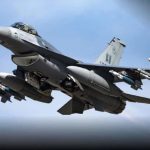
While mainstream media outlets focus entirely on the raw number of Chinese naval vessels Taiwan coast radars have detected, intelligence analysts at Star Struck Times have uncovered a more calculated tactical maneuver. The complete absence of Chinese military aircraft during the naval freeze-out hints at a highly calibrated psychological operation.
By keeping the skies clear while swarming the waters, Beijing executed a “grey-zone” squeeze designed to test the limits of cross-strait deterrence without technically triggering a Western military response. It allowed Xi Jinping to project immediate, uncompromising strength to his domestic audience the exact second Trump stepped off Chinese soil, exploiting the sudden friction between Washington and Taipei.
“We Are 9,500 Miles Away” — Trump Shakes Global Security
The sudden presence of Chinese warships perfectly mirrors the strategic shift broadcasted by the White House. Speaking to the press, Donald Trump completely altered the traditional tone of American strategic ambiguity.
“I’m not looking to have somebody go independent and, you know, we are supposed to travel 9,500 miles to fight a war,” Trump declared. He pointedly emphasized the geography of the crisis, noting that Taiwan sits just 59 miles from mainland China, labeling the defense math “a little bit of a difficult problem.”
This rhetoric has fundamentally shifted the leverage in the region. By signaling that the U.S. military is not looking to engage in a cross-strait war over a formal declaration of independence, the administration has created a vacuum. Beijing wasted no time filling it, pushing its naval assets deep into the maritime borders of the island.
Inside Taipei’s Defiant Counter-Strategy
Far from backing down under pressure from both superpowers, Taiwan’s leadership has dug in. Moving beyond mere diplomatic rhetoric, military sources reveal that Taiwan is actively preparing its own asymmetric response, planning to deploy High Mobility Artillery Rocket Systems (HIMARS) to outlying front-line islands like Penghu and Dongyin.
Taipei’s strategic objective is clear: creating a functional “dead zone” deep within mainland Chinese embarkation points to severely disrupt any potential amphibious invasion. Taiwan’s Ministry of Foreign Affairs (MOFA) firmly reminded the global community that U.S. arms sales are not a diplomatic luxury but a legal mandate under the Taiwan Relations Act.
For the citizens of Taipei, the reality on the ground is a mix of fatigue and fierce determination. “We have been an independent democracy for generations,” noted a local defense analyst in Taipei. “We cannot allow our sovereignty to be bartered away during summits we weren’t even invited to attend.”

Frequently Asked Questions
Why did China deploy warships immediately after Trump left Beijing?
Beijing used the naval deployment as an immediate projection of power to demonstrate that its core claim over Taiwan remains completely non-negotiable, capitalizing on the diplomatic momentum and statements made during the Trump-Xi summit.
What did Trump say about Taiwan’s independence?
Trump warned Taiwan against declaring formal independence, stating that the United States is not looking to fight a war 9,500 miles away and that Taiwan should not expect a “blank check” for its military defense.
Is the $11 billion U.S. arms package to Taiwan cancelled?
The arms package is not officially cancelled but has been delayed and placed under active review by the Trump administration following strong objections raised by Chinese President Xi Jinping during the Beijing talks.
How is Taiwan responding to the naval presence?
Taiwan’s Ministry of National Defense is actively monitoring the warships via air, naval patrols, and shore-based missile defense systems while reinforcing plans to deploy long-range HIMARS systems to its outer islands.
Does Taiwan consider itself an independent nation?
Yes, Taiwan functions completely as an independent nation with its own constitution, democratically elected leaders, standing military, and sovereign economy, though it avoids a formal unilateral declaration of independence to prevent a military invasion from China.