Over 2 million displaced as Punjab suffers worst floods in history
Breaking Now: Pakistan’s Punjab province is drowning under historic floods, the worst in its history. With over 2 million people displaced, heartbreaking scenes of submerged villages and families clinging to rooftops have shocked the world. Experts warn this tragedy is a brutal reminder of climate change’s deadly grip on South Asia. But the question everyone is asking: Can Pakistan withstand another disaster of this scale?
Over 2 million people displaced by historic floods in Punjab.
Experts link disaster to climate change and extreme weather.
Relief efforts face challenges due to destroyed infrastructure.
Punjab Floods 2025: The Climate Catastrophe That Shook Pakistan
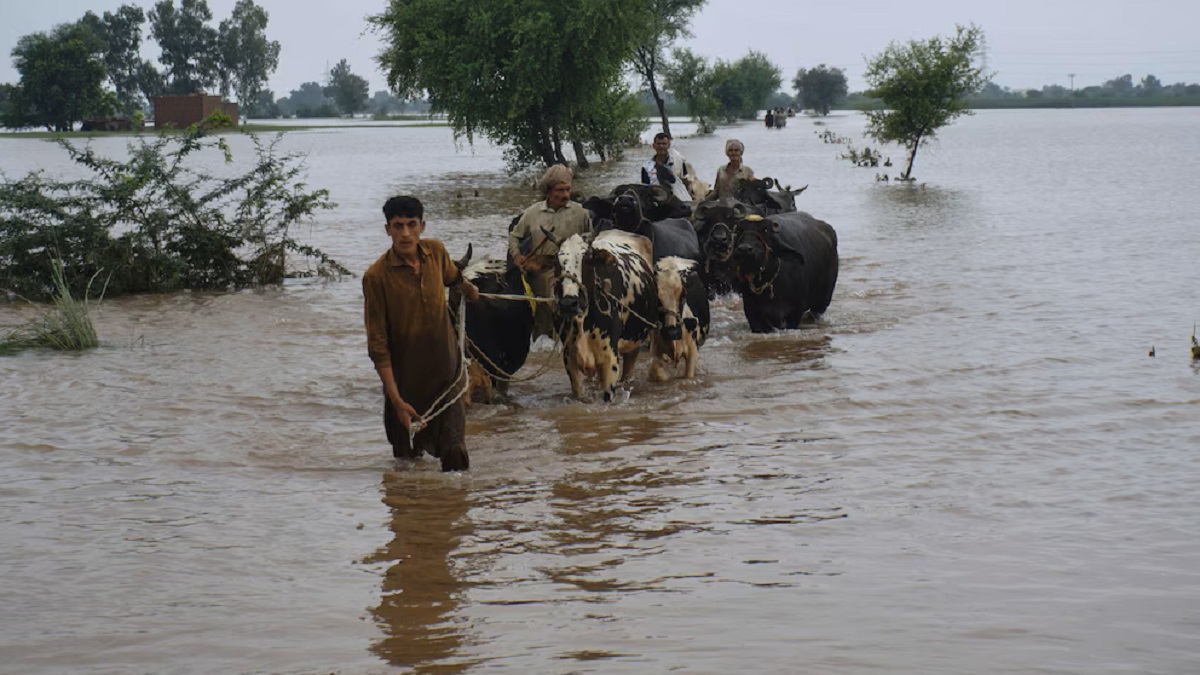
The images are haunting. Fields once lush with wheat and rice now resemble oceans. Families wade through waist-deep water, clutching children, livestock, and whatever little they could save. Roads have disappeared, homes lie in ruins, and entire villages are marooned.
Pakistan’s Punjab province is experiencing its worst floods in recorded history, with over 2 million people displaced and countless lives upended. Officials and climate scientists point to extreme weather patterns fueled by climate change as the culprit behind this humanitarian catastrophe.
The Unprecedented Scale of Destruction
For decades, Punjab has been called the breadbasket of Pakistan. Today, much of that breadbasket is underwater.
Rivers like the Chenab, Ravi, and Sutlej have swelled beyond limits, breaking embankments.
Lahore, Multan, Faisalabad, and rural belts are reeling under floodwater.
More than 400,000 homes have been damaged or destroyed.
Critical infrastructure — schools, bridges, hospitals — lies in shambles.
The Pakistan Meteorological Department reported rainfall 300% above normal levels, calling it an “unprecedented climate anomaly.”
Voices from the Ground: Stories of Survival and Loss
In southern Punjab’s Rajanpur district, 60-year-old farmer Bashir Ahmed stared helplessly at what used to be his land. “My fields are gone. My house is gone. Even the graves of my ancestors are gone,” he said, tears streaming down his face.
In Lahore, volunteer rescue teams pulled dozens of families from rooftops after water submerged entire streets overnight. Mothers cradled babies wrapped in plastic sheets to protect them from rain.
“Every hour feels like we’re fighting for our lives,” said Ayesha, a teacher in Multan, who sheltered 30 neighbors in her two-room house.
Why This Flood Is Different: The Climate Connection
Pakistan has long been vulnerable to monsoon floods, but scientists stress that this disaster is not normal.
Warmer air holds more moisture, fueling heavier rains.
Melting Himalayan glaciers are dumping more water into rivers.
Poor infrastructure and unchecked urbanization worsened the impact.
Dr. Saadia Khan, a climate expert from Islamabad, noted:
“Punjab’s flooding is a wake-up call for the world. What we are witnessing is the face of climate change-fueled disasters — intense, frequent, and deadly.”
Economic and Social Toll: Billions Lost, Millions at Risk
The numbers are staggering.
Agricultural losses are expected to cross $5 billion, threatening Pakistan’s food security.
Inflation is projected to spike as crops like rice, sugarcane, and cotton are destroyed.
With 2 million displaced, the humanitarian crisis may rival the 2022 floods that submerged one-third of the country.
The government has declared a national emergency, calling for international aid. UN agencies, NGOs, and neighboring countries are mobilizing resources, but relief efforts are hampered by broken roads and rising waters.
Celebrity and Political Response: A Global Spotlight on Punjab
The tragedy has not gone unnoticed.
Pakistani cricketers like Babar Azam and Shaheen Afridi have launched fundraising campaigns.
Bollywood actor Shah Rukh Khan tweeted solidarity, urging international support.
Social media is flooded with images under the hashtag #PrayForPunjab, with millions of shares worldwide.
Prime Minister Shehbaz Sharif, standing in waist-deep water during a rescue visit, declared:
“This is not just Punjab’s crisis. This is Pakistan’s fight for survival in the era of climate change.”
FAQs
Q1: Why are Punjab floods 2025 called historic? Because river levels reached unprecedented heights, displacing over 2 million people — the worst in Pakistan’s recorded history.
Q2: How is climate change linked to these floods? Climate change intensified monsoon rains and glacier melt, overwhelming river systems and triggering the disaster.
Q3: What areas of Punjab are most affected? Districts like Rajanpur, Multan, Faisalabad, and parts of Lahore are among the hardest hit.
Q4: How can people help flood victims? Donations to verified NGOs, volunteering for local rescue missions, and amplifying awareness through social media.
Pakistan’s tragedy is a global warning. Do you believe world leaders are doing enough to combat climate change before disasters like this become the new normal?
Share your thoughts in the comments and join the conversation.
Hello! I'm M Muzamil Shami, the founder and lead editor of Star Struck Times, your trusted source for trending news, entertainment scoops, celebrity gossip, sports highlights, and global headlines.
With a passion for storytelling and journalism, I created this platform to bring you breaking news, viral moments, and deep insights into the worlds of Bollywood, Hollywood, sports, politics, tech, and more — all in one place.