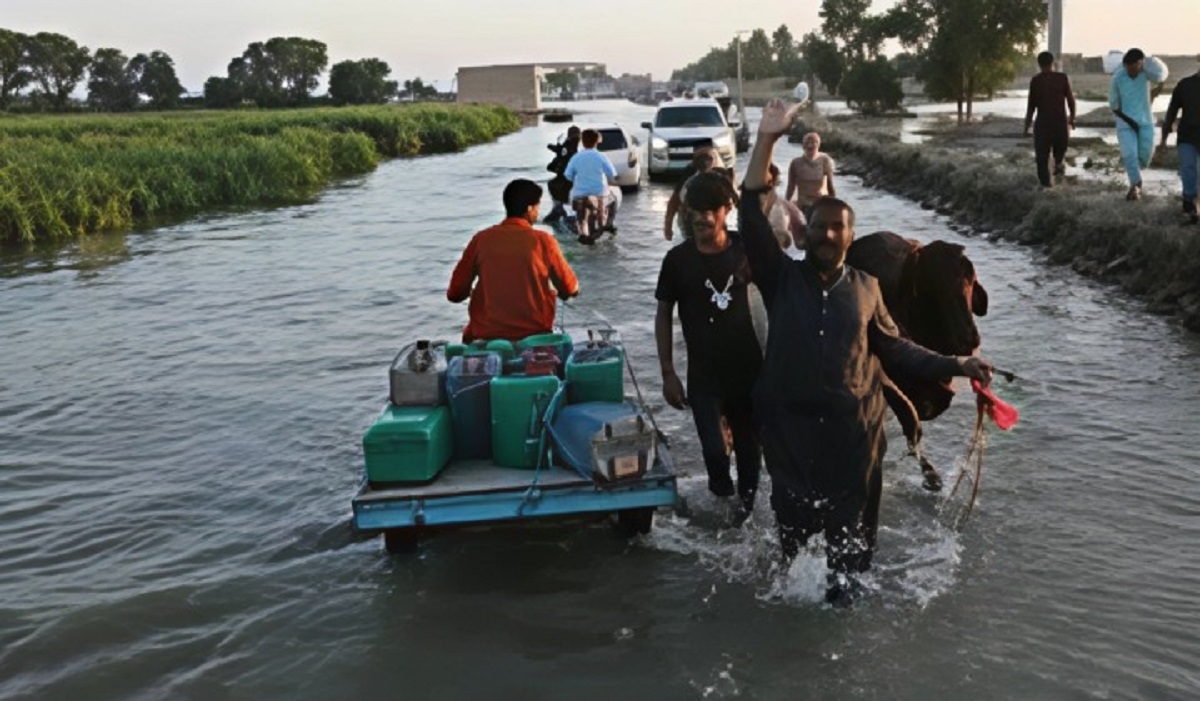
Families return home as floodwaters recede in Punjab after weeks of devastation.
As floodwaters finally recede in Pakistan’s Punjab province, a wave of cautious hope sweeps across the region. After weeks of monsoon rains and water releases from Indian dams that displaced nearly 2.5 million people and claimed 100 lives, families are now beginning to return home — faced with heartbreak, resilience, and the challenge of rebuilding.
Key Points
Floodwaters recede in eastern Punjab after weeks of monsoon devastation.
2.5 million displaced, nearly 100 lives lost amid overflowing rivers.
Water releases from Indian dams worsened flooding in Punjab villages.
Families return home to rebuild as aid teams provide urgent relief.
Emotional tributes pour in for victims, with calls for stronger flood defenses.
Punjab Floodwaters Recede: Hope After Devastation
LAHORE (Star Struck Times) — After weeks of relentless monsoon rains and overflowing rivers, floodwaters have finally begun to recede across Pakistan’s eastern Punjab province. The catastrophe, worsened by water releases from Indian dams, displaced nearly 2.5 million residents and claimed around 100 lives.
Now, with waters retreating, families are cautiously returning to their homes, facing the daunting task of rebuilding lives destroyed by nature’s fury.
“We lost everything, but at least we are alive. That is what gives us hope,” said Muhammad Aslam, a farmer from Kasur, as he returned to his damaged home.
Humanitarian Aid and Relief Efforts in Punjab
Relief teams, both government-led and international, are working tirelessly to deliver food, medicine, and temporary shelter to flood-hit areas. Officials confirm that while rescue operations are winding down, the focus has now shifted to rehabilitation.
Local charities and NGOs are appealing for more donations, citing shortages of clean drinking water and medicines. Social media has amplified these appeals, with hashtags like #PrayForPunjab trending across platforms.
Emotional Tributes and National Response
The floods have sparked an emotional outpouring across Pakistan. Celebrities and politicians have shared heartfelt tributes, urging unity.
“This tragedy reminds us of our resilience. Punjab will rise again, stronger,” tweeted actor Humayun Saeed.
The Prime Minister’s Office has also promised improved flood control measures, including better early warning systems and embankment reinforcements.
The Road Ahead for Flood Victims
Although the waters are receding, experts warn that post-flood diseases like dengue and cholera could spread if sanitation is not urgently addressed. Families are rebuilding homes with mud and brick, while many remain dependent on relief camps.
The Punjab government has vowed to compensate victims, but residents fear the aid will not be enough to cover massive agricultural and housing losses.
FAQs
Q1: What caused the floods in Punjab? Heavy monsoon rains combined with water releases from Indian dams led to overflowing rivers and widespread flooding.
Q2: How many people were affected? Approximately 2.5 million people were displaced, with nearly 100 fatalities reported.
Q3: What relief measures are being taken? The government, NGOs, and international aid groups are providing food, water, medical aid, and temporary shelters, while rehabilitation programs are being planned.
As Punjab slowly dries up, stories of survival and resilience emerge from villages that were once submerged. Yet, the tragedy highlights Pakistan’s vulnerability to climate change and cross-border water management issues.
Do you think Pakistan needs stronger climate defense strategies to prevent such disasters in the future? Share your thoughts below!
Hello! I'm M Muzamil Shami, the founder and lead editor of Star Struck Times, your trusted source for trending news, entertainment scoops, celebrity gossip, sports highlights, and global headlines.
With a passion for storytelling and journalism, I created this platform to bring you breaking news, viral moments, and deep insights into the worlds of Bollywood, Hollywood, sports, politics, tech, and more — all in one place.






Can you be more specific about the content of your article? After reading it, I still have some doubts. Hope you can help me. https://accounts.binance.bh/zh-CN/register-person?ref=DCKLL1YD
Your point of view caught my eye and was very interesting. Thanks. I have a question for you. https://www.binance.bh/futures/ref?code=IXBIAFVY