


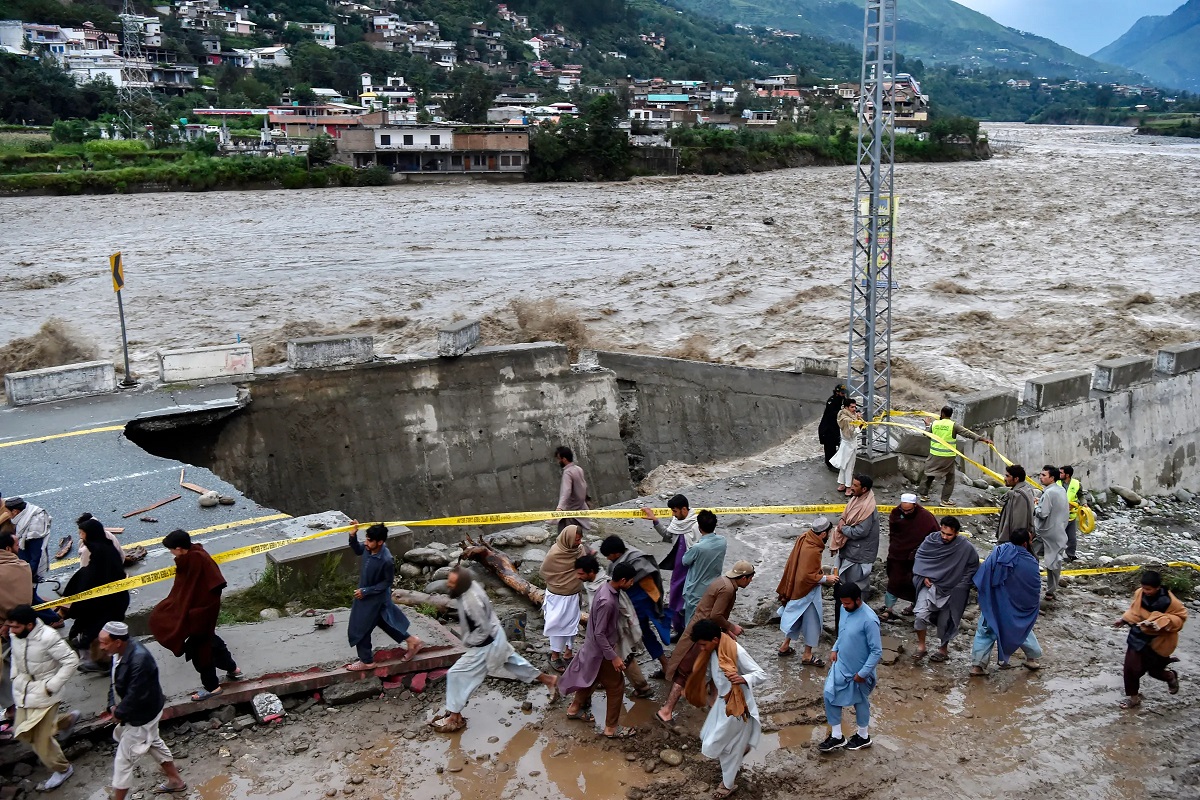
Breaking Now — Pakistan floods 2025 have submerged 1.8 million acres of farmland, destroyed factories, and sparked health crises with cholera fears. Meanwhile, parts of the country still battle a relentless heatwave. Can Pakistan recover from this dual disaster?
- Record monsoon rains and Indian dam releases have caused massive flooding in Punjab & Sindh.
- Over 1.8 million acres of farmland submerged, destroying crops and exports.
- Factories across flood-hit regions face heavy losses, threatening Pakistan’s fragile economy.
- Health crisis emerges with rising cases of cholera, diarrhea, and waterborne diseases.
- Despite floods, the meteorological office forecasts hot and dry conditions, raising fresh challenges.
Introduction: A Nation Under Water and Heat
Islamabad (Star Struck Times) — Pakistan is reeling from one of its worst climate double blows in decades: devastating floods and a punishing heatwave. In Punjab and Sindh, swollen rivers, relentless monsoon rains, and dam releases from across the Indian border have swallowed fields and factories alike. At the same time, meteorologists warn that much of the country remains under a blanket of scorching heat, with temperatures soaring past 40°C in several cities.
This is more than just a weather event — it’s a humanitarian, economic, and political crisis that has shaken millions of families.

Crops and Factories Drowned: The Economic Toll
According to Reuters, more than 1.8 million acres of farmland now lie under water, leaving farmers in despair. “I’ve lost my entire season’s crop,” a cotton farmer from Sindh lamented, staring at fields that had turned into vast lakes. Wheat, rice, and cotton — Pakistan’s agricultural backbone — are among the worst hit, threatening food supplies and export revenues.
Factories in industrial belts of Punjab have also been inundated. Many small manufacturers report machinery losses running into millions. With Pakistan already struggling under IMF conditions, inflationary pressure and unemployment fears loom large.
Health Crisis: Cholera Fears Rising
Al Jazeera reports that the disaster is not confined to property and crops. Waterborne diseases, especially cholera, have started spreading in flood-hit regions. Displaced families, many crowded into makeshift camps, lack access to clean water and proper sanitation.
“If urgent action isn’t taken, we could see a public health emergency worse than 2022, when Pakistan faced record monsoon deaths,” warned a senior doctor in Karachi.
Children and the elderly remain the most vulnerable, and aid agencies are calling for immediate medical interventions, clean water supplies, and vaccination campaigns.
Heatwave Adds Insult to Injury
While central Pakistan drowns, other regions are baking. The National Weather Forecasting Center (NWFC) has confirmed that much of Pakistan will continue to see hot and dry conditions this week. In Dalbandin, Bhakkar, and Sibbi, maximum temperatures hit 40–41°C, intensifying pressure on flood survivors.
Ironically, heat and evaporation could ease flooding in some areas but worsen health risks by breeding more disease vectors.
Expert Opinions: Climate Crisis in Action
Climate experts believe this disaster is another stark reminder of South Asia’s vulnerability. A meteorologist noted:

“Pakistan is trapped between two extremes — sudden floods and scorching droughts. Unless climate adaptation is prioritized, these cycles will only worsen.”
Economists add that damage to crops and exports may shave off 1–1.5% of Pakistan’s GDP this year, while recovery costs could exceed $2 billion.
Background: Echoes of 2022’s Floods
This crisis brings back painful memories of the 2022 super floods, which killed more than 1,700 people and caused damages worth $30 billion. While Pakistan has since set up flood warning systems, critics argue that implementation has been weak, with poor dam management and urban planning failures aggravating today’s disaster.
Conclusion: The Road Ahead
Pakistan now faces a dual challenge: saving lives in the immediate crisis while preventing long-term collapse in food and economic security. Relief operations are underway, but many say the country must also focus on climate resilience, disaster-proof infrastructure, and international aid.
For ordinary Pakistanis, the question remains: how much more can they endure?
Pakistan Weather Snapshot (Sep 23, 2025)
| Region | Flood Impact | Temp (°C) | Forecast |
|---|---|---|---|
| Punjab (South) | Severe | 38–40 | Hot & Dry |
| Sindh (North) | Severe | 39–41 | Hot & Dry |
| Karachi | Moderate | 35–37 | Humid & Hot |
| Balochistan | Mild | 40–41 | Hot & Dry |
| KPK/North | Low | 25–28 | Partly Cloudy |
FAQs
Q1: How much farmland has been lost in Pakistan floods 2025?
Over 1.8 million acres of farmland have been submerged, threatening food security and exports.
Q2: Which diseases are spreading after floods?
Authorities fear outbreaks of cholera, diarrhea, and waterborne infections, especially in camps.
Q3: Are parts of Pakistan still facing a heatwave?
Yes. Despite flooding, many regions continue to see temperatures above 40°C.
Q4: How does this compare to 2022 floods?
The 2025 floods are smaller in scale but still devastating, with damages already in the billions of dollars.
What are your thoughts on Pakistan’s dual disaster — floods and heatwave?
Share your opinions in the comments below.
Stay updated with Star Struck Times for the latest on climate, politics, and breaking global news.
Follow us now so you never miss a trending story!
References / Further Reading
- Reuters — Pakistan Floods & Economic Impact
- Al Jazeera — Pakistan Floods & Health Crisis
- Pakistan Meteorological Department (PMD)
- National Disaster Management Authority (NDMA) Pakistan
- World Health Organization (WHO) — Cholera & Flood Emergencies



Thank you for your sharing. I am worried that I lack creative ideas. It is your article that makes me full of hope. Thank you. But, I have a question, can you help me?
Thank you for your sharing. I am worried that I lack creative ideas. It is your article that makes me full of hope. Thank you. But, I have a question, can you help me? https://www.binance.com/register?ref=GGYHGRE