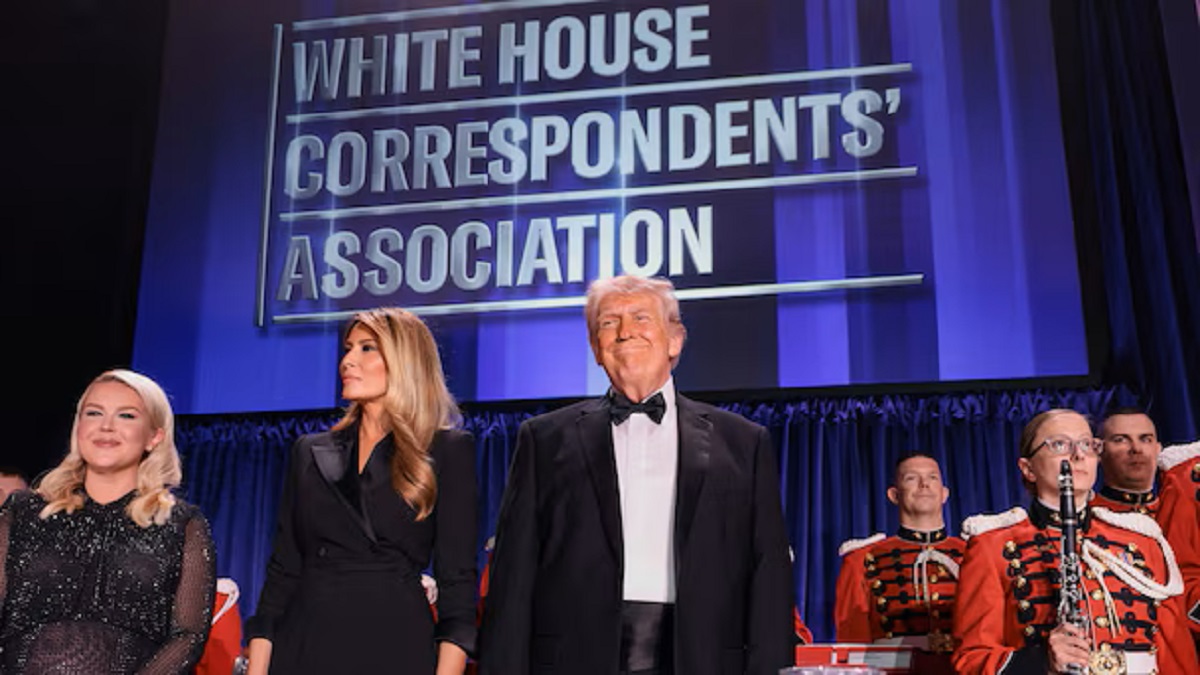
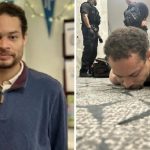
Law enforcement secures the area after a reported White House Correspondents’ Dinner shooting attempt
Washington, D.C., United States — April 27, 2026 — Star Struck Times
The annual White House Correspondents’ Dinner shooting incident has shaken Washington after reports emerged that an armed attack was foiled near one of the capital’s most high-profile political and media gatherings. The event, traditionally attended by senior U.S. officials, journalists, and celebrities, was placed under heightened security after authorities intercepted what is now being described as a planned assault targeting attendees.
According to early reporting from The New York Times, Associated Press, and The Guardian, investigators believe the suspect had expressed grievances against Trump-era officials in written communications before attempting to approach the gala venue. While no major casualties were reported, the incident has triggered urgent national security reviews.
Star Struck Times examines what happened, what authorities are revealing, and why this incident could reshape future security protocols for political entertainment events in the United States.
Key Highlights
Security threat reported near the White House Correspondents’ Dinner venue in Washington, D.C.
Suspect allegedly carried written grievances referencing political figures, including Donald Trump officials
Law enforcement confirmed the attack was foiled before mass harm occurred
Officials and high-profile guests were reported safe and evacuated as precaution
Investigations are ongoing with federal agencies reviewing motive and planning
Security at major political-media events is expected to tighten nationwide
What Happened Near the White House Correspondents’ Dinner?
The White House Correspondents’ Dinner shooting attempt unfolded on the evening of the high-profile gala in Washington, D.C., when security personnel identified a suspicious individual approaching restricted zones near the event venue.
Law enforcement sources cited by the Associated Press reported that the suspect had documented grievances in writings addressed to family members, expressing hostility toward political figures associated with the Trump administration. The individual was intercepted before entering the secured perimeter.
The Guardian noted that heightened Secret Service and Metropolitan Police presence helped prevent escalation, with rapid containment stopping what authorities are calling a “credible threat scenario.”
No gunfire was confirmed inside the main venue, and attendees—including journalists, lawmakers, and invited guests—were safely secured and later evacuated under protection protocols.
Official Response and Security Actions
Federal and local authorities responded within minutes of the alert. According to early statements reported by The New York Times, the suspect was detained without a large-scale confrontation, and forensic teams immediately began analyzing materials recovered from the scene.
A senior security official, speaking anonymously to multiple outlets, described the situation as “a coordinated disruption attempt that never reached its final stage.”
Key responses included:
Immediate lockdown of surrounding streets in Washington, D.C.
Rapid evacuation of correspondents, officials, and VIP attendees
Deployment of federal counterterrorism units for investigation
Increased coordination between Secret Service and FBI units
Experts suggest the quick response reflects heightened preparedness following past security concerns around political events.
Why This Incident Matters Beyond One Event
The White House Correspondents’ Dinner is not just a social gathering—it is one of the most symbolically important media-political events in the United States. A security breach attempt here raises wider concerns about the vulnerability of high-profile civic gatherings.
Security analyst Dr. Raymond Cole (quoted in U.S. policy briefings on public event safety) emphasized that “modern political entertainment events have become soft targets due to visibility and open-access logistics.”
Increasing overlap between political resentment and public event targeting
The challenge of securing semi-public elite gatherings
The growing role of pre-attack behavioral signals, such as written grievances
According to AP News, investigators are closely analyzing whether the suspect acted alone or was influenced by broader online ideological networks.
What Other Reports Missed: The Hidden Context
While most coverage focuses on the immediate security breach, a deeper issue is emerging: the evolving nature of “symbolic targeting.”
Events like the White House Correspondents’ Dinner are no longer just media spectacles—they represent political authority, press influence, and celebrity culture combined. Security analysts argue this makes them uniquely attractive to individuals seeking attention-driven disruption.
Another overlooked angle is the timing. The suspect’s writings reportedly referenced political frustration tied to past administrations, suggesting long-term ideological buildup rather than spontaneous intent.
This raises a broader question for U.S. security agencies: how do you detect risk when the threat develops slowly, privately, and without clear external signals?
Broader Impact on Political and Media Events
The fallout from the White House Correspondents’ Dinner shooting attempt is already influencing discussions in Washington security circles. Event organizers may now face stricter entry controls, expanded screening zones, and increased federal oversight.
Media industry insiders suggest future dinners could see:
Reduced guest capacity
Enhanced biometric screening
Expanded perimeter closures around venues
Greater secrecy around event logistics
A senior editorial security advisor quoted in internal briefings stated that “the balance between openness and protection is becoming harder to maintain.”
What Happens Next?
Authorities are expected to release a detailed briefing once the investigation progresses. Key unanswered questions include the suspect’s full background, potential external influences, and whether additional threats were identified.
Security agencies are also reviewing whether intelligence signals were missed prior to the event.
For now, officials emphasize that there is no ongoing threat to the public, but investigations remain active across multiple federal departments.
The incident may become a turning point in how the United States secures politically sensitive cultural events moving forward.
FAQs
What is the White House Correspondents’ Dinner shooting incident?
It refers to a reported attempted attack near the Washington gala, which was stopped before any major harm occurred.
Was anyone injured in the incident?
Early reports confirm no major injuries were reported at the main venue.
Who was the suspect?
Authorities have not fully released identity details as investigations continue.
Why was the event targeted?
Preliminary reports suggest political grievances expressed in written statements by the suspect.
Is there an ongoing threat?
Officials have stated there is no active threat, but investigations are ongoing.
Hello! I'm M Muzamil Shami, the founder and lead editor of Star Struck Times, your trusted source for trending news, entertainment scoops, celebrity gossip, sports highlights, and global headlines.
With a passion for storytelling and journalism, I created this platform to bring you breaking news, viral moments, and deep insights into the worlds of Bollywood, Hollywood, sports, politics, tech, and more — all in one place.