NASA’s bold 2030 lunar nuclear plan sparks debate and competition
Breaking Now — NASA stuns the world! The space agency has announced an audacious plan to put a nuclear reactor on the Moon by 2030, a move shaking up the global space race. With China and Russia racing to do the same, the stakes have never been higher. But there’s a twist — experts warn that choosing where to place the reactor could trigger legal disputes, environmental risks, and even geopolitical clashes. Is this the future of energy in space — or the start of a dangerous power struggle?
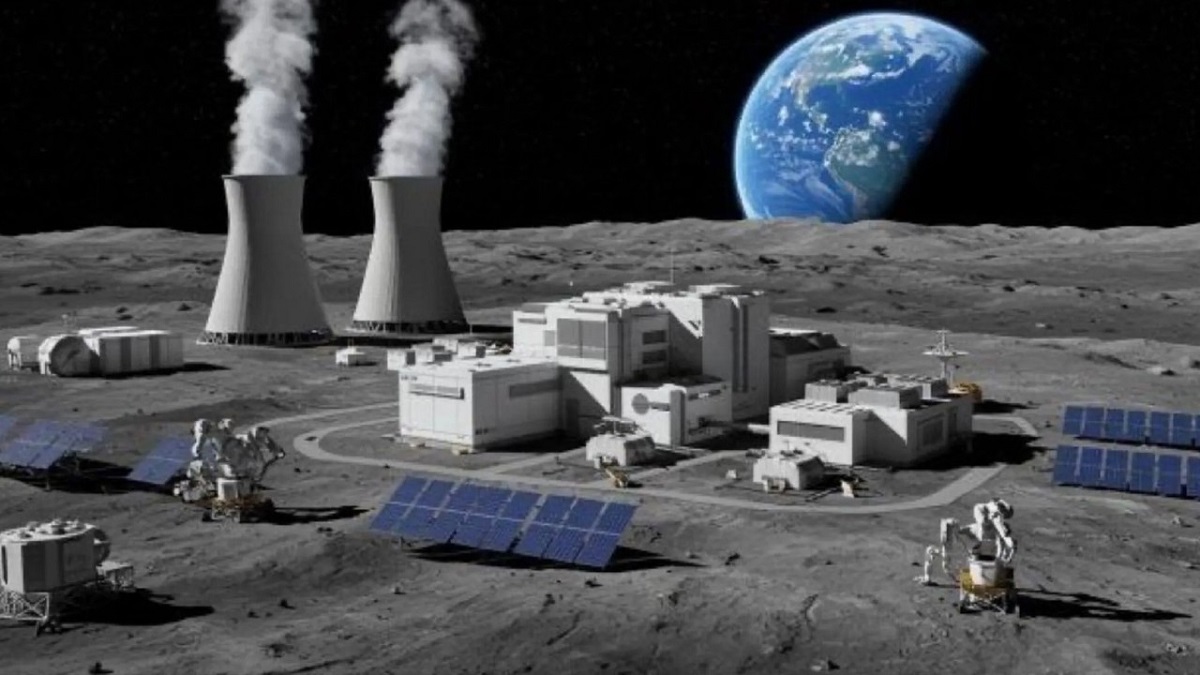
NASA plans to deploy a 100-kW nuclear reactor on the Moon by 2030.
The project is seen as strategic competition with China and Russia.
Legal experts warn of Outer Space Treaty violations.
Engineers face major challenges in site selection and safety.
Success could redefine space exploration and geopolitics.
The 2030 Mission That Could Change Everything
NASA’s nuclear reactor project isn’t science fiction — it’s a fully funded plan. By 2030, the U.S. aims to install a 100-kilowatt fission reactor on the lunar surface.
Why? Because solar panels can’t provide reliable energy during the two-week-long lunar nights. To power future bases, mining operations, and Mars-bound missions, a constant energy source is vital.
This project could mean America becomes the first nation to generate nuclear power beyond Earth — and that’s why the world is watching closely.
Geopolitical Stakes: The New Space Race Heats Up
Space isn’t just science — it’s strategy.
China and Russia have already announced plans for a joint lunar reactor by the mid-2030s.
U.S. officials fear that whoever wins the lunar energy race could control key resources like water ice, essential for rocket fuel and human survival.
Acting NASA Administrator Sean Duffy declared: “If you lead in space, you lead on Earth.”
For Washington, this isn’t just about science — it’s about geopolitical dominance.
Space Law & Governance: Who Owns the Moon?
Here’s where things get tricky.
The Outer Space Treaty of 1967 bans nations from claiming territory in space. But what happens when a nuclear reactor requires a “keep-out zone” for safety?
Experts warn this could amount to a backdoor land grab, fueling disputes with rival powers. Legal scholars are scrambling to draft frameworks, but right now, the Moon is a legal gray zone.
Will this project set a precedent that turns the Moon into the next geopolitical battlefield?
Scientific & Technical Hurdles: Choosing the Perfect Spot
Building a reactor on Earth is hard enough. On the Moon, it’s a nightmare.
Dust storms: Lunar regolith can damage machinery and spread radioactive contamination.
Proximity to ice: Valuable polar ice deposits must be protected, but they’re also attractive sites for bases.
Safety shielding: The reactor must be far enough from crew habitats — but close enough for efficient power transfer.
NASA engineers are running simulations, but choosing the right site is proving to be the biggest challenge.
Implications for the Future: More Than Just Power
If NASA succeeds:
Lunar bases could become permanent outposts, opening the door for mining operations and even tourism.
The Moon could serve as a launch hub for Mars missions.
Nuclear power in space could reshape global energy politics.
If it fails, the consequences could be catastrophic: radioactive contamination on the Moon, legal disputes, or worse — a dangerous U.S.-China-Russia standoff.
FAQs
Q1: Why does NASA want a nuclear reactor on the Moon? Because solar panels can’t provide enough energy during the two-week lunar nights, a nuclear reactor offers reliable, continuous power for bases and missions.
Q2: Is putting a nuclear reactor on the Moon safe? NASA insists it will be safe, but experts warn about dust, contamination, and safety zones that may spark disputes.
Q3: How does this affect the space race with China and Russia? The U.S. sees this as a way to stay ahead of rivals. China and Russia plan their own reactor by 2035, raising competitive tensions.
Q4: Could this violate space law? Yes. The Outer Space Treaty bans land claims, but creating safety zones may look like territorial control, which is controversial.
What do you think? Should NASA build a nuclear reactor on the Moon — or is it too risky? Share your thoughts in the comments!
For more updates, check out our Space News section and Geopolitics category.
Hello! I'm M Muzamil Shami, the founder and lead editor of Star Struck Times, your trusted source for trending news, entertainment scoops, celebrity gossip, sports highlights, and global headlines.
With a passion for storytelling and journalism, I created this platform to bring you breaking news, viral moments, and deep insights into the worlds of Bollywood, Hollywood, sports, politics, tech, and more — all in one place.