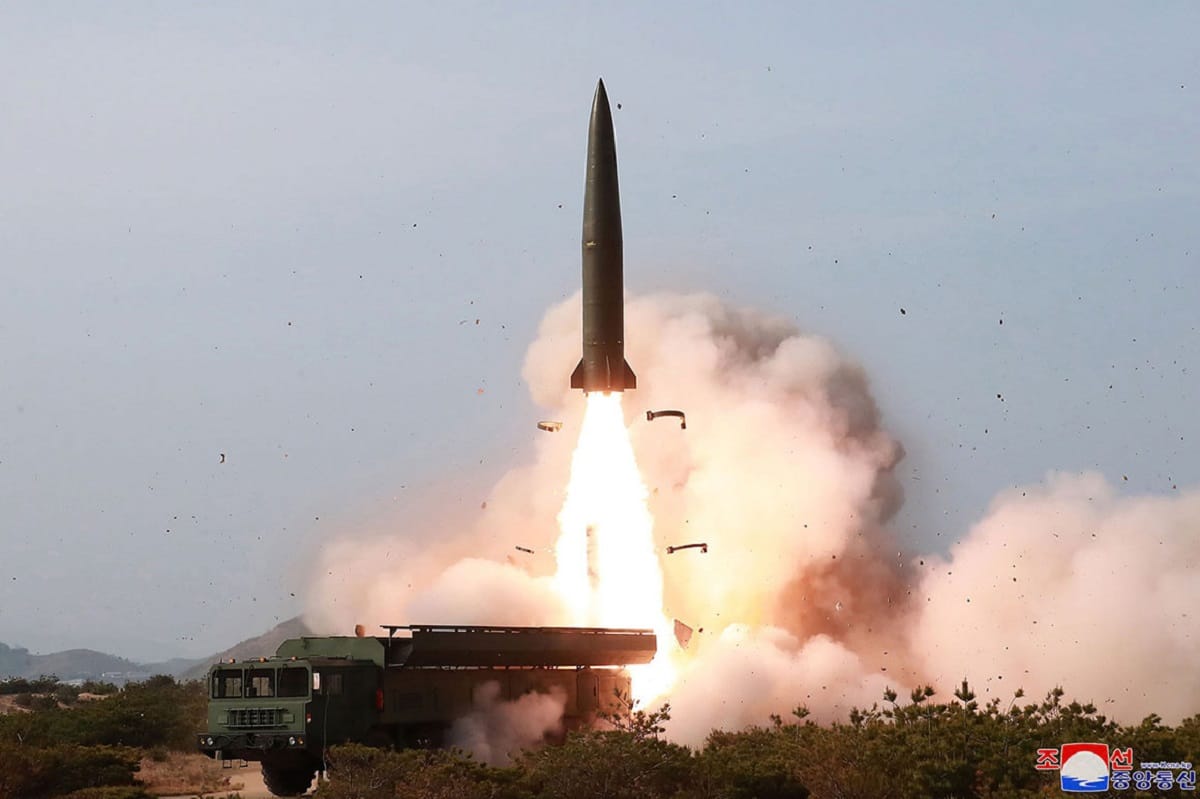
Kim Jong Un oversees new anti-air missile test amid rising tensions with U.S. and South Korea.
In a tense and emotionally charged escalation, North Korea anti-air missiles took center stage on August 23, 2025, as Kim Jong Un supervised the test firing of two newly developed surface-to-air missiles. This provocative move occurred in the shadow of joint U.S.–South Korea military exercises—the Ulchi Freedom Shield drills—and has stirred international alarm and geopolitical shockwaves.
North Korea test-launched two advanced anti-air missiles, aimed at drones and cruise missiles.
Leader Kim Jong Un personally supervised the event.
The launch coincided with ongoing U.S.–South Korea war games, sharply raising regional tensions.
Experts warn the test signals a sharpened military posture and technological advancement.
Diplomatic fallout looms, as Seoul and Washington prepare for high-stakes summits.
As U.S. and South Korean forces conducted joint drills to reinforce security and readiness, Pyongyang’s decision to showcase its new missile capabilities struck a nerve. Coverage in state media emphasized that the weapons demonstrated “superior combat capability” and rapid response to aerial threats like drones and cruise missiles. For civilians and defense watchers alike, the emotional tone is one of alarm and urgency: what will North Korea test next?
Moreover, Kim Jong Un framed the drills as a rehearsal for war, pushing forward with both nuclear expansion and missile upgrades. This dual-pronged escalation leaves regional players—and global audiences—on edge.
State media confirmed that Kim Jong Un observed the test, with Korea Central News Agency reporting the missiles’ effectiveness in engaging “attack drones and cruise missiles”. However, crucial technical specifics—missile type, range, launch site, and precise performance metrics—remain undisclosed, heightening global uncertainty.
North Korea often pairs secretive testing with dramatic public messaging—a strategy aimed at maintaining strategic mystery while stoking international concern. This time, the ambiguity is especially unsettling, appearing timed to disrupt imminent summits in Washington involving President Donald Trump and South Korean President Lee Jae-Myung.
Broader Implications
North Korea’s test isn’t just a military show—it’s a strategic message. The launch escalates instability, invites sanctions expansion, and may undermine diplomatic openings. It also pressures South Korea to enhance its air defense while complicating the upcoming Trump–Lee summit.
Meanwhile, the test underscores growing Kim–Russia ties, with analysts suggesting Russia may be sharing military technology to bolster North Korean capabilities.
FAQs
Q1: What was tested? North Korea launched two new anti-air missiles, claimed to counter drones and cruise missiles.
Q2: Who oversaw the test? Leader Kim Jong Un personally supervised the launches.
Q3: Why now? The test coincided with joint U.S.–South Korea military drills, interpreted by Pyongyang as aggression.
Q4: What are the global risks? The launch heightens regional tensions, risks miscalculation, and may derail diplomatic talks.
Q5: Why did North Korea test these missiles now? The launch aligns with U.S.–South Korea Ulchi Freedom Shield drills, which Pyongyang views as hostile; Kim used the test to visibly push back.
Q6: Are these missiles nuclear-capable? State media calls them “anti-air,” intended to target drones and cruise missiles—not necessarily nuclear-capable, though broader military buildup hints at strategic upgrades.
Q7: How are neighbors reacting? South Korea and the U.S. likely view this as a threat escalation. Seoul is also engaging Japan and the U.S. diplomatically to bolster trilateral deterrence
Stay informed—follow our updates as this story unfolds. What’s your take? Will this test derail diplomacy or trigger stronger deterrence? Share your view in the comments!
Hello! I'm M Muzamil Shami, the founder and lead editor of Star Struck Times, your trusted source for trending news, entertainment scoops, celebrity gossip, sports highlights, and global headlines.
With a passion for storytelling and journalism, I created this platform to bring you breaking news, viral moments, and deep insights into the worlds of Bollywood, Hollywood, sports, politics, tech, and more — all in one place.