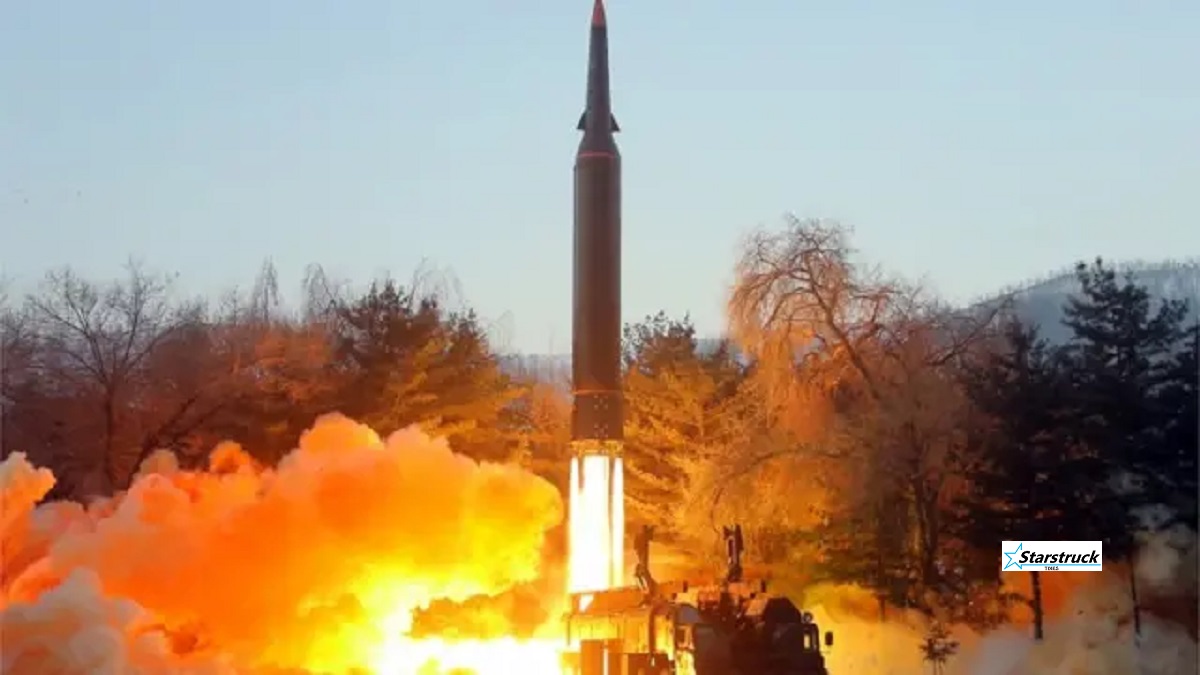
SEOUL, South Korea — Star Struck Times — North Korea test‑fired hypersonic missiles on January 4, 2026, in a move it says strengthens its war deterrence amid rising geopolitical tensions, state media reported. The launch occurred over the East Sea just ahead of a key state visit by South Korean President Lee Jae‑Myung to China and shortly after North Korea publicly denounced recent U.S. military actions in Venezuela, underscoring a volatile security environment in East Asia and beyond. Reuters
Key Highlights
- Test Date: January 4, 2026
- Launch Type: Hypersonic missiles fired toward sea
- Reason Given: Strengthen military deterrence, assess operational capability
- International Context: Tensions linked with U.S. actions in Venezuela
- Regional Impact: Occurred as South Korean President visits China
- Neighbor Responses: Condemnations expected from Seoul & Tokyo
What Happened: The Missile Test Explained
On January 4, 2026, North Korea’s official Korean Central News Agency (KCNA) reported that the country test‑fired hypersonic missiles to check military readiness and enhance its nuclear deterrence capabilities. The missiles reportedly traveled about 1,000 km over the East Sea, highlighting Pyongyang’s advancing weapons development. North Korean leader Kim Jong Un personally oversaw the exercise, underlining its strategic significance to his government.
Kim stated the test was driven by what North Korea called the “recent geopolitical crisis,” a reference that analysts link to rising tensions in the region, especially after the United States’ controversial military operations in Venezuela. “It’s a very important strategy to maintain or expand the strong and reliable nuclear deterrent,” Kim said, according to KCNA.

Public Reaction and Official Responses
International Reaction:
The South Korean government and defense officials typically respond to such missile tests with serious concern, viewing them as violations of UN Security Council resolutions and destabilizing actions that threaten regional peace. While official statements from Seoul are pending, military analysts in Seoul told Reuters that Pyongyang’s activities complicate ongoing diplomatic efforts with China and the United States. The Korea Times
Neighboring Countries:
Japan’s defense ministry also regularly condemns these launches, reiterating that such missile tests pose a direct threat to the security of Japan and its allies. Regional allies are likely to coordinate responses to these provocations.
Local Perception:
A Seoul resident, speaking anonymously, said, “These regular tests make everyday life feel like a crisis even if no conflict erupts.” Meanwhile, a defense analyst told Star Struck Times, “North Korea’s hypersonic capabilities, even if unproven, force regional powers to rethink their defense postures.”
Why It Matters: Geopolitical and Security Impact
North Korea’s hypersonic missile tests carry significant geopolitical weight. Hypersonic weapons — capable of flying at least five times the speed of sound with advanced maneuverability — pose serious challenges to conventional missile defense systems used by the U.S., South Korea, and Japan. Even if Pyongyang’s claimed capabilities are not independently verified, the tests signal a continued focus on militarization. AP News
According to defense experts, including those at the Korea Institute for National Unification, these tests likely serve dual purposes: strengthening internal regime legitimacy and testing the resolve of neighboring powers. “This is about deterrence and signaling,” one expert said. Increased missile capabilities could prompt accelerated defense investments by South Korea and its allies.
Context: Past Missile Tests and Ongoing Tensions
North Korea has conducted multiple missile tests over recent years, including ballistic and intermediate‑range launches, often timed to disrupt diplomatic efforts or coincide with regional political milestones. The latest tests follow similar patterns observed during visits by U.S. and South Korean officials in past months.
Historically, Pyongyang’s weapons demonstrations are seen as strategies to maintain relevance on the global stage and to counter perceived threats from alliances like U.S.–South Korea–Japan trilateral cooperation. These proclamations frequently coincide with North Korea’s domestic political goals, such as upcoming party congresses or strategic announcements.

What Happens Next?
Analysts expect further regional diplomatic engagements, including security dialogues between South Korea, China, and the United States. Talks may focus on curbing missile proliferation and reinforcing defense cooperation. Meanwhile, markets and military planners will monitor missile development as defense spending priorities evolve.
FAQs
Q1: What exactly are hypersonic missiles?
A: Hypersonic missiles travel faster than Mach 5 and can maneuver mid‑flight, making them harder to track and intercept. Their development signals advanced military capabilities.
Q2: Did the missiles reach other countries?
A: No. North Korea reported the missiles flew over the East Sea. No evidence suggests they entered other nations’ territories.
Q3: Are these tests a violation of international law?
A: United Nations resolutions prohibit North Korea from conducting certain missile tests. Neighboring countries and the U.S. routinely condemn such actions as violations.
Q4: How does this affect global security?
A: Hypersonic weapons complicate defense systems and heighten regional military tensions, potentially affecting diplomatic negotiations and alliances.
Stay informed with verified global developments.
Read the full report on Star Struck Times and follow us for trusted international news updates as they unfold.
References / Further Reading
- Reuters — North Korea test‑fires hypersonic missiles, KCNA says
- South China Morning Post — North Korea links missile launch to geopolitical crisis
- AP News — North Korea latest hypersonic weapons test
- Korea Times — Kim Jong Un attends hypersonic missile test
© 2025 Star Struck Times. All rights reserved.