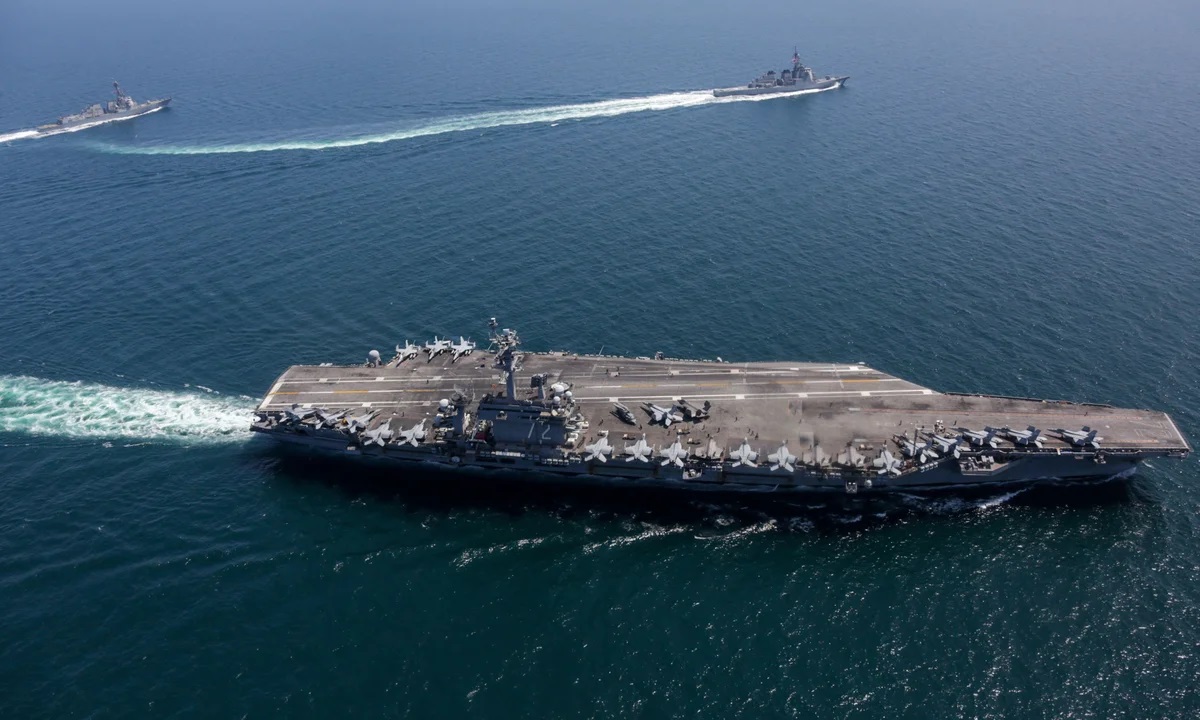
The United States is weighing another round of military strikes against Iran as tensions between Washington and Tehran intensify, with Israeli officials pressing for renewed military action and President Donald Trump yet to make a final decision. The possibility of further attacks comes amid fresh military exchanges, rising tensions around the Strait of Hormuz and continuing diplomatic efforts to prevent a wider regional conflict.
Key Points
President Donald Trump is considering additional military strikes against Iran, but no final decision has been announced.
Israeli officials are reportedly urging Washington to participate in another round of attacks.
Recent US and Iranian military exchanges have increased concerns about renewed escalation.
Iran’s army chief, Amir Hatami, has warned of a stronger response if Iran is attacked again.
Diplomatic efforts involving regional countries continue as the military standoff intensifies.
US Considers Further Military Action Against Iran
According to an Axios report published November 19, US officials say Trump is still considering possible military action against Iran. The White House has asked the Pentagon and intelligence agencies to assess potential strike scenarios and how Tehran might respond.
However, the discussions do not mean an attack has been authorized. The president has not announced a decision to launch another major military campaign.
Israeli officials have reportedly been pushing Washington to join further airstrikes. The discussions come as Israeli intelligence chief Roman Gofman has held meetings with senior US officials, including CIA Director John Ratcliffe and presidential envoy Steve Witkoff.
A significant question remains whether Washington believes additional military action would achieve objectives that economic pressure and previous strikes have not.
Recent US-Iran Exchanges Raise the Risk of Escalation
The possibility of renewed attacks follows fresh military confrontations in the region.
Reuters reported on November 17 that US fighter jets struck an Iranian Revolutionary Guard missile-launch site on Qeshm Island after Iran said it had targeted a US radar installation in Bahrain. Bahrain reported intercepting the Iranian attack.
The exchange illustrates how quickly the confrontation can escalate beyond the two countries, particularly when military installations and regional allies become involved.
The Strait of Hormuz is another major concern. The strategically important waterway carries a substantial share of global oil and liquefied natural gas shipments, making further instability a potential threat to international energy markets.
Iran Warns of a Stronger Response
Iran’s military leadership has also issued warnings against further US attacks.
On November 18, Iranian army commander-in-chief Amir Hatami warned that any renewed attack would trigger a more severe response. He said Iran would respond without geographical limitations and could target the United States and its supporters.
His comments underline Tehran’s position that another round of military strikes would not necessarily remain confined to Iranian territory.
Meanwhile, Iranian claims about military operations and intercepted or destroyed American equipment should be distinguished from independently verified developments.
Why Another Round of Strikes Is Not Certain
Despite the renewed military preparations and pressure from Israel, Washington’s position is not straightforward.
A Reuters report published November 14 said Trump had told advisers he might hold off on further attacks if Iran or Iran-backed Houthi forces did not provoke the United States. The report also described concerns among US officials about the effectiveness of renewed strikes and the availability of some precision weapons.
Separately, US officials have continued to emphasize economic pressure as a means of weakening Tehran’s position.
This creates an important distinction: the US military can prepare for additional operations without the president deciding to authorize them.
The situation therefore remains uncertain. Another round of strikes is among Washington’s options, but diplomatic efforts, regional security concerns and the potential consequences of retaliation could all influence Trump’s decision.
For countries across the Middle East, the immediate concern is whether the latest military exchanges remain limited or develop into a broader confrontation.
Hello! I'm M Muzamil Shami, the founder and lead editor of Star Struck Times, your trusted source for trending news, entertainment scoops, celebrity gossip, sports highlights, and global headlines.
With a passion for storytelling and journalism, I created this platform to bring you breaking news, viral moments, and deep insights into the worlds of Bollywood, Hollywood, sports, politics, tech, and more — all in one place.