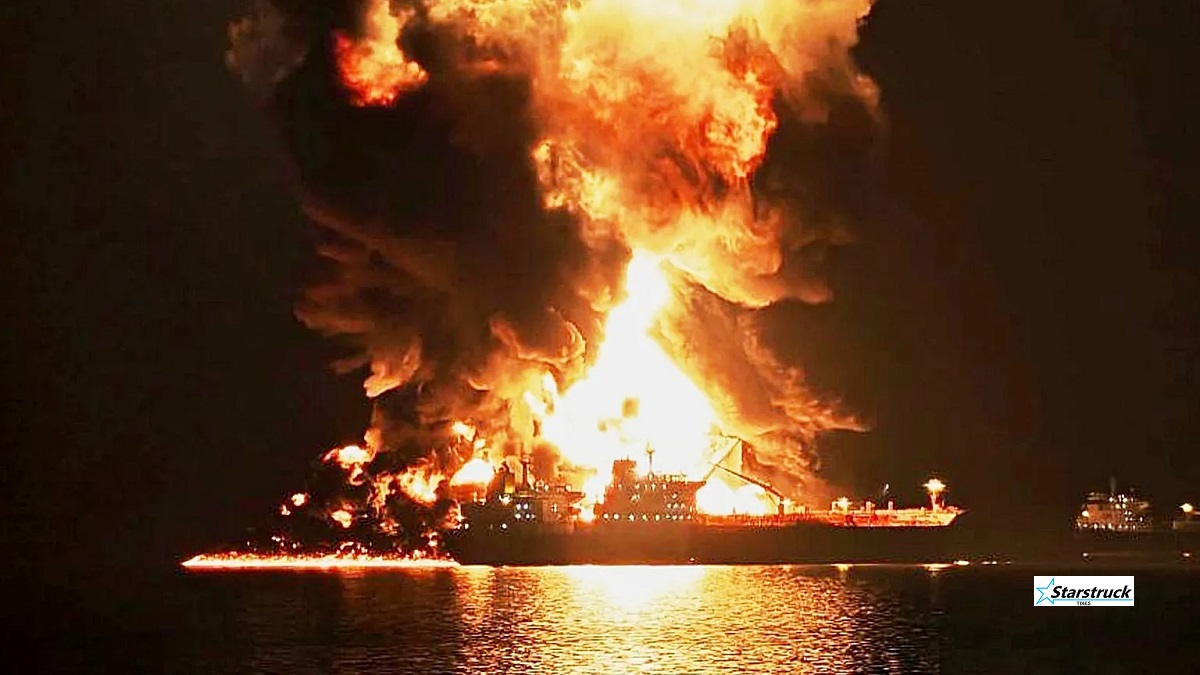
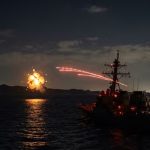
Iran claims to have downed its 17th US MQ-1 drone as its navy reports tanker fires following alleged naval mine strikes in the Strait of Hormuz. Illustrative image.
Middle East
TEHRAN, November 15, 2026
By Star Struck Times
Key Points
Iran’s Islamic Revolutionary Guard Corps (IRGC) claims it shot down a US MQ-1 drone over Qeshm Island on November 14, describing it as the 17th such aircraft destroyed by Iranian forces.
Iran’s navy and Revolutionary Guards reported that three oil tankers caught fire after striking naval mines in the Strait of Hormuz.
Reuters said it could not independently verify the tanker incidents.
Iran claims the vessels entered restricted shipping routes, while the identities and nationalities of the tankers remain undisclosed.
The incidents add pressure to an already volatile maritime route that carries a significant share of global oil supplies.
Iran Claims 17th US MQ-1 Drone Destroyed Over Qeshm Island
Iran’s Islamic Revolutionary Guard Corps (IRGC) says it has shot down a US MQ-1 reconnaissance and combat drone over Qeshm Island near the strategically important Strait of Hormuz. The announcement came on November 14, as Iranian naval forces also reported that three oil tankers caught fire after striking naval mines in the waterway, according to Iranian state media and a Reuters report.
The IRGC said its Aerospace Force detected and intercepted the American drone using what it described as a newly developed advanced air defence system. Iranian officials identified the aircraft as belonging to the MQ-1 family and claimed the incident marked the 17th US MQ-1 drone destroyed by Iranian forces.
However, the reported interception has not been independently confirmed. No independently verified evidence establishing the aircraft’s destruction or its precise operational identity was available in the reports reviewed for this article.
The latest announcement also follows another Iranian claim on November 13, when the country’s regular navy said it had brought down an MQ-1 drone near the coastal area of Sirik in Hormozgan province.
Three Tankers Reportedly Catch Fire After Mine Strikes
The maritime incidents have added another layer of uncertainty to the confrontation.
According to Reuters, Iranian state media reported that one oil tanker struck a naval mine in the eastern Strait of Hormuz on Saturday morning. Two additional tankers reportedly hit mines later in the day, with the Revolutionary Guards Navy claiming that the vessels exploded and caught fire.
Iran’s IRNA news agency quoted the Guards Navy as saying the two vessels were attempting to use a prohibited route through the strait.
The Iranian military also alleged that the tankers were violating its navigation restrictions. However, the authorities did not immediately identify the vessels, disclose their nationalities or provide independently confirmed information about casualties.
An important distinction is that the latest Reuters report describes three tanker incidents in total, not simply two. The two evening incidents involving the Revolutionary Guards were separate from the earlier mine strike reported by Iran’s regular navy.
Reuters said it could not immediately verify the Iranian reports. Consequently, the reported mine strikes and fires should be treated as claims by Iranian authorities rather than independently established findings.
Why the Strait of Hormuz Matters
The Strait of Hormuz is one of the world’s most important maritime energy routes. Connecting the Persian Gulf with the Gulf of Oman and the Arabian Sea, it provides a vital passage for oil and liquefied natural gas shipments from Gulf producers.
According to the International Energy Agency, approximately 20 million barrels of oil per day passed through the strait in 2025, representing around 25% of global seaborne oil trade.
The waterway is particularly important for Asian energy markets. Countries including China, India, Japan and South Korea depend heavily on shipments passing through this narrow maritime corridor.
Repeated reports of naval mine incidents, fires aboard tankers and restrictions on commercial shipping therefore carry implications beyond the immediate military confrontation.
Even without a confirmed closure, uncertainty over safe passage can complicate shipping operations, increase insurance concerns and create additional pressure on energy markets.
A Wider Dispute Over Maritime Control
Iran has imposed restrictions on vessels seeking to cross the Strait of Hormuz and has insisted that ships coordinate their passage with its authorities.
The United States, meanwhile, has imposed a naval blockade on Iranian ports in response to Tehran’s restrictions on maritime traffic. Washington has also maintained military support for shipping operations in the region.
The two sides have offered conflicting accounts of developments in the waterway. Iran has repeatedly accused vessels of violating its restrictions, while the United States has challenged Iranian claims about maritime security and military operations.
The US military has also said it cleared the main shipping routes through the strait of mines, according to reporting by AFP.
Another important detail concerns the drone designation. The US Air Force officially retired its MQ-1 Predator fleet in March 2018, transitioning to the MQ-9 Reaper. That historical fact does not independently disprove Iran’s latest claim, but it makes precise identification of the aircraft important. The US military also operates related MQ-1C Gray Eagle aircraft through the Army.
For now, the central unanswered questions concern the identity of the reported drone, the circumstances surrounding its alleged interception and the identities and condition of the tankers.
Until independent evidence or additional official statements emerge, Iran’s claims should not be confused with confirmed US aircraft losses or independently verified tanker attacks.
Hello! I'm M Muzamil Shami, the founder and lead editor of Star Struck Times, your trusted source for trending news, entertainment scoops, celebrity gossip, sports highlights, and global headlines.
With a passion for storytelling and journalism, I created this platform to bring you breaking news, viral moments, and deep insights into the worlds of Bollywood, Hollywood, sports, politics, tech, and more — all in one place.