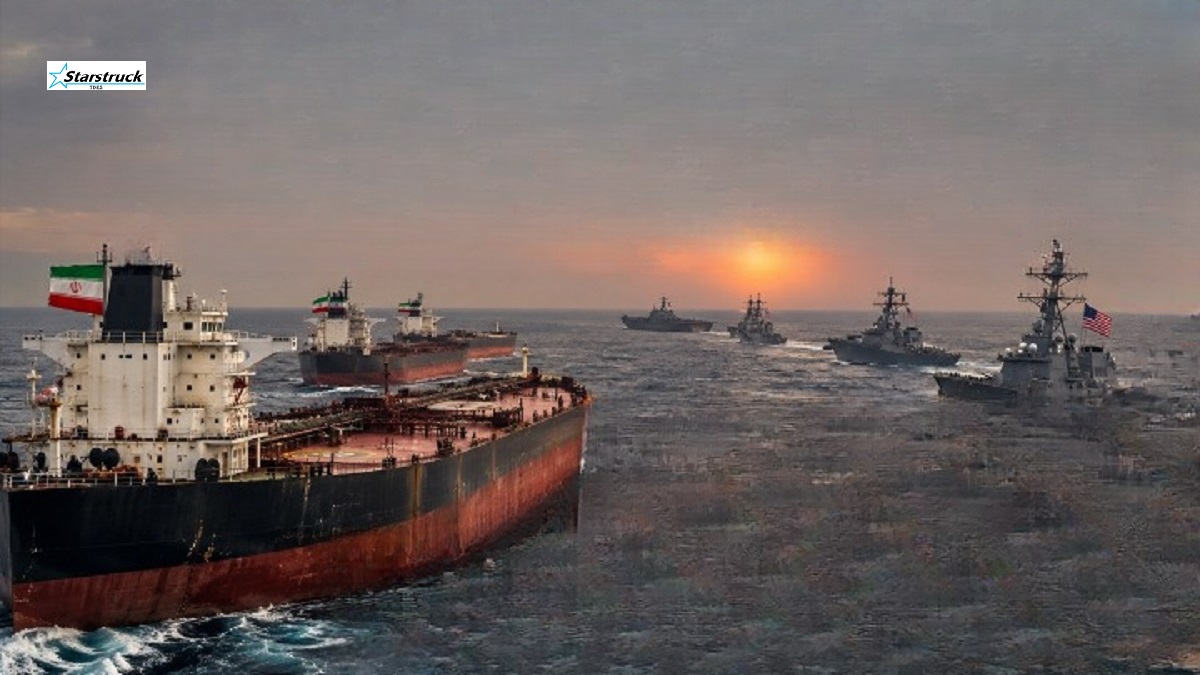
DUBAI, November 20, 2026 — An oil tanker has begun loading Iranian crude in the Persian Gulf, raising the possibility that Tehran could attempt to resume seaborne oil exports despite a US naval blockade that has sharply restricted the country’s shipments since July.
The development, reported by Reuters on November 19, comes as Iran faces mounting pressure over its oil revenues and considers ways to move crude to international buyers. Ship-tracking company TankerTrackers.com reported that the vessel was taking on Iranian oil through a ship-to-ship transfer.
However, the reported loading does not establish that the tanker has successfully crossed the US blockade. Its identity, intended destination and total cargo volume have not been publicly confirmed in the Reuters report.
Key points
TankerTrackers.com identified a ship-to-ship transfer involving Iranian crude in the Persian Gulf.
The vessel could become the first tanker to export Iranian crude successfully since the US restored its naval blockade in July.
The tanker has not been publicly identified, and its destination remains unknown.
A separate shipping-monitoring report identified a transfer involving approximately 200,000 barrels of Iranian crude south of Kharg Island.
The crucial question is whether the oil can actually leave the blockade perimeter.
Why this development matters
The distinction between loading oil and successfully exporting it is central to understanding the latest development.
Reuters quoted Samir Madani, co-founder of TankerTrackers.com, as saying the vessel was not under US Treasury sanctions. That may have helped it enter the region without attracting scrutiny. However, its next movements will determine whether the reported operation becomes a successful export.
A November 19 shipping update from United Against Nuclear Iran (UANI) adds another important detail. The organization reported that the tanker HAO FAN received approximately 200,000 barrels of Iranian crude from another vessel, OLYM, in a transfer south of Kharg Island on November 17. UANI said HAO FAN was not listed under US Treasury sanctions and appeared to be transmitting a spoofed location near Shinas in the Gulf of Oman.
The available reporting does not conclusively establish that this specific transfer and the unidentified tanker described by Reuters are the same operation. They should therefore be treated as separate pieces of shipping intelligence rather than one confirmed voyage.
US blockade puts Iran’s oil exports under pressure
The United States reinstated its naval blockade of Iranian ports and coastlines on July 14, 2026. The restrictions have created significant obstacles for Iran’s oil industry, particularly its ability to deliver crude to China, its main oil buyer.
According to Iran International’s November 19 reporting, Iranian crude and condensate loadings had fallen substantially from approximately 2 million barrels per day in March to around 220,000–255,000 barrels per day in August, based on Kpler data. Kpler recorded no crude or condensate loadings in September.
The blockade has also affected Iran’s ability to generate foreign currency. With fewer shipments reaching buyers, Tehran faces growing pressure to find alternative ways to move its oil.
The Joint Maritime Information Center’s November 18 advisory maintained a SEVERE regional maritime threat level. It warned of continued naval activity, increased monitoring and potential risks to commercial vessels operating around the Gulf, the Strait of Hormuz and the Gulf of Oman.
What happens next?
The tanker movement represents a potentially important test of the US blockade, but the outcome remains uncertain.
If the vessel crosses the enforcement perimeter and delivers its cargo, it could mark a significant development for Iran’s oil exports. If it fails, the incident would instead demonstrate the continuing difficulties facing Tehran’s attempts to restore shipments.
For now, there is no independently confirmed evidence in the cited reporting that the tanker has completed an export voyage or that a large Iranian tanker convoy has successfully broken through the blockade.
The immediate focus remains on the vessel’s identity, its eventual destination and whether US forces attempt to intercept it.
Hello! I'm M Muzamil Shami, the founder and lead editor of Star Struck Times, your trusted source for trending news, entertainment scoops, celebrity gossip, sports highlights, and global headlines.
With a passion for storytelling and journalism, I created this platform to bring you breaking news, viral moments, and deep insights into the worlds of Bollywood, Hollywood, sports, politics, tech, and more — all in one place.