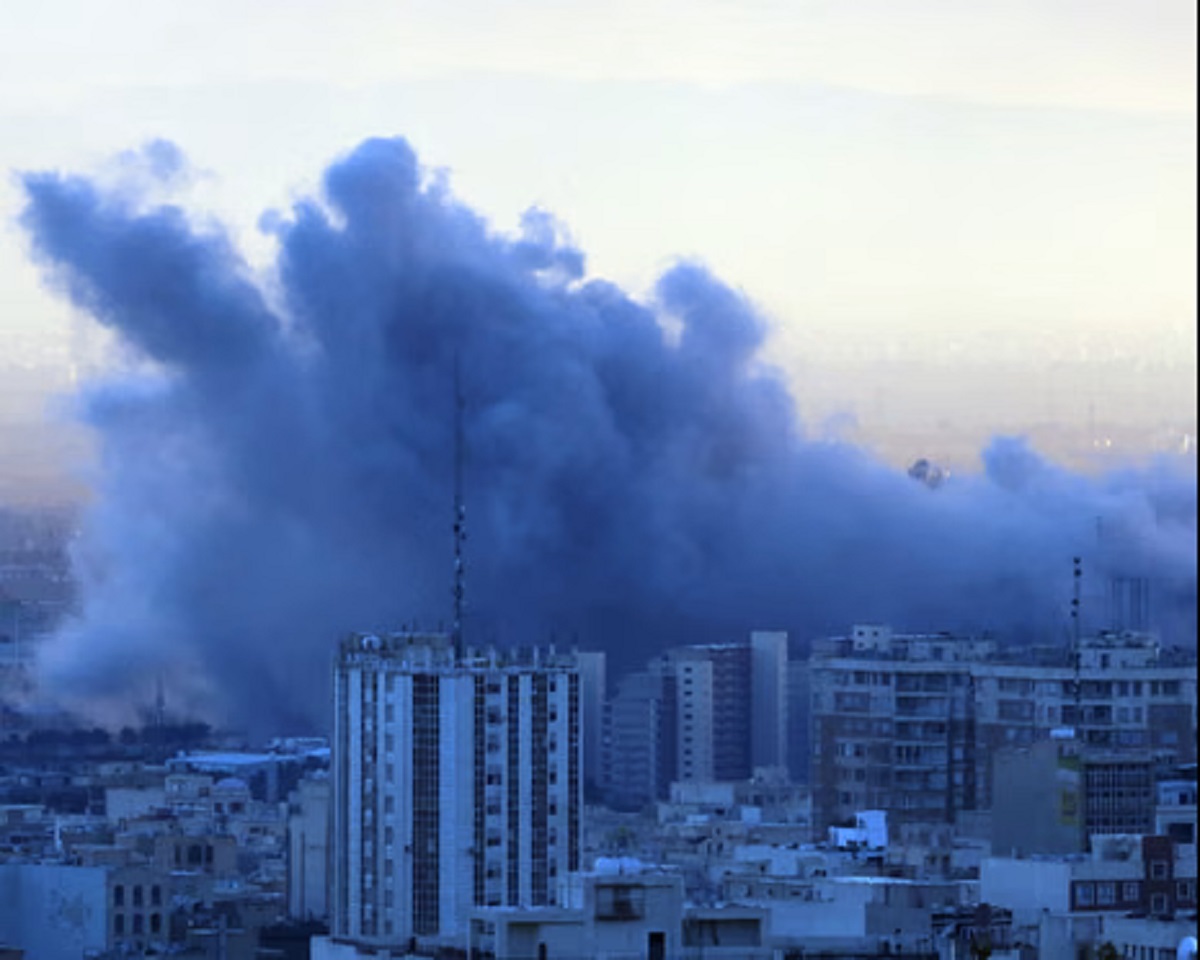
The ongoing conflict between the United States, Israel and Iran has entered a critical fifth day, with military strikes, missile exchanges and regional spill‑overs intensifying across the Middle East. The crisis — sparked by coordinated US‑Israeli air strikes on Iranian territory on February 28, 2026 — has drawn in Gulf states, provoked proxy group responses, and disrupted global energy and transportation corridors. Civilian casualties are mounting and diplomatic pressure for de‑escalation is increasing.
This widening war marks one of the most severe escalations in regional hostilities in decades. It has triggered retaliatory attacks from Iran across multiple fronts, including missile and drone strikes targeting Israel, US military bases and allies in the Gulf, while Hezbollah operating from Lebanon has joined the fray.
Key Highlights
Conflict enters Day 5 with ongoing US‑Israel strikes and Iranian retaliation.
Iran reportedly launches hundreds of missiles and drones toward the Gulf region and Israel.
Global shipping through Strait of Hormuz effectively halted, disrupting oil trade.
Proxy groups such as Hezbollah intensify attacks on Israel from Lebanon.
UN investigation condemns civilian casualties, including a school strike in Iran.
What Happened: The Timeline of Escalation
The conflict began in the early hours of February 28, 2026, when the United States and Israel launched a codename‑designated campaign against key Iranian strategic targets, including military infrastructure and leadership compounds in Tehran and other cities. This offensive — identified by Israeli authorities as Operation Lion’s Roar — aimed to degrade Iran’s missile capabilities and perceived nuclear threats.
Since then, Iranian forces have responded with sustained missile barrages and drone assaults on Israeli towns, US bases in the Gulf Cooperation Council (GCC) states, and strategic assets in Bahrain, Kuwait, Qatar, and the UAE. Coastal shipping near the Strait of Hormuz has dropped sharply as Iran’s Revolutionary Guard Corps asserted control of the vital trade route.
In Lebanon, Iran‑aligned Hezbollah fighters have fired rockets into northern Israel in retaliation for Iranian leadership losses, prompting Israeli strikes on Hezbollah positions in Beirut and surrounding regions.
Public Reaction and Official Responses
International leaders and civil society have expressed alarm at the rapid escalation and civilian toll. A United Nations fact‑finding mission sharply criticized both sides, stating recent attacks—including one that hit a girls’ school in southern Iran—appear to violate international laws that protect civilians during conflict. “The scale and nature of these strikes bring grave concerns under the UN Charter,” the mission said.
Regional governments are taking varied stances. The United Arab Emirates emphasized its sovereign right to self‑defense as its air defenses intercept multiple Iranian missiles and drones, while several Gulf states have lodged diplomatic protests following impacts on their soil.
A senior US official, speaking on condition of anonymity, said, “Our operations are focused on neutralizing threats to our forces and regional stability,” underscoring Washington’s commitment to its strategic objectives. Meanwhile, an independent Middle East analyst noted that public sentiment in Tehran and beyond is mixed, with some rallying around national defense and others urging diplomatic negotiations to prevent further bloodshed.
Why It Matters: Regional and Global Impact
The conflict’s implications extend far beyond the battlefield:
Energy markets have already reacted sharply, with oil prices spiking as the effective closure of the Strait of Hormuz imperils nearly a fifth of the world’s seaborne oil trade.
Global air travel has seen widespread disruptions as Middle East airspace closures trigger flight rerouting and cancellations, affecting carriers worldwide.
Diplomatic relations are under strain: European states are divided on how to respond, some advocating defense solidarity while others push for neutrality and negotiation.
The UN Security Council has convened emergency sessions as global powers weigh sanctions, cease‑fire proposals, and humanitarian support for affected civilians. Analysts warn that without diplomatic breakthroughs, this conflict could transform into a protracted crisis with far‑reaching consequences for Middle Eastern stability.
Context and Past Similar Events
This confrontation follows years of tensions rooted in disputes over Iran’s nuclear ambitions, ballistic missile programs, and support for militant groups opposed to Israel. Previous proxy conflicts—such as the Hezbollah–Israel hostilities and intermittent clashes involving Iranian‑backed Houthi fighters in Yemen—have foreshadowed the broader 2026 crisis.
Unlike earlier skirmishes, however, this conflict features direct military engagement between Iran and the US‑Israel alliance, marking a historic escalation. The death of Iran’s Supreme Leader Ayatollah Ali Khamenei during the initial attacks has intensified Iranian public resolve and complicates diplomatic resolution efforts.
What Happens Next
Diplomatic efforts are underway behind the scenes to prevent further destabilization, with backchannel talks reported between global powers and Middle Eastern states. Governments are urging citizens in the region to stay vigilant amid ongoing missile threats and escalating hostilities. The international community watches closely as negotiations unfold at the United Nations and through bilateral channels to secure a ceasefire and humanitarian access.
FAQs
1. What triggered the current conflict? A coordinated US‑Israel offensive against Iran’s strategic military and nuclear sites on February 28, 2026.
2. Who is involved aside from Iran, the US, and Israel? Proxy groups like Hezbollah and Gulf states hosting US bases are directly affected, with missiles and drones crossing multiple borders.
3. Why is the Strait of Hormuz so significant? It’s a critical oil transit route; disruptions here impact global energy markets.
4. What are the global economic impacts? Oil prices are rising and international travel routes are disrupted due to regional airspace closures.
5. Is there a path to peace? Diplomatic negotiations and UN involvement aim to establish ceasefire conditions, but progress remains uncertain.
Read more on global conflicts in our WorldNews category → Star Struck Times.
Hello! I'm M Muzamil Shami, the founder and lead editor of Star Struck Times, your trusted source for trending news, entertainment scoops, celebrity gossip, sports highlights, and global headlines.
With a passion for storytelling and journalism, I created this platform to bring you breaking news, viral moments, and deep insights into the worlds of Bollywood, Hollywood, sports, politics, tech, and more — all in one place.