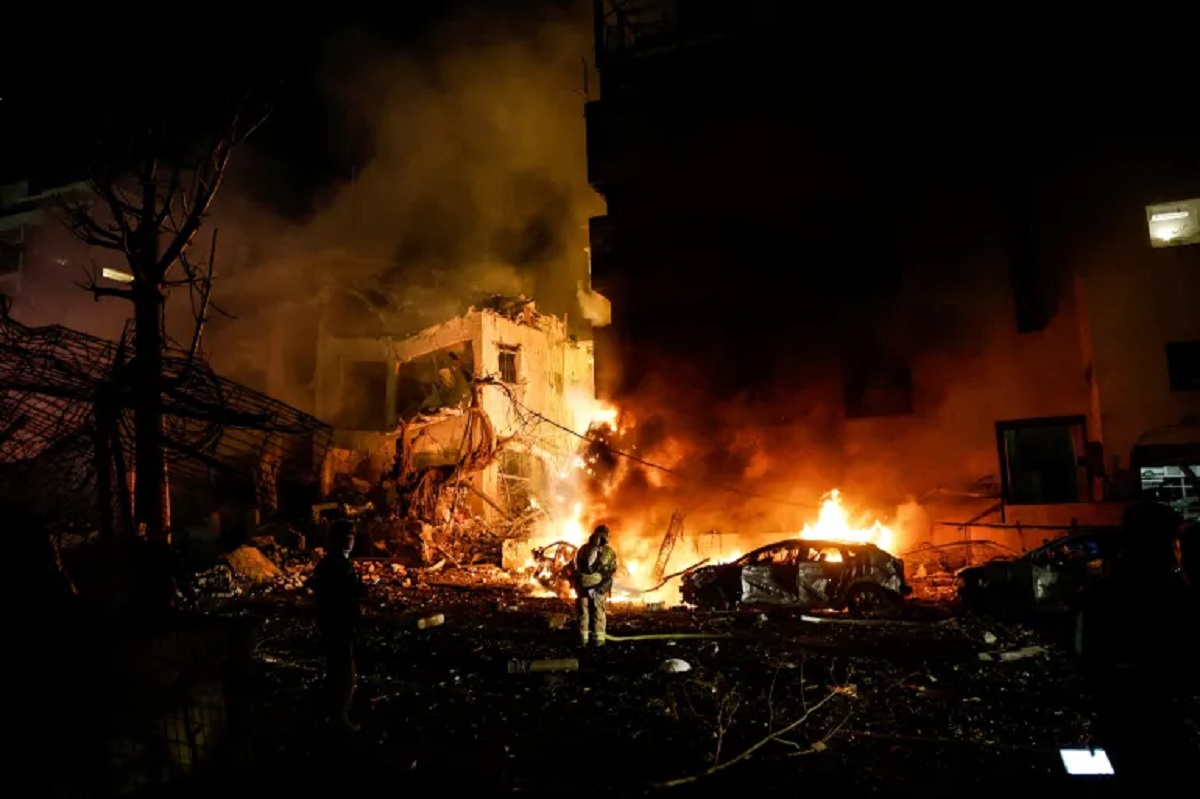
Tensions in the Middle East escalated sharply on March 25–26, 2026, as the ongoing Iran–Israel war escalation entered its fourth week with continued military strikes and growing fears of a broader regional conflict. The situation, which now involves indirect participation from the United States, has triggered global concern over oil supplies, shipping security, and geopolitical stability. Readers can follow more global developments in our World News category, where ongoing coverage of the crisis is being updated daily.
Key Highlights
Israeli forces conducted fresh airstrikes on targets inside Iran on March 25 and 26, 2026
Iran warned it could block the Strait of Hormuz, a key global oil route
The United States maintained military support and defensive deployments in the region
Oil markets reacted with volatility as investors feared supply disruptions
Diplomatic channels remained open, but no ceasefire was agreed by March 26
What Happened on March 25–26, 2026
The latest phase of the Iran–Israel conflict saw intensified military activity across multiple fronts. According to reports from Reuters and Al Jazeera, Israeli fighter jets carried out precision strikes on what were described as military installations near Isfahan and Shiraz on March 25.
Iranian state media confirmed explosions but claimed that its air defenses successfully intercepted several incoming missiles. By March 26, Iranian officials issued strong warnings that further attacks could provoke retaliation not only against Israel but also against U.S. military assets in the region.
The situation marked one of the most serious escalations in Middle Eastern geopolitics since the 2019 Gulf tensions, raising alarm among global policymakers.
Global Reaction and Official Responses
Governments worldwide reacted swiftly to the escalation. The United States Department of Defense stated that its forces in the Middle East were on high alert but emphasized that Washington was seeking de-escalation.
A Pentagon spokesperson said,
“Our primary objective remains regional stability and the protection of international shipping routes.”
Meanwhile, the United Nations Security Council held an emergency session on March 26, 2026, where diplomats urged both Iran and Israel to avoid actions that could lead to full-scale war.
Energy markets responded immediately. According to Bloomberg, crude oil prices surged by nearly 4% within 24 hours, reflecting fears that a conflict in the Strait of Hormuz could disrupt nearly 20% of global oil supply.
Why the Strait of Hormuz Threat Matters
The Strait of Hormuz remains one of the most strategically important waterways in the world. Roughly one-fifth of global oil shipments pass through this narrow channel between Iran and Oman.
Iran’s warning that it could block or restrict passage through the strait sent shockwaves through global markets and shipping companies. Maritime analysts believe such a move would trigger immediate international military intervention, potentially transforming the regional confrontation into a multinational conflict.
A maritime security expert quoted by The Guardian noted,
“Any disruption in Hormuz would be felt worldwide within days, not weeks. It is the single most sensitive chokepoint in global energy logistics.”
Public Reaction and Media Coverage
Across social media platforms, the escalating Middle East war news dominated global trending topics. Citizens in several Gulf countries expressed anxiety about possible missile strikes and economic instability.
One social media user from Dubai wrote,
“We’ve seen tensions before, but this feels different. Flights are being rerouted, and people are worried.”
In Israel, residents near major cities were seen rushing to shelters during air raid sirens on March 25. Iranian citizens, meanwhile, reported internet slowdowns and increased military presence in major urban centers.
Unique Angle: How This Conflict Is Shaping the Global Economy
Beyond the battlefield, the Iran–Israel war escalation is already influencing global economic trends. Shipping insurance premiums for vessels traveling through the Persian Gulf surged dramatically between March 24 and March 26, according to data cited by Financial Times.
Economists believe that even without a full naval blockade, prolonged tensions could raise transportation costs, increase fuel prices, and slow global trade. Media analysts argue that the conflict is no longer just a regional issue but a global economic risk factor affecting supply chains from Asia to Europe.
Historical Context: A Pattern of Escalation
This is not the first time tensions between Iran and Israel have approached open conflict. Similar escalations occurred in 2020 and 2023, but direct cross-border strikes remained limited.
The current situation is different due to:
direct military exchanges
heightened involvement of global powers
and explicit threats targeting critical energy routes
These factors combined make the March 2026 escalation one of the most dangerous flashpoints in recent Middle Eastern history.
What Happens Next
Diplomatic efforts are expected to intensify in the coming days, with European mediators reportedly preparing to host back-channel talks. However, military analysts warn that any further strikes or a miscalculation at sea could quickly spiral into a broader regional war involving multiple countries.
For now, the world is watching closely as both Iran and Israel continue military preparations while publicly signaling openness to negotiations.
FAQs
What caused the latest Iran–Israel war escalation in March 2026?
The escalation was triggered by Israeli airstrikes on Iranian military facilities, which Israel said were linked to regional security threats.
Why is the Strait of Hormuz important in this conflict?
The strait handles around 20% of global oil shipments, making any disruption a major risk to global energy supply and prices.
Is the United States directly involved in the conflict?
The U.S. has not officially entered the conflict but maintains military support for Israel and has deployed forces to protect shipping routes.
How have global markets reacted to the conflict?
Oil prices and shipping insurance costs rose sharply between March 25 and March 26 due to fears of supply disruption.
Could this conflict turn into a wider regional war?
Yes. If additional countries or armed groups become involved, the conflict could expand beyond Iran and Israel.
Stay informed with verified and timely global coverage. Follow Star Struck Times for accurate updates on developing international conflicts and their global impact.
Hello! I'm M Muzamil Shami, the founder and lead editor of Star Struck Times, your trusted source for trending news, entertainment scoops, celebrity gossip, sports highlights, and global headlines.
With a passion for storytelling and journalism, I created this platform to bring you breaking news, viral moments, and deep insights into the worlds of Bollywood, Hollywood, sports, politics, tech, and more — all in one place.