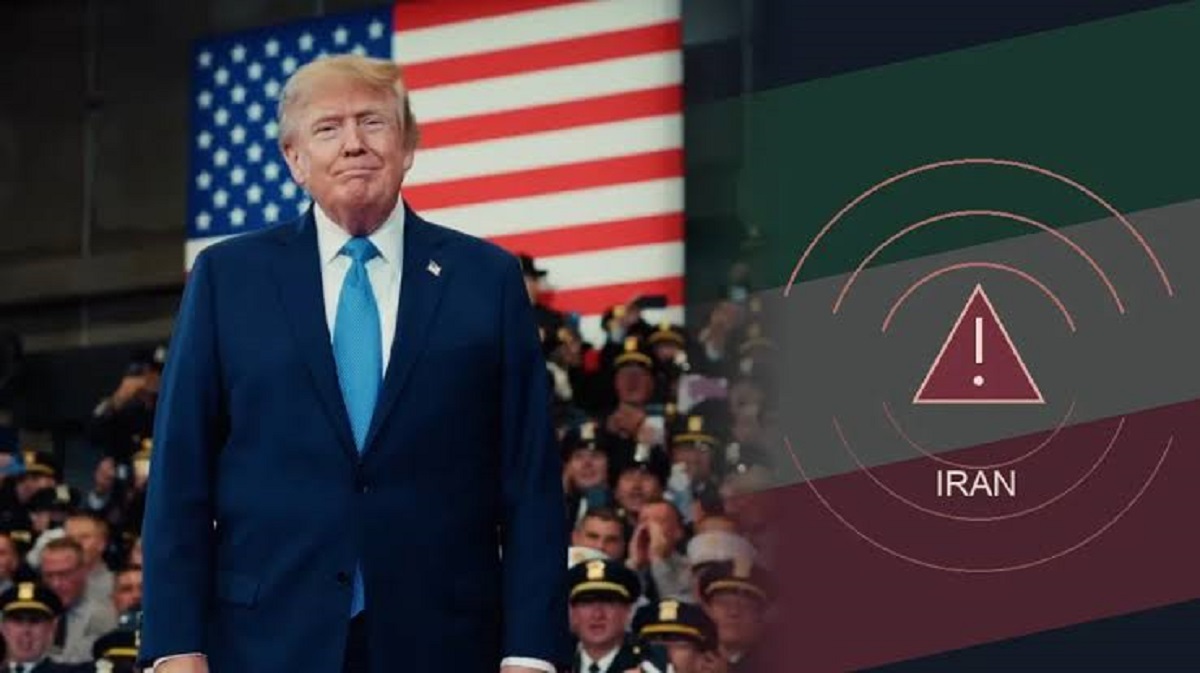
US President Donald Trump is considering military and diplomatic options as tensions with Iran continue.
WASHINGTON, November 6, 2026
Key points
Donald Trump says he will soon decide whether the United States should launch further military action against Iran.
The US president has warned that Washington may have to destroy more of Iran if necessary.
US Central Command is reportedly preparing for possible renewed military operations, but has not received an order to launch them.
Diplomatic efforts involving Qatar and other regional countries are continuing alongside military preparations.
Trump weighs three options after Iran meeting
Trump’s comments followed a meeting with his national security advisers on Thursday, November 5. According to Axios, it was his first discussion focused on Iran with senior advisers since the US midterm elections. The president said Washington was considering whether to intensify military action to ensure Iran’s nuclear programme could not be restored. Axios+1
The decision comes at a critical point in the conflict. Trump is weighing three broad approaches: launching another wave of military strikes, maintaining economic pressure on Tehran or pursuing a diplomatic agreement that could require concessions from Washington.
Although his warning raised the possibility of further destruction, no new military order had been issued at the time of reporting. US Central Command was completing preparations for a possible return to major combat operations, according to a US official cited by Axios. Axios+1
That distinction is important: military preparations indicate that Washington wants to retain the option of escalation, but they do not confirm that another attack has been authorised.
Iran’s nuclear proposal adds a diplomatic opening
Alongside the military discussions, Tehran has continued pursuing a diplomatic route through Qatar.
A senior Iranian official told Reuters on Thursday that Iran had submitted a nuclear proposal to the United States through Qatari mediators. Washington was reviewing the proposal, but the official did not disclose its full contents.
However, Tehran has attached conditions to further negotiations. Iranian security official Mohsen Rezaei said Iran would not negotiate or reopen the Strait of Hormuz until Washington fulfilled seven demands.
Those demands include lifting US sanctions, releasing frozen Iranian assets and paying war reparations. Washington, meanwhile, has maintained that nuclear issues must form part of any initial negotiations. Reuters+1
The competing conditions reveal the central obstacle to a diplomatic breakthrough: both sides appear to want progress, but they disagree over what must happen first.
Regional diplomacy intensifies
Iranian Foreign Minister Abbas Araghchi held telephone discussions with regional counterparts, including officials from Qatar, Saudi Arabia, Türkiye, the United Arab Emirates, Oman and Egypt, according to Axios.
Meanwhile, Rezaei travelled to Moscow and met Russian President Vladimir Putin at the Kremlin. Rezaei said he delivered a message from Iran’s Supreme Leader, Mojtaba Khamenei, while Putin indicated his willingness to help end the conflict. Axios+1
The diplomatic activity is significant because the potential consequences of renewed fighting extend beyond the immediate confrontation between Washington and Tehran.
The Strait of Hormuz remains a particularly important point of disagreement. Any prolonged disruption to the strategic waterway could affect international energy supplies and shipping, making the outcome of negotiations relevant well beyond the Middle East.
What happens next?
Washington’s next move remains uncertain. Axios reported that the USS Theodore Roosevelt carrier strike group was expected to spend several days in Singapore before reaching the US Central Command area of responsibility around mid-November.
Its arrival could add to the United States’ military options, but it should not be treated as evidence that an attack has been scheduled. Axios
For now, the situation is defined by two parallel developments: preparations for possible renewed military action and diplomatic efforts aimed at preventing another escalation.
Trump has promised a decision soon, but neither a final military decision nor a comprehensive agreement with Iran had been announced as of November 6.
The central question is no longer simply whether Washington can launch another operation. It is whether the United States and Iran can overcome their competing conditions before military preparations turn into renewed fighting.
Hello! I'm M Muzamil Shami, the founder and lead editor of Star Struck Times, your trusted source for trending news, entertainment scoops, celebrity gossip, sports highlights, and global headlines.
With a passion for storytelling and journalism, I created this platform to bring you breaking news, viral moments, and deep insights into the worlds of Bollywood, Hollywood, sports, politics, tech, and more — all in one place.