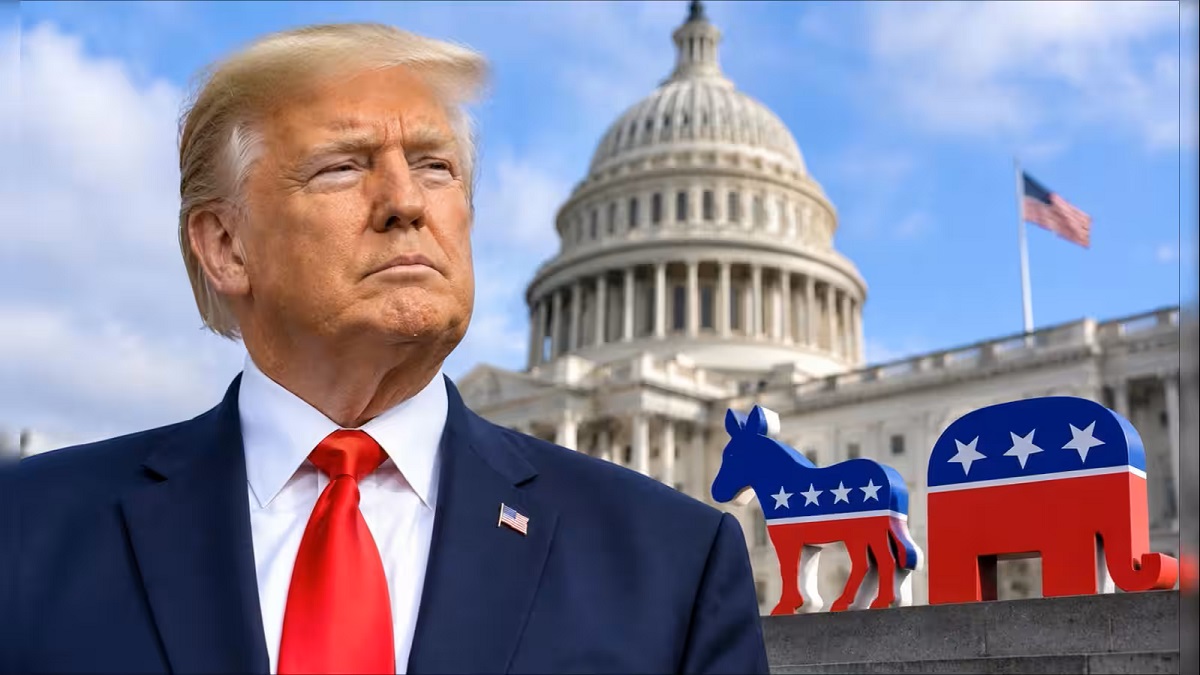
Democrats secure projected control of both chambers of Congress following major victories in the 2026 US midterm elections.
WASHINGTON, November 4, 2026
Democrats have secured control of both chambers of the US Congress in a sweeping midterm election victory, according to projections by CBS News, dealing a major political setback to President Donald Trump and the Republican Party. The results include a historic Senate victory in South Carolina, where Democrat Annie Andrews defeated Republican Darline Graham, ending nearly three decades of Republican dominance in the state’s Senate elections.
The outcome marks a significant shift in Washington’s political balance and sets up a new period of confrontation between the Democratic-controlled Congress and Trump’s administration during the final two years of his presidency.
Key Points
Democrats have won the House majority, according to CBS News projections.
Democrats have also secured a Senate majority after flipping several Republican-held seats.
Annie Andrews defeated Darline Graham in South Carolina, delivering Democrats a historic victory.
Democratic gains in traditionally Republican states highlight the scale of the party’s electoral breakthrough.
The new congressional balance could bring increased investigations and oversight of the Trump administration.
Democrats Take Control of Both Chambers
The 2026 midterm elections have produced a major change in the balance of power in Washington. Democrats have won enough projected victories to take control of the House of Representatives and the Senate, according to CBS News.
The results represent a reversal of the Republican Party’s congressional advantage and give Democrats a stronger position to challenge the president’s legislative priorities.
The House victory is particularly significant because the chamber plays a central role in approving federal legislation, overseeing government spending and conducting investigations into the executive branch.
With Democrats preparing to take control, congressional committees could become a major source of scrutiny for the Trump administration.
Annie Andrews Delivers Historic South Carolina Upset
One of the most striking developments came from South Carolina, where Democrat Annie Andrews defeated Republican Darline Graham in the US Senate race.
Andrews, a pediatrician, became the first Democrat to win a Senate seat in South Carolina since 1998. Her victory also makes her the first woman elected to represent the state in the US Senate.
The result is especially significant because Trump carried South Carolina by approximately 18 percentage points in the 2024 presidential election.
Graham had been appointed to the Senate following the death of her brother, Republican Senator Lindsey Graham, in July. She subsequently secured the Republican nomination and campaigned for a full six-year term.
Despite Trump’s support and substantial spending by Republican groups, Andrews managed to turn the race into a major Democratic breakthrough.
According to Reuters, Republican outside groups invested approximately $27 million in defending the seat, while Democratic groups spent around $24 million attempting to flip it.
The result highlights how national political dissatisfaction, candidate appeal and local campaign dynamics can combine to make traditionally safe seats competitive.
Republican Strongholds Become Competitive
South Carolina was not the only state where Democrats made significant gains.
Democratic candidates also secured important victories in states including North Carolina, Ohio, Kansas and Texas, according to election projections and reported results.
These contests were particularly important because Republicans had entered the election with majorities in both chambers.
The victories in traditionally Republican territory suggest that Democratic gains were not limited to the party’s established strongholds.
Reuters reported that concerns over the economy, living costs, fuel prices and the Iran war contributed to voter dissatisfaction with the administration.
However, individual races also reflected local political circumstances, meaning the results should not be attributed to a single issue or voter motivation.
What the Results Mean for Trump’s Presidency
The shift in congressional control could significantly affect Trump’s ability to advance his domestic agenda.
A Democratic majority in both chambers would give the opposition party greater influence over legislation, government spending, congressional investigations and oversight hearings.
It could also create difficulties for Republican efforts to secure support for the administration’s remaining legislative priorities.
However, a change in congressional control does not remove presidential powers. Trump retains the authority to veto legislation, and Democrats would need sufficient support to overcome a presidential veto.
The new Congress is therefore likely to face a difficult political environment, with negotiations, investigations and disagreements over federal policy potentially dominating Washington.
Why the 2026 Midterms Matter
The election results represent more than a change in congressional party leadership. They provide an important indication of the political challenges facing Republicans as Trump enters the final two years of his second term.
For Democrats, the victories offer an opportunity to rebuild political momentum and establish a stronger position ahead of the next presidential election.
For Republicans, losing both chambers raises questions about the party’s electoral strategy, candidate selection and ability to maintain support among voters concerned about economic conditions.
Although the remaining vote counts and official certification processes still matter, the projected results have already established the 2026 midterms as a major turning point in American politics.
Hello! I'm M Muzamil Shami, the founder and lead editor of Star Struck Times, your trusted source for trending news, entertainment scoops, celebrity gossip, sports highlights, and global headlines.
With a passion for storytelling and journalism, I created this platform to bring you breaking news, viral moments, and deep insights into the worlds of Bollywood, Hollywood, sports, politics, tech, and more — all in one place.