


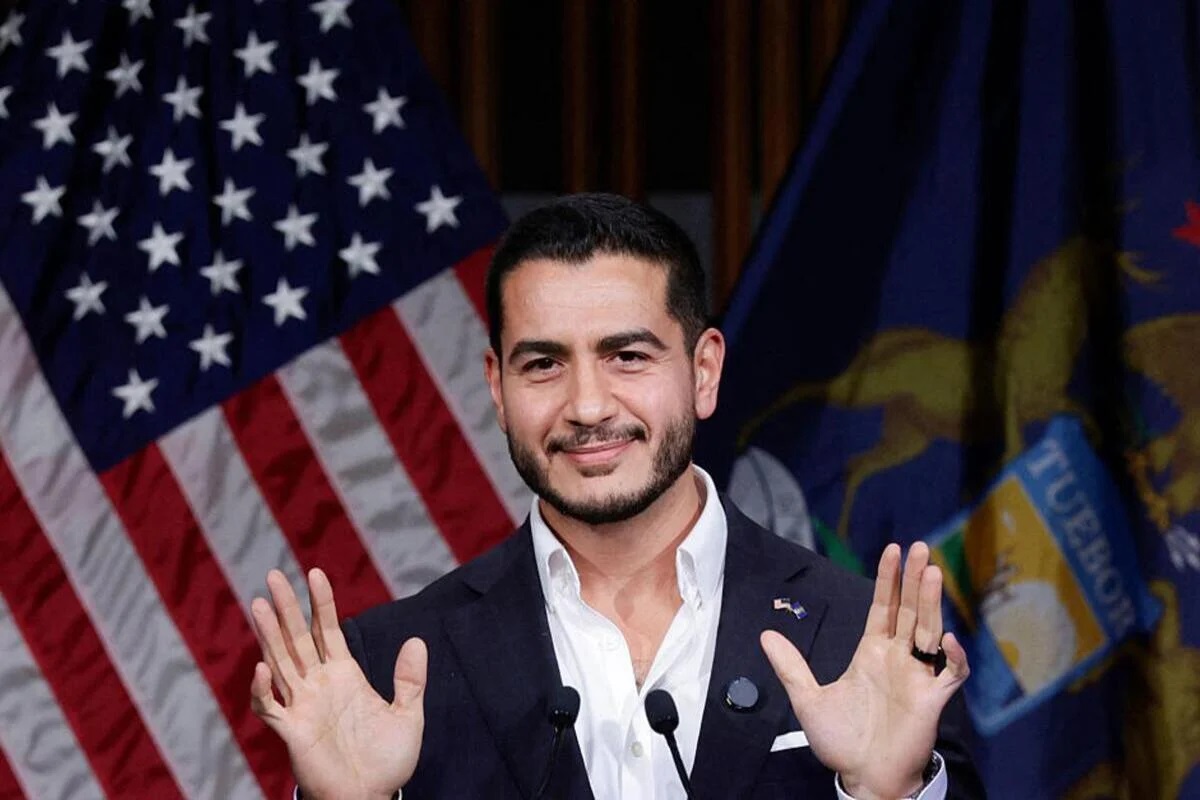
November 5, 2026 | DEARBORN, Michigan
Democrat Abdul El-Sayed has made US political history by becoming the first Muslim elected to the United States Senate, defeating Republican Mike Rogers in Michigan’s 2026 midterm elections after a campaign marked by attacks on his faith and questions about his loyalty to the country.
El-Sayed, 42, a Michigan-born Egyptian American and former Detroit health director, turned the Republican attacks into a central issue in his victory message. His win came as Democrats made sweeping gains nationwide, taking control of both chambers of Congress in a major setback for President Donald Trump and his party.

The Michigan contest attracted national attention after Trump and several prominent Republicans repeatedly portrayed El-Sayed as a national security threat. The Democrat rejected the accusations and argued that the campaign had relied on religious prejudice rather than a serious discussion of voters’ concerns.
Key Points
- Abdul El-Sayed becomes the first Muslim elected to the US Senate.
- He defeated Republican Mike Rogers in Michigan’s closely watched Senate race.
- Trump and Republican allies repeatedly targeted El-Sayed over his Muslim identity.
- El-Sayed’s campaign focused on healthcare, affordability and other everyday concerns.
- His victory comes amid a wider Democratic takeover of Congress.
Attacks on El-Sayed’s Muslim Identity Became a Defining Issue
The campaign against El-Sayed went beyond conventional political disagreements. According to Reuters, Trump repeatedly labelled him a jihadist and terrorist, while campaign advertisements attempted to associate him with extremist groups and suggested he would introduce Sharia law in Michigan.
Republican allies also questioned his loyalty to the United States. El-Sayed denied the accusations, including claims linking him to the Muslim Brotherhood. Reuters reported that no evidence had emerged establishing an association between him and the organisation.
Republican candidate Mike Rogers maintained that his objections were ideological rather than religious. However, the rhetoric surrounding the race made El-Sayed’s faith one of its most prominent political issues.
The controversy also raised concerns among residents in and around Dearborn, which has one of the country’s largest Arab American communities. Local officials and residents told Reuters that the campaign had contributed to fears about anti-Muslim hostility and community safety.
Voters Focused on Everyday Economic Concerns
Despite the attention surrounding the attacks, the election also reflected wider concerns about the economy and the cost of living.
El-Sayed ran on a progressive platform that emphasised healthcare and affordability. Reuters reported that many voters interviewed in the Detroit area considered the personal attacks a distraction from issues affecting their daily lives.

That distinction is important in understanding the result. El-Sayed’s victory was not simply a symbolic milestone for Muslim representation. It also demonstrated that a candidate facing an unusually divisive campaign could win a major statewide contest while keeping economic and healthcare issues central to his message.
The attacks did resonate with some voters, however. Reuters interviewed several people who said El-Sayed’s religion or perceived links to extremism influenced their decision to support Rogers. The campaign therefore exposed continuing divisions over Muslim representation and religious identity in American politics.
A Historic Victory, but a Bigger Political Test Ahead
El-Sayed’s victory carries significance beyond his personal achievement. His election makes him the first Muslim member of the US Senate, creating a historic moment for Muslim Americans and communities that have long sought greater representation in national politics.
However, his success also brings expectations that extend beyond representation. Voters will now judge him on his ability to deliver on the issues that shaped his campaign.
In an interview with the Associated Press after the race was called, El-Sayed said Michigan had rejected a campaign focused on his name and appearance rather than policy issues.
With approximately 97% of the vote counted at the time of the AP report, he held a seven-percentage-point lead over Rogers. AP also reported that every Michigan county had shifted toward Democrats compared with the 2024 election.
El-Sayed acknowledged the historic significance of becoming the first Muslim senator but emphasised that winning the seat was only the beginning. His focus, he indicated, would be on what he could accomplish in office.
That is the next test for the Michigan Democrat: turning a historic election victory into meaningful political results.
His win also raises a broader question for Republicans after their midterm losses: whether campaigns centred on cultural and religious divisions can persuade voters when economic concerns remain prominent.
For El-Sayed, the immediate achievement is historic. The longer-term challenge will be proving that the coalition behind his victory can translate into effective representation in Washington.
Reporting note: This article focuses on the Michigan Senate race rather than repeating the broader national election results covered in Star Struck Times’ existing midterm report.