WASHINGTON, Sept. 24, 2026 — U.S. President Donald Trump gave Chinese President Xi Jinping an unusually prominent welcome at Joint Base Andrews on Wednesday as Xi began a three-day state visit to Washington, while U.S. Treasury Secretary Scott Bessent said Washington and Beijing had agreed to extend their trade truce into January.
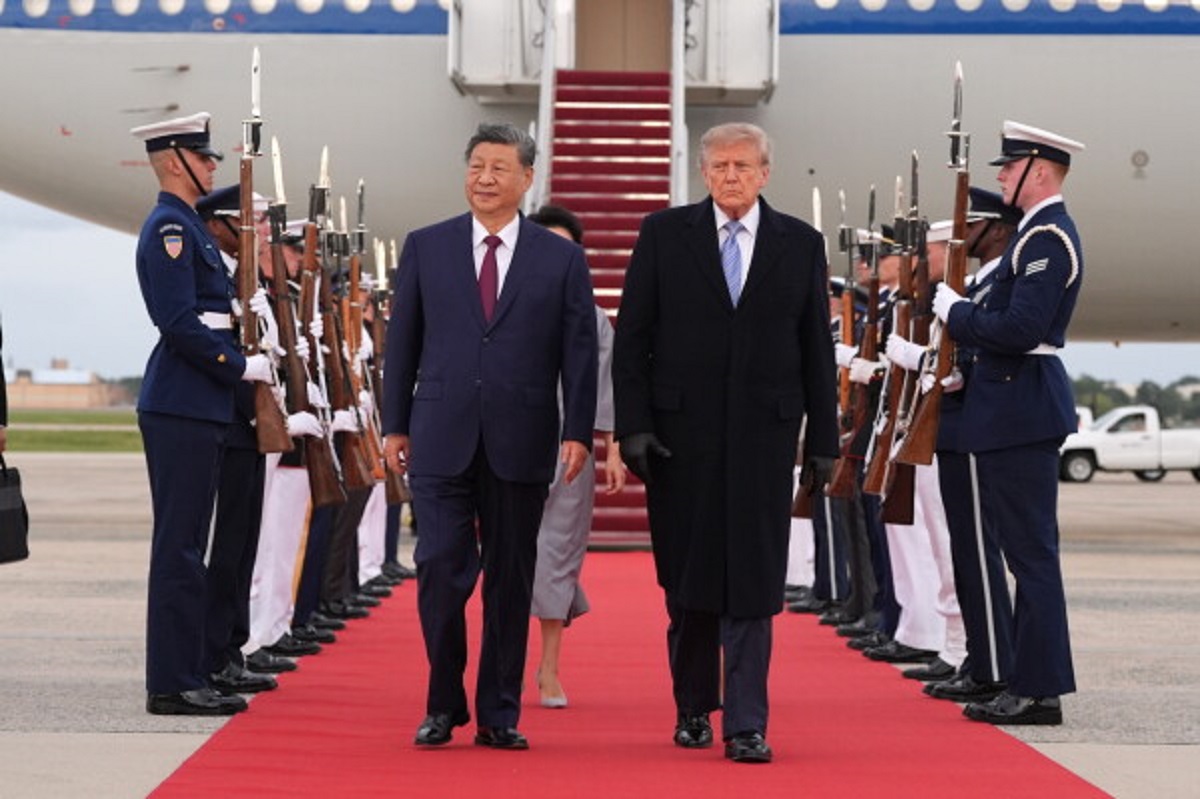
Trump personally greeted Xi and his wife, Peng Liyuan, on the tarmac, where a military band, U.S. and Chinese flags, a red carpet and a military flyover marked the arrival. Xi’s visit is his first to Washington since 2015 and comes as the two governments try to stabilize relations without resolving their deeper disputes over trade, advanced technology, Taiwan and other security issues.
Key points
- Trade truce extended: Bessent said the existing U.S.-China trade arrangement, originally due to expire Nov. 10, will be extended by two months to allow negotiations on a broader agreement to continue.
- Rare planeside welcome: Trump met Xi personally at Andrews, an unusually high-profile gesture for a visiting foreign leader. AP described the greeting as rare, while the White House had announced beforehand that Trump would receive Xi at the base.
- Trade commitments remain a challenge: Earlier agreements included Chinese commitments involving U.S. agricultural products and Boeing aircraft, but AP reported that progress on some commitments has fallen short of expectations.
- AI and technology are central: The countries remain competitors in artificial intelligence and advanced technology, even as officials seek mechanisms to manage tensions and keep talks open.
- Taiwan and Iran add geopolitical pressure: The summit comes with disagreements extending beyond economics, including Taiwan and China’s relationship with Iran.
Xi said in a statement carried by China’s state news agency Xinhua that the United States and China should be “partners rather than rivals” and expressed confidence that his visit would produce results.

The trade truce extension is one of the clearest immediate outcomes surrounding the visit. Reuters reported that the two sides agreed to extend the arrangement by two months, giving negotiators additional time to work toward a potentially larger trade agreement.
But the extension does not remove the underlying economic disputes. AP reported ahead of the summit that implementation of previous commitments had been uneven, including China’s promised purchases of U.S. agricultural products and an earlier commitment involving 200 Boeing aircraft.
That distinction is important as Trump and Xi move into their formal talks. The public welcome signals an effort to keep the relationship stable, while the substance of the meetings will test whether that stability can produce further agreements.
The White House has scheduled a formal state arrival ceremony for Thursday, followed by meetings and a state dinner. First lady Melania Trump is also scheduled to host Peng Liyuan at the Smithsonian National Museum of Asian Art. The visit is due to conclude Friday.
For now, the trade-truce extension provides more negotiating time rather than a final settlement. The more consequential question is whether Trump and Xi can convert that temporary breathing room into concrete progress on the economic and security disputes that continue to define U.S.-China relations.