U.S.-Iran talks focus on Strait of Hormuz tensions
Islamabad, Pakistan, April 12, 2026, 11:40 PM — Star Struck Times
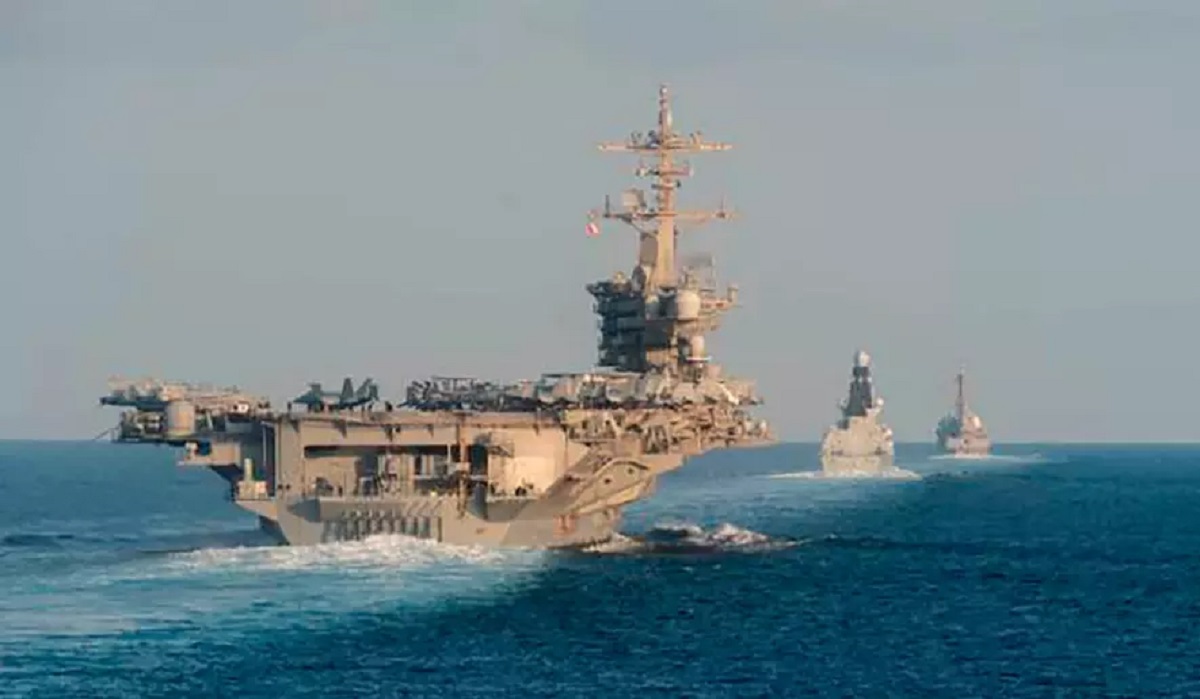
High-stakes U.S.-Iran peace talks stretched late into Sunday night in Islamabad, signaling both urgency and uncertainty in efforts to prevent a broader regional conflict. According to multiple international reports, discussions focused on de-escalation in the Persian Gulf—particularly around the Strait of Hormuz—while Iran firmly denied claims that U.S. Navy destroyers had recently passed through the strategic waterway. For more global developments, visit our World News section.
Key Highlights
U.S. and Iran negotiations continued past midnight in Islamabad
Talks centered on de-escalation and maritime security in Hormuz
Iran denied reports of U.S. Navy destroyers entering the strait
Diplomatic pressure mounts as global oil markets watch closely
No official agreement announced yet, but talks remain ongoing
What Happened in Islamabad?
Diplomatic efforts between the United States and Iran intensified over the weekend, with delegations from both sides engaging in prolonged discussions aimed at reducing military tensions. The talks, reportedly mediated through backchannel diplomacy, took place in Islamabad—an increasingly important neutral ground for sensitive negotiations.
According to reporting by The Washington Post, negotiations extended well past midnight, suggesting that both parties see value in continuing dialogue rather than escalating conflict.
At the center of the discussions is the Strait of Hormuz, a narrow but critical passage through which nearly 20% of the world’s oil supply flows. Any disruption here could trigger immediate global economic consequences.
Meanwhile, Forbes reported that Iran strongly rejected claims that U.S. Navy destroyers had entered the strait, calling such reports “misleading” and potentially harmful to ongoing diplomatic efforts.
Rising Tensions—and Strategic Denials
The denial from Iranian officials is not just a rebuttal—it’s a calculated diplomatic move. By rejecting the presence of U.S. warships in Hormuz, Iran appears to be signaling restraint while also pushing back against narratives that could justify military escalation.
A senior analyst in Middle East geopolitics noted:
“These denials are part of a broader strategy—both sides are trying to control the narrative while keeping negotiations alive.”
On social media, reactions have been mixed. Some observers see the extended talks as a hopeful sign:
“At least they’re still talking. That’s better than missiles,” one user wrote.
Others remain skeptical:
“Talks don’t mean peace—just buying time,” another commented.
Why This Matters Globally
The U.S.-Iran talks are not just about two nations—they have global implications.
The Strait of Hormuz is one of the most strategically important chokepoints in the world. Any military activity or perceived threat in the region can immediately impact oil prices, shipping routes, and international trade.
In recent years, tensions between the U.S. and Iran have fluctuated between diplomatic engagement and near-conflict scenarios. This latest round of talks comes at a time when global markets are already sensitive due to economic uncertainty and geopolitical instability.
If these negotiations succeed, they could stabilize not just the region—but also global energy markets.
A Pattern of Fragile Diplomacy
This is not the first time U.S.-Iran relations have hinged on late-night negotiations. From the 2015 nuclear deal to more recent indirect talks, diplomacy between the two nations has often been slow, complex, and fragile.
What makes the current situation different is the heightened sensitivity around maritime security and the increasing involvement of third-party nations facilitating dialogue.
Pakistan’s role as a host reflects a broader shift toward regional mediation in global conflicts.
The Untold Angle: Information Warfare
Beyond military and diplomatic tensions, there is another battlefield—information.
Conflicting reports about naval movements in the Strait of Hormuz highlight how narratives can shape global perception. Whether intentional or not, such claims can influence markets, public opinion, and even negotiation outcomes.
Experts suggest that both sides are carefully managing information flow:
“In modern geopolitics, controlling the story is almost as important as controlling territory.”
This adds a layer of complexity to the talks—where truth, perception, and strategy are deeply intertwined.
What Happens Next?
As of now, no official agreement has been announced. However, the continuation of talks itself is a positive indicator.
Key questions moving forward:
Will both sides agree on a framework for de-escalation?
Can trust be rebuilt after years of tension?
How will global markets react in the coming days?
Diplomatic insiders suggest that even a temporary agreement could significantly reduce immediate risks.
But until a formal statement is released, uncertainty remains the dominant theme.
FAQs
1. Why are the U.S.-Iran talks happening now?
The talks are driven by rising tensions in the Strait of Hormuz and the need to prevent military escalation that could impact global trade.
2. What is the Strait of Hormuz and why is it important?
It’s a critical shipping route through which about 20% of global oil supply passes, making it vital for the global economy.
3. Did U.S. Navy destroyers enter the Strait of Hormuz?
Iran has denied these reports, calling them inaccurate and potentially harmful to diplomacy.
4. Where are the talks taking place?
The negotiations are being held in Islamabad, Pakistan.
5. What could happen if the talks fail?
Failure could lead to increased military tensions, disrupted oil supplies, and global economic instability.
Sources
Forbes — U.S.-Iran Peace Talks Coverage
The Washington Post — Islamabad Negotiations Report
Hello! I'm M Muzamil Shami, the founder and lead editor of Star Struck Times, your trusted source for trending news, entertainment scoops, celebrity gossip, sports highlights, and global headlines.
With a passion for storytelling and journalism, I created this platform to bring you breaking news, viral moments, and deep insights into the worlds of Bollywood, Hollywood, sports, politics, tech, and more — all in one place.