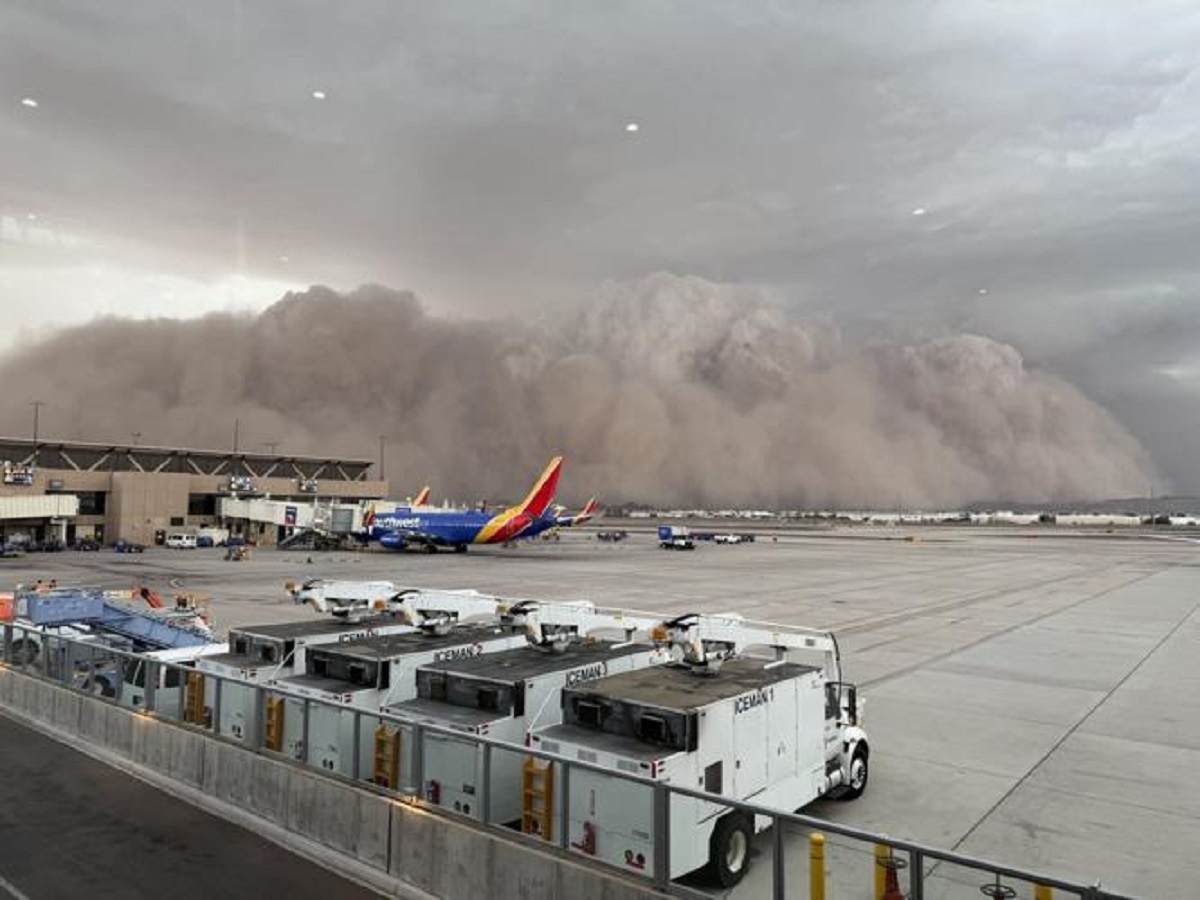
A massive haboob rolls across the Phoenix metro area, triggering emergency warnings and widespread power outages.
Massive Phoenix Haboob Triggers Emergency Warnings and Power Outages
PHOENIX, USA, August 20, 2026 — Star Struck Times. A towering wall of blinding dust and severe monsoon thunderstorms slammed into the Phoenix metropolitan area, plunging major transit corridors into near-zero visibility, knocking out power to thousands of homes, and triggering urgent weather warnings across Maricopa and Pinal counties.
The sudden onset of the high-velocity haboob forced public safety officials to issue immediate shelter-in-place advisories, warning drivers on I-10 and I-17 to pull off the roadway as winds exceeding 50 mph whipped loose desert soil into a dense, suffocating haze.
Emergency Metric
Current Status / Impact Detail
Peak Wind Gusts
50–70+ MPH recorded across Valley storm cells
Primary Risk Level
Severe Thunderstorm & Category 5 Dust Storm
Visibility Impact
Reduced to under 0.25 miles on key corridors
Grid Status
Widespread local outages across Maricopa County
Air Travel Impact
Ground delays & route diversions at Phoenix Sky Harbor
Key Points Summary
Catastrophic Visibility Drop: A massive haboob swept through the Southeast Valley, reducing visibility to near zero in minutes.
Severe Weather Warnings: The National Weather Service (NWS) issued dual Severe Thunderstorm and Dust Storm Warnings across Phoenix, Mesa, Chandler, and Queen Creek.
Power Grid Under Strain: Utility crews were dispatched to handle widespread regional blackouts caused by high winds and snapped distribution lines.
Travel Alerts Active: Officials issued strict “Pull Aside, Stay Alive” directives for drivers caught on Valley freeways.
Monster Haboob Swallows Metro Phoenix in Sudden Monsoon Rampage
The desert sky transformed from a scorched afternoon haze into an apocalyptic brown wall within minutes as the latest monsoon system hit the Valley floor. Produced by collapsing thunderstorm downdrafts, the massive outflow pushed millions of tons of dry desert soil straight toward downtown Phoenix, Mesa, and Chandler.
As the dense dust wall moved over urban sectors, ambient light disappeared, turning 5:00 PM into a murky, dusk-like twilight. Atmospheric pressure dropped drastically while surface temperatures plummeted over 15 degrees in under twenty minutes—a classic marker of severe monsoonal outflow.
For residents, the sudden onset brought instant chaos. “You could see the wall coming over the mountains, but once it hit the pavement, everything went completely black,” recounted one commuter stuck near the East Valley. Flight operations at Phoenix Sky Harbor International Airport faced immediate ground holds, with aircraft forced into holding patterns while ground crews paused ramp operations to navigate blinding wind-blown debris.
Hidden Context: What Other Reports Missed
While local coverage focused heavily on flight delays and fallen tree branches, atmospheric researchers point to a far more concerning phenomenon: back-to-back Category 5 dust storms driven by extreme antecedent heat. Prior to the monsoon burst, Phoenix endured prolonged extreme heat, baking the topsoil and creating ideal conditions for extreme atmospheric dust loading.
According to local meteorological scales, these massive dust events carry atmospheric particle concentrations up to five times higher than routine desert dust storms. The sheer density of the particulate matter means air filter systems in residential units and commercial buildings face instant overload, posing severe respiratory risks for vulnerable populations hours after the main front clears.
Common Search Queries
What triggered the sudden dust storm in Phoenix today?
The dust storm, or haboob, was caused by strong downdrafts from collapsing monsoon thunderstorms southeast of the metro area. Cold air slammed into the desert floor, rushing outward at speeds up to 70 mph and lifting loose, dry topsoil into a massive wall of dust.
How do I check local power outages near me in Maricopa County?
Residents experiencing blackouts should check the official outage maps provided by Arizona Public Service (APS) or the Salt River Project (SRP) directly via their mobile portals to track real-time restoration times.
Frequently Asked Questions (FAQs)
Q1: What should I do if I am driving when a haboob hits?
A: Follow the Arizona Department of Transportation’s official “Pull Aside, Stay Alive” safety protocol: pull your vehicle completely off the paved roadway, turn off all lights (including headlights and emergency flashers), take your foot off the brake, and keep your seatbelt fastened until visibility returns.
Q2: Is a haboob different from a regular dust storm?
A: Yes. While all haboobs are dust storms, a haboob specifically refers to a massive, highly concentrated wall of dust created by atmospheric collapse and thunderstorm outflows, resulting in far higher particulate concentrations and rapid drops in visibility.
Q3: How long do Phoenix dust storms typically last?
A: The intense visual “wall” of a haboob generally passes over a specific location within 15 to 30 minutes, though localized particulate haze and secondary dust surges can linger for several hours depending on lingering wind activity.
Are you currently navigating the monsoon storm in the Phoenix metro area? Drop your location, current weather conditions, and visibility updates in the comments below to keep fellow travelers informed!
Hello! I'm M Muzamil Shami, the founder and lead editor of Star Struck Times, your trusted source for trending news, entertainment scoops, celebrity gossip, sports highlights, and global headlines.
With a passion for storytelling and journalism, I created this platform to bring you breaking news, viral moments, and deep insights into the worlds of Bollywood, Hollywood, sports, politics, tech, and more — all in one place.