SHANGHAI, CHINA, August 10, 2026 — Star Struck Times
The eastern coastline of China is reeling after Typhoon Dolphin—the most destructive tropical cyclone to strike the mainland this year—roared ashore with sustained winds reaching 151 km/h (94 mph), forcing state authorities to execute a emergency relocation of over one million residents. Making initial landfall near Yuhuan in Zhejiang province on Sunday evening before hammering the financial hub of Shanghai, the Category 1-equivalent monster has paralyzed major transportation networks, stranded thousands of travelers, and triggered severe flood warnings across six eastern provinces. As rivers rise beyond critical flood thresholds and red-alert warnings echo across the region, cities are locked down while emergency crews scramble to mitigate landslides and catastrophic storm surges.
Key Points Summary
- Mass Evacuation Unleashed: Over 1,000,000 residents across Zhejiang, Shanghai, and Fujian provinces have been moved to emergency municipal shelters.
- Double Landfall Devastation: Typhoon Dolphin made first landfall at Yuhuan, Zhejiang around 5:30 PM local time packing 151 km/h winds, striking Wenzhou shortly after.
- Air & Maritime Standstill: Over 1,400 flights were abruptly canceled across Shanghai’s Pudong and Hongqiao international hubs, alongside major grounding at Hangzhou Airport.
- Torrential Deluge Warnings: Meteorological forecasters predict up to 500 mm (nearly 20 inches) of rainfall in central Zhejiang, with heavy downpours extending into Henan, Hubei, and Jiangsu.
- Economic & Supply Chain Impact: Major maritime container terminals, including Shanghai’s Yangshan Port, halted operations and cleared berths to protect shipping infrastructure.
               TYPHOON DOLPHIN TRAJECTORY & IMPACT ZONE

      [ Okinawa, Japan ] --------> [ Taiwan Strait ]
    (Injuries / 50k Outages)       (180+ Flights Axed)
                                           |
                                           v
                              [ Landfall: Yuhuan, Zhejiang ]
                              (151 km/h Winds / 900k Evacuated)
                                           |
                                           v
  +-------------------------------------------------------------------+
  |                       EASTERN CHINA GRID                          |
  |                                                                   |
  |  [ Shanghai Hub ]        [ Yangtze River Delta ]   [ Inland Path ] |
  |  • 1,400+ Flights Axed   • 500mm Rain Threat     • Westward Slow |
  |  • Yangshan Port Closed  • River Flood Red Alert  • Landslide Risk|
  +-------------------------------------------------------------------+
The Megacity Under Siege
As dusk fell on Sunday evening, the sky above Shanghai turned an unnatural shade of dark slate as Typhoon Dolphin’s terrifying outer bands enveloped the Yangtze River Delta. The storm arrived after carving a destructive swath through Japan’s southern Okinawa prefecture—where it cut power to 50,000 homes—and whipping northern Taiwan with torrential downpours. By the time Dolphin struck Zhejiang province, the China Meteorological Administration had issued its highest-level red alert, warning of “extraordinary torrential rain” and atmospheric surges capable of inundating low-lying coastal cities.

The physical scale of the emergency operation is staggering. In Wenzhou alone, local officials mobilized high-speed transit units and police convoys to move more than 900,000 people out of mountainous hazard zones and unreinforced structures into 1,000 designated emergency centers. In neighboring Fujian province, nearly 100,000 coastal workers and residents were pulled back from high-risk offshore sites, while 290 construction vessels were ordered to drop anchor in protected inland waters.
+-------------------------------------------------------------------------+
|                REGIONAL EVACUATION & DISRUPTION METRICS                 |
+---------------------+-------------------+-------------------------------+
| Region / City       | Evacuations       | Operational Disruption        |
+---------------------+-------------------+-------------------------------+
| Zhejiang Province   | 900,000+          | Rail suspended, 270 flights   |
| Shanghai Megacity   | 30,300+           | 1,400+ flights canceled       |
| Fujian Province     | 98,900+           | 55 ferry routes shut down     |
| Maritime Sector     | 474 Vessels Anchored| Yangshan Port cleared       |
+---------------------+-------------------+-------------------------------+
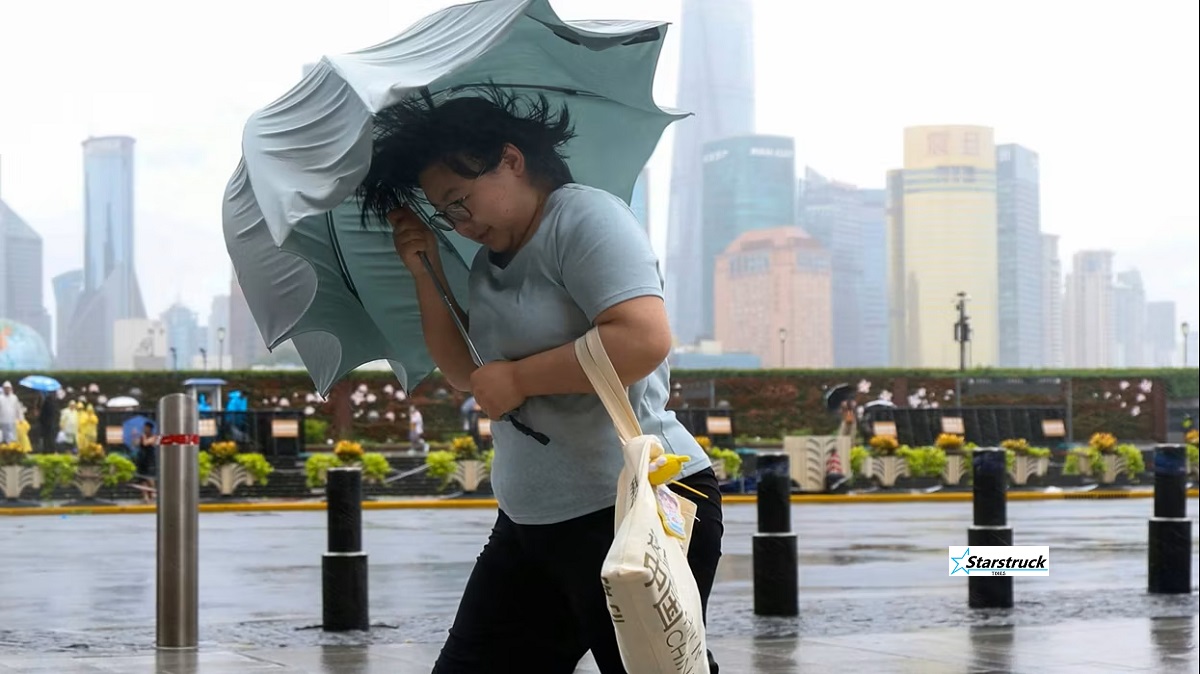
For Shanghai—a bustling metropolis of 24 million—the atmospheric onslaught brought urban movement to a grinding halt. State television broadcast footage of deserted highways, wind-whipped skyscrapers, and flooded arterial avenues. At Shanghai Pudong and Hongqiao airports, terminal halls were transformed into sprawling waiting zones as flight departure boards turned entirely red with cancellations. Ground transportation wasn’t spared either: China Railway Shanghai Group suspended high-speed lines connecting eastern coastal centers to the interior.
What Other Reports Missed: The Micro-Impacts & Economic Friction
While global headlines focus purely on macro-evacuation numbers, the operational friction on the ground highlights a fascinating divide in public perception and severe economic disruption.
- The Seasoned Resident vs. Stranded Tourist Divide:In local transit hubs, a stark contrast emerged between visitors and typhoon-tested locals. While thousands of panicked tourists found themselves stranded due to sudden airline suspensions, seasoned coastal natives treated the storm with stoic familiarity. “To us coastal residents, a typhoon like this is just part of everyday life,” noted Chen, a traveler from Guangdong stranded at Shanghai Pudong after his family’s flight was grounded. Yet despite the calm attitude of locals, state officials refused to take chances, enforcing mandatory indoor stay-at-home orders as the storm moved inland.
- The “Slow-Motion” Inland Flood Threat:Chief meteorologists warn that Dolphin’s greatest hazard isn’t its initial landfall wind speed, but its post-landfall stalling trajectory. Forecast models show the typhoon slowing down as it moves westward toward central China. This stalling mechanism acts as an atmospheric sponge, dumping up to 500 mm (20 inches) of rain over river basins like the Qiantang, Yong, and Jiao. Small-to-medium river systems are expected to breach historical warning thresholds, creating severe landslide risks across inland Zhejiang and Anhui provinces through midweek.
- Global Logistics & Supply Chain Shocks:Shanghai’s Yangshan Deep-Water Port—the busiest container port on earth—took the preventive measure of evacuating all berths and moving hundreds of cargo ships to open-water anchorages. Fuel bunkering operations were completely frozen. Supply chain analysts estimate that a 48-to-72-hour operational shutdown at Yangshan will cause ripple effects across trans-Pacific shipping routes for up to three weeks, delaying electronics and consumer goods exports bound for North American and European markets.
4. ENGAGEMENT
- What is Typhoon Dolphin’s current status in China?Typhoon Dolphin made landfall near Yuhuan, Zhejiang on Sunday evening as a Category 1-equivalent storm with 151 km/h winds. It was downgraded to a tropical storm on Monday morning as it tracked westward toward central China, continuing to cause torrential rainfall.
- How many people were evacuated due to Typhoon Dolphin?More than 1 million residents have been evacuated across eastern China, including over 900,000 in Zhejiang province, 98,900 in Fujian, and more than 30,000 in Shanghai.
Frequently Asked Questions (FAQs)
Q1: How severely are Shanghai flights and trains affected by the storm?
A: Major transport networks are heavily disrupted. Shanghai’s Pudong and Hongqiao airports canceled over 1,400 flights (roughly 60% of scheduled traffic), while Hangzhou Airport canceled over 270 flights. High-speed rail services across Zhejiang and Jiangsu provinces remain selectively grounded.
Q2: Which provinces are at the highest risk for severe flooding?
A: Zhejiang, Shanghai, Jiangsu, Anhui, Fujian, Henan, and Hubei are under high-level alerts. Central Zhejiang is projected to absorb up to 500 mm of total rainfall, presenting extreme flash flood and landslide hazards.

Q3: How does Typhoon Dolphin compare to other recent storms in the region?
A: Dolphin is the strongest tropical cyclone to hit mainland China so far this year. It closely follows Typhoon Noul, which struck southern Guangdong Province two weeks prior after causing widespread damage across the Philippines.
What do you think? Are coastal megacities doing enough to adapt their infrastructure to escalating climate events like Typhoon Dolphin? Drop your thoughts, travel updates, or emergency experiences in the comments below!