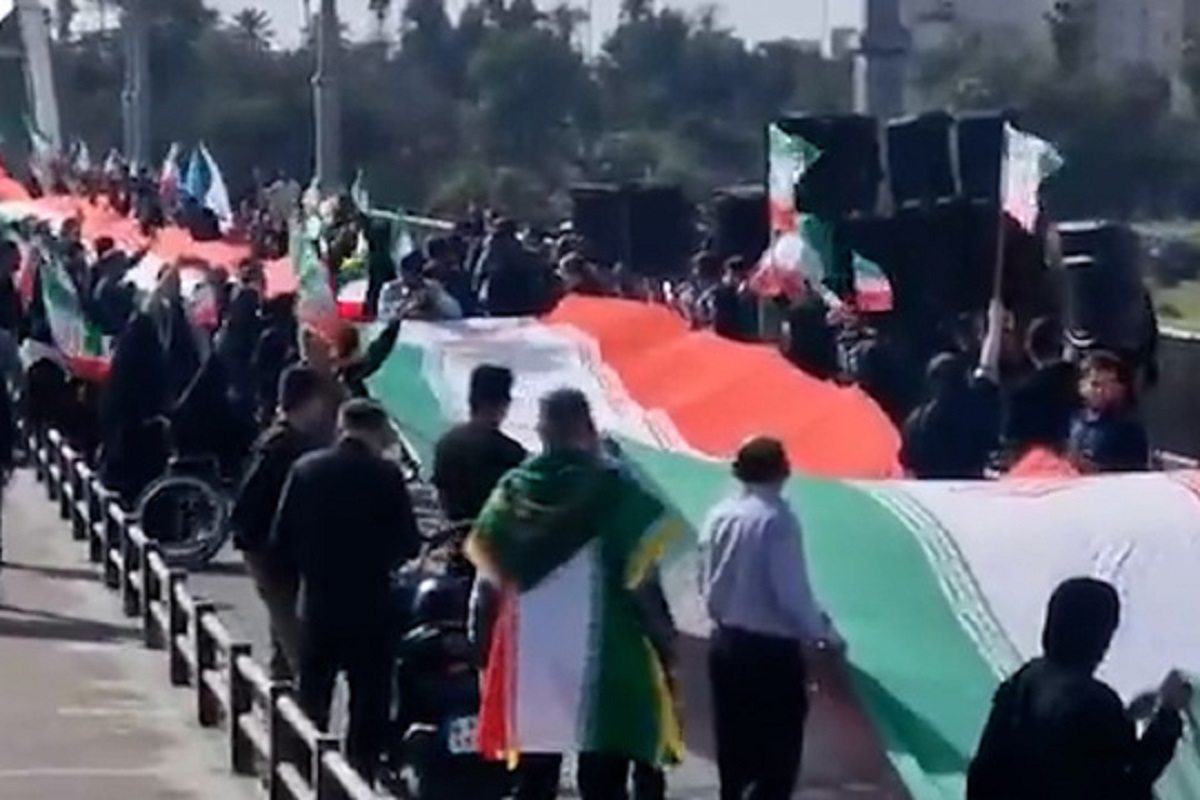
Civilians gather in Tehran forming human chains at key infrastructure sites
Tehran, Iran — April 8, 2026, 10:00 AM — Star Struck Times
In a striking display of civilian resistance, Iranians form human chains at bridges and power plants across major cities after escalating threats from the United States and Israel. The coordinated gatherings began late Tuesday night following statements by Donald Trumpwarning of potential strikes on critical infrastructure. The situation marks a rare moment where civilians physically position themselves as shields, raising urgent global concerns about escalation, humanitarian risk, and the future of regional stability.
Thousands of civilians gathered at bridges, power plants, and key infrastructure sites
Human chains formed in Tehran, Isfahan, and Mashhad
Triggered by direct threats to civilian infrastructure
Iranian officials encouraged public presence as a deterrent
Global observers warn of humanitarian and legal consequences
Social media flooded with images and videos of mass gatherings
What Happened: Civilians Step Into the Line of Fire
The phrase “Iranians form human chains at bridges and power plants” became a global headline overnight as videos surfaced showing long lines of civilians holding hands around critical infrastructure.
According to reports from Reuters and Al Jazeera, thousands responded to calls from Iranian authorities urging citizens to gather at locations considered potential targets. The move followed renewed rhetoric from Washington, where Donald Trump warned of targeting infrastructure if tensions escalate further.
Eyewitnesses in Tehran described an atmosphere of both fear and defiance.
“We are here because this is our home. If they strike, they strike us,” said one participant near a major power facility.
The gatherings were not limited to the capital. Similar scenes were reported in Isfahan near industrial plants and in Mashhad around transport bridges, signaling a coordinated nationwide response.
Global Reaction: Alarm Bells Over Human Shields
The international community has reacted with concern, as the development raises complex ethical and legal questions.
The United Nations Human Rights Office warned that the use of civilians—whether voluntary or encouraged—as protective barriers could escalate humanitarian risks. Meanwhile, analysts from the International Crisis Group noted that this tactic puts immense pressure on opposing forces, potentially deterring strikes but also increasing the stakes dramatically.
A Western diplomat, speaking anonymously to BBC News, stated:
“This creates a dangerous scenario where any military action risks massive civilian casualties, even if unintended.”
Social media platforms have amplified the situation, with hashtags related to “Iranians form human chains at bridges and power plants” trending globally. Videos show families, elderly citizens, and even children participating.
Why It Matters: A New Kind of Deterrence
This moment represents a shift in modern conflict dynamics. Instead of traditional military deterrence, civilians themselves are becoming the front line.
Military analysts suggest this tactic is designed to:
Increase political cost of any strike
Attract global attention and sympathy
Complicate military decision-making
Dr. Reza Khadem, a geopolitical analyst based in Europe, explains:
“This is psychological warfare as much as physical defense. It forces adversaries into a moral dilemma.”
If strikes occur despite these human chains, the fallout could be catastrophic—not just in terms of lives lost, but also in global public opinion.
Historical Context: Echoes of the Past
While unusual, this is not entirely unprecedented. During the Iran-Iraq War, civilians often played symbolic roles in national defense. More recently, similar tactics have been observed in conflict zones like Gaza, where civilians gathered around buildings to deter airstrikes.
However, the scale and coordination of the current situation—where Iranians form human chains at bridges and power plants across multiple cities—marks a significant escalation.
Unlike past events, this action is unfolding in real time on social media, making it impossible for the world to ignore.
Unique Angle: The Power of Visibility in Modern Warfare
What sets this situation apart is not just the act itself, but its visibility.
In today’s digital age, every human chain is instantly broadcast worldwide. This transforms a local defensive tactic into a global narrative battle.
The Iranian strategy appears to leverage:
Real-time video documentation
Viral social media engagement
International public pressure
In essence, civilians are not only forming physical barriers—but also shaping the global perception of the conflict.
What Happens Next
The coming days are critical.
If tensions continue to rise, the presence of civilians at strategic sites could either deter military action—or lead to unprecedented tragedy. Diplomatic channels are reportedly active, with European nations urging restraint on all sides.
Observers are watching closely to see whether:
The U.S. or Israel modifies its stance
Iran continues to mobilize civilians
International mediation efforts succeed
The world now faces a fragile moment where one decision could change everything.
FAQs
1. Why are Iranians forming human chains?
To deter potential attacks on infrastructure by physically placing civilians at targeted locations.
2. Who called for these gatherings?
Iranian authorities encouraged citizens after threats from the U.S.
3. Is this legal under international law?
It’s controversial—using civilians in this way raises serious humanitarian concerns.
4. Where are these human chains forming?
Major cities like Tehran, Isfahan, and Mashhad.
5. Could this stop military strikes?
Possibly—but it also increases the risk of civilian casualties if strikes occur.
Hello! I'm M Muzamil Shami, the founder and lead editor of Star Struck Times, your trusted source for trending news, entertainment scoops, celebrity gossip, sports highlights, and global headlines.
With a passion for storytelling and journalism, I created this platform to bring you breaking news, viral moments, and deep insights into the worlds of Bollywood, Hollywood, sports, politics, tech, and more — all in one place.