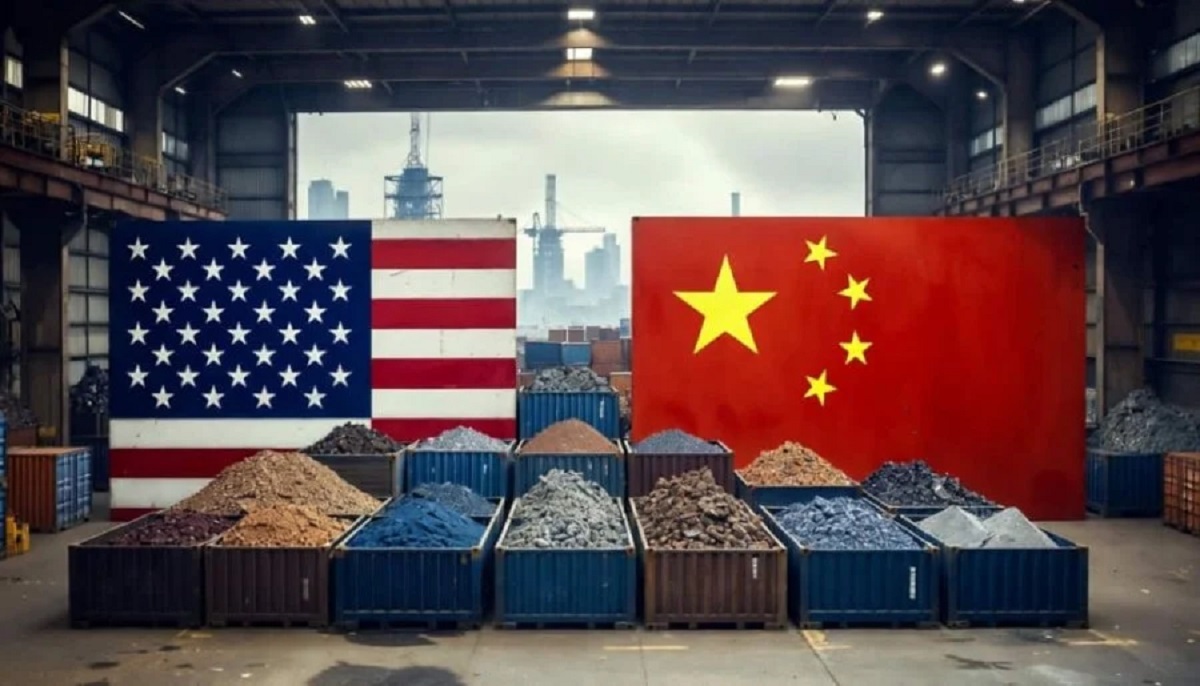
WASHINGTON — The United States on Feb. 4, 2026 convened representatives from more than 50 nations in Washington, D.C., for high‑level talks aimed at diluting China’s dominance over global critical minerals supply chains — a strategic priority for industries from semiconductors to electric vehicles. The meeting followed President Donald Trump’s unveiling of “Project Vault,” a $12 billion strategic reserve and trade initiative designed to diversify access to essential minerals commonly controlled or processed by China. The discussions are seen as pivotal in reshaping global supply chains and national security industrial bases.
Key Highlights
U.S. hosts global talks with 50+ countries to counter China’s grip on critical minerals.
“Project Vault” unveiled with $12 billion in funding to build a strategic stockpile.
Plans include a proposed critical minerals trade bloc and coordinated price floors.
Allies such as Japan, EU, South Korea, India support supply diversification.
What Happened: U.S. Hosts Critical Minerals Talks
On Feb. 4, 2026, the United States brought together delegates from more than 50 nations, including key partners from Asia, Europe, and Africa, to discuss reducing reliance on China for critical minerals — raw materials like rare earths, lithium, and cobalt vital for modern manufacturing. The summit built on President Trump’s Project Vault announcement days earlier, which creates a strategic reserve backed by $10 billion from the U.S. Export‑Import Bank and $2 billion in private capital.
Vice President JD Vance said the proposed trading bloc and aligned price floors are tools to ensure fair market conditions and protect domestic mining and processing sectors. U.S. Trade Representative Jamieson Greer outlined bilateral arrangements with the EU, Japan, and Mexico aimed at building resilient supply chains outside China’s dominance.
Official Responses and Public Reaction
Officials from allied nations broadly welcomed the initiative. Japan and the EU reaffirmed commitments to diversify critical minerals sources, noting the geopolitical urgency of supply chain security. A European trade official told Reuters that “this represents a major step toward collaborative industrial resilience.”
However, reactions varied — some industry analysts caution that reshaping decades‑old supply dependencies will be complex. Scott Kennedy, head of the China business program at the Center for Strategic and International Studies in Washington, said, “This effort shows recognition that the global supply landscape must change, but execution will require sustained investment and alignment.”
Why It Matters: Industry and Geopolitical Impact
Critical minerals are essential for semiconductors, renewable energy, defense systems, and electric vehicles. China controls a substantial share of the industry, with over 70% of rare earth mining and roughly 90% of processing capacity historically concentrated within its borders, contributing to global supply vulnerabilities.
By coordinating price floors and supply agreements with allies, the U.S. aims to reduce single‑point dependencies, encourage investment in alternative mining and processing infrastructure, and stabilize industrial inputs for advanced technology sectors. These shifts have broad implications for global trade patterns, manufacturing costs, and strategic autonomy for many countries.
Context: Past Moves and Long‑Term Strategy
The talks align with ongoing U.S. efforts — including the Pax Silica initiative, aimed at strengthening allied supply chains for advanced technologies, and legislative proposals to bolster Export‑Import Bank financing for critical materials. Critics note that China’s previous export curbs and price strategies have underlined the risk of concentrated supply chains, catalyzing political will for diversification. Similar discussions have taken place in G7 forums and bilateral talks between Western partners.
Conclusion: What Happens Next
The U.S. and its partners are expected to refine the critical minerals trade bloc framework and begin implementing coordinated policy tools such as price supports and strategic stockpiles. Further diplomatic negotiations will likely address how to balance global trade norms with protective measures, and how allied nations can scale mining and processing investments. Continued tensions with China over trade and resources may shape negotiations in the months ahead.
FAQs
Q1: Why are critical minerals so important? Critical minerals like lithium, cobalt, and rare earths are essential for modern tech, including EV batteries, semiconductors, renewable energy systems, and defense equipment. Supply disruptions can therefore impact both consumer markets and national security.
Q2: What is Project Vault? Project Vault is a U.S. government initiative to create a strategic stockpile of critical minerals, backed by approximately $12 billion in public and private funding, to reduce dependency on foreign sources.
Q3: How is China involved? China has historically dominated global supply chains for rare earth elements and other critical minerals, leading many countries to seek diversified sources and alliances to reduce strategic risk.
Q4: Who are the allied nations participating? Countries such as Japan, South Korea, India, Germany, Australia, and many others attended the Washington summit to discuss cooperation on critical minerals.
Q5: Could this reshape global supply chains? Yes — the coordinated pricing, stockpiling, and trade bloc proposals aim to diversify supply chains away from a single dominant supplier, potentially altering global industrial networks over the long term.
Stay informed on global economic and technology supply chain shifts — follow Star Struck Times for expert updates and in‑depth analysis.
Hello! I'm M Muzamil Shami, the founder and lead editor of Star Struck Times, your trusted source for trending news, entertainment scoops, celebrity gossip, sports highlights, and global headlines.
With a passion for storytelling and journalism, I created this platform to bring you breaking news, viral moments, and deep insights into the worlds of Bollywood, Hollywood, sports, politics, tech, and more — all in one place.