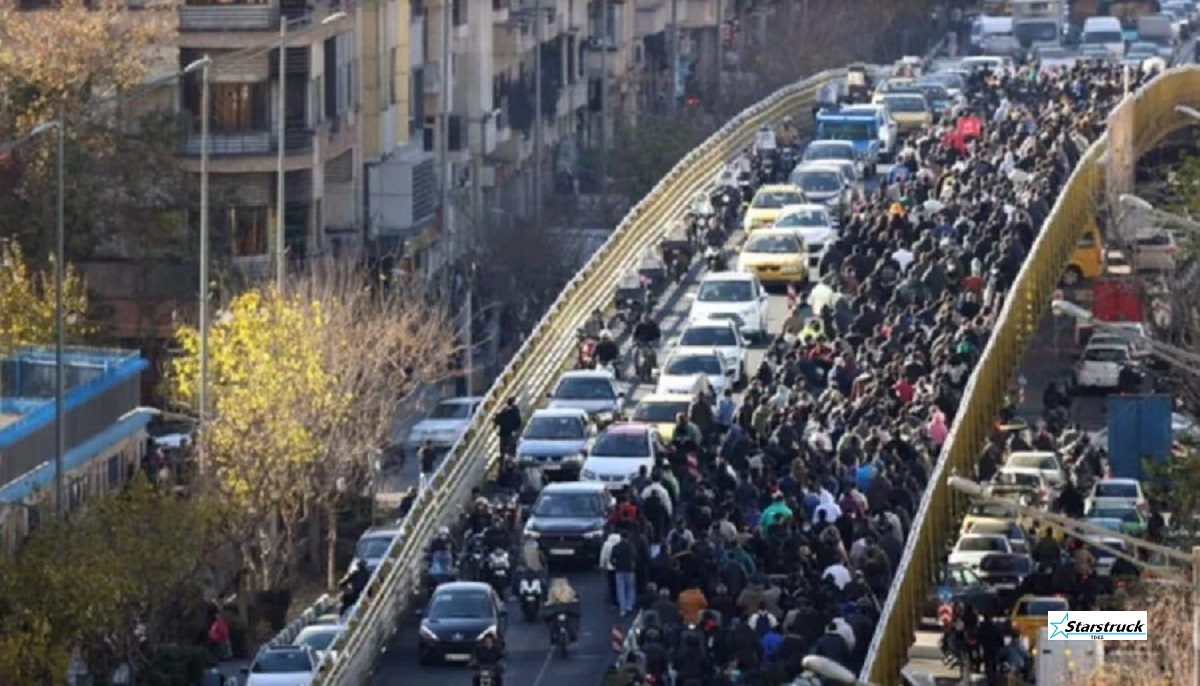
Demonstrators march in Tehran’s streets as public dissent grows over the falling rial and high inflation
Iran is witnessing one of its largest waves of public unrest in three years as protests enter a third consecutive day following a dramatic collapse in the value of the Iranian rial and surging inflation. Demonstrations that began on December 28, 2025, when traders and shopkeepers in Tehran’s Grand Bazaar closed their shops and marched in the streets, have since spread to major cities including Isfahan, Shiraz, Mashhad, Karaj, and Yazd.
The protests reflect deepening frustration over the cost‑of‑living crisis, with Iran’s currency falling to record lows against the U.S. dollar and inflation exceeding 40%. Officials have acknowledged the demonstrators’ grievances and offered dialogue, but the situation remains tense, with university students increasingly joining the movement.
Nationwide protests continue as the Iranian rial hits record lows against the U.S. dollar.
Inflation exceeds 40%, sending prices of food, healthcare, and essentials sharply higher.
Shops shut in Tehran’s Grand Bazaar, a historically influential economic district.
Students and youth join protests, broadening the dissent.
Government offers dialogue while facing mounting public pressure.
What Happened: Facts and Timeline
The unrest began on December 28, 2025, when merchants in Tehran’s historic bazaar closed shops in protest against the plunging value of the rial, which sank to approximately 1.4 million to the U.S. dollar — an unprecedented level that has sharply increased the cost of imports and basic goods.
By December 29–30, demonstrations had spread beyond Tehran to cities such as Isfahan, Shiraz, Mashhad, Karaj, and Yazd, with hundreds of protesters taking to the streets and videos circulating on social platforms showing large gatherings chanting economic and political slogans.
Notably, the protests have involved not only shopkeepers and traders but also university students and young Iranians, indicating a widening base of discontent. Some chants have reflected broader political frustration, including calls for systemic changes and demands for better governance.
Public Reaction and Official Response
Many protesters have expressed frustration not only over economic hardship but also perceived government mismanagement. One Tehran resident told reporters, “We cannot afford food or medicine anymore — we need concrete solutions.” Meanwhile, officials have taken a more conciliatory tone than in past crackdowns.
PresidentMasoud Pezeshkian directed the interior minister to engage in talks with protest representatives and address “legitimate demands,” while government spokeswoman Fatemeh Mohajerani said Tehran recognizes the protests and aims to establish a dialogue mechanism.
However, the broader public remains cautious. “If talks don’t bring real change, people will return to the streets,” said an economics student in Tehran, reflecting skepticism about negotiated outcomes. Analysts note that the willingness for dialogue is partly aimed at reducing volatility after months of economic strain. Media analysts believe this shift reflects both domestic pressure and international scrutiny.
Why It Matters: Economic and Social Impact
Iran’s current unrest is rooted in deep economic challenges. The rial’s collapse has compounded inflation that has risen sharply through 2025. According to official data, overall inflation reached more than 42% in December, with food prices up around 72% year‑on‑year and healthcare costs up 50%, squeezing household budgets.
The devaluation and inflation stem from longstanding factors including international sanctions, reduced oil revenues, and ongoing geopolitical tensions. The economic crisis has pushed many Iranians into hardship, disproportionately affecting lower‑income families and small businesses that rely on stable currency and predictable market conditions.
Economists warn that without structural reforms, the cost‑of‑living crisis could deepen, leading to further social instability. “Persistent currency instability erodes public trust and savings,” said one independent economist, noting the broader societal toll of the crisis.
Past Protests and Context
Iran has experienced waves of unrest in recent years. Major protests in 2022 and 2023 were sparked by political issues including the death of Mahsa Amini in custody and broader calls for reform. While those movements had strong political overtones, the current protests are primarily driven by economic distress — though political dissatisfaction is increasingly audible in chants and slogans.
The strong role of bazaar merchants in political expression has historical roots; the Grand Bazaar was a key force in the 1979 Iranian Revolution, and its participation now signals deepening dissent in the business community.
What Happens Next
Iran’s leadership faces a critical juncture. Ongoing negotiations with protest representatives may ease tensions temporarily, but long‑term solutions to inflation, currency stabilization, and economic reform are needed to prevent further unrest. Observers will be watching whether dialogue mechanisms result in measurable policy changes or if protests expand in scope and intensity.
FAQs
Q: What triggered the protests in Iran? A: The immediate trigger was the sharp fall of the Iranian rial to record lows against the U.S. dollar, causing soaring inflation, rising prices, and economic hardship that pushed traders and students into the streets.
Q: Which cities are affected by the protests? A: Demonstrations have spread across major cities including Tehran, Isfahan, Shiraz, Mashhad, Karaj, and Yazd, with protesters from various walks of life participating.
Q: Has the government responded to demands? A: Government officials, including President Masoud Pezeshkian, have offered dialogue, acknowledging protesters’ concerns and initiating talks through the interior ministry.
Q: Are the protests turning political? A: While the primary catalyst is economic, some participants have chanted slogans critical of the government and status quo, reflecting broader societal frustrations.
Q: What could happen next? A: Iran could see expanded negotiations, policy adjustments to stabilize the economy, or continued unrest if protesters feel demands are unmet.
Stay updated on global developments and in‑depth analysis — follow Star Struck Times for the latest coverage on Iran’s economic crisis and protests.
Hello! I'm M Muzamil Shami, the founder and lead editor of Star Struck Times, your trusted source for trending news, entertainment scoops, celebrity gossip, sports highlights, and global headlines.
With a passion for storytelling and journalism, I created this platform to bring you breaking news, viral moments, and deep insights into the worlds of Bollywood, Hollywood, sports, politics, tech, and more — all in one place.