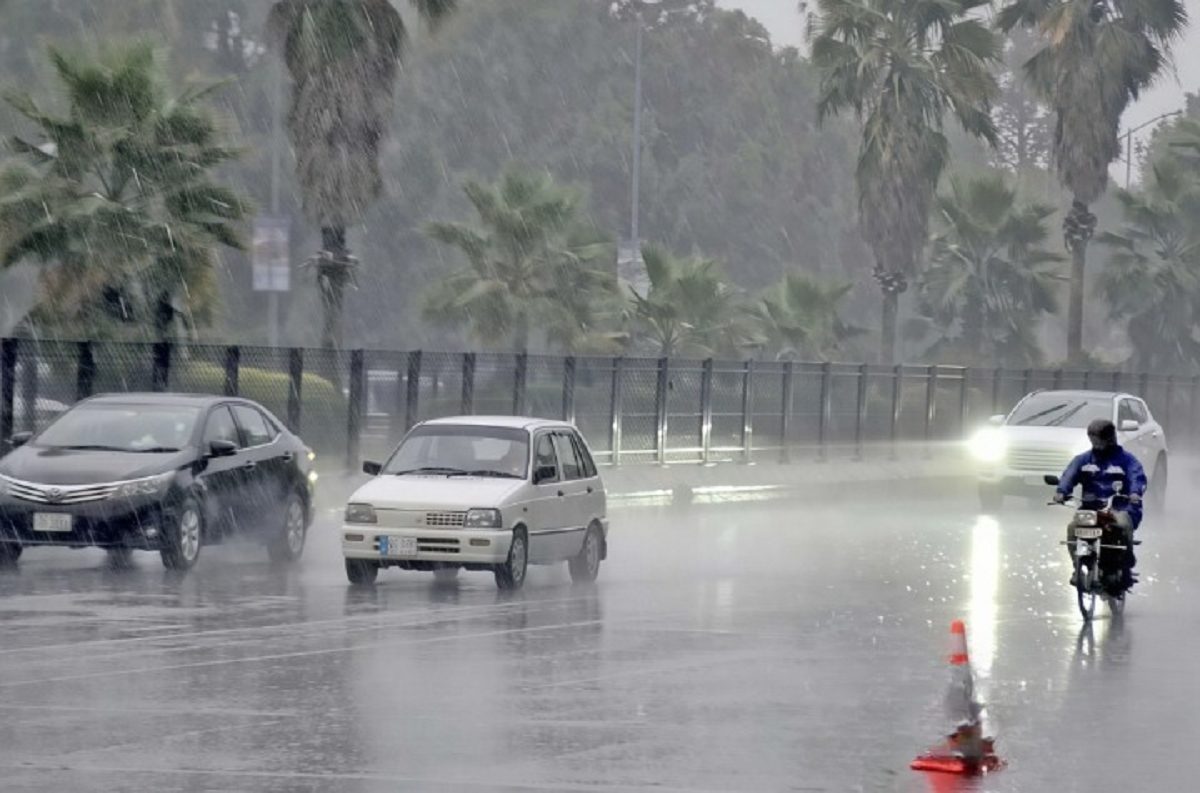
Residents navigate a flooded street in Karachi during the monsoon rains of 2025.
Monsoon Fury Unleashed: Southeast Sindh, Gilgit-Baltistan, and Khyber Pakhtunkhwa on High Alert
The skies over Pakistan are darkening, and the Pakistan Meteorological Department (PMD) has issued urgent warnings as heavy monsoon rains are set to lash the country. With the potential for flash floods and landslides, residents in southeast Sindh, Gilgit-Baltistan, and parts of Khyber Pakhtunkhwa are on high alert. Here’s what you need to know to stay safe.
Key Points Summary
Heavy Rainfall Expected: Widespread rain-wind/thundershowers with scattered heavy falls are forecasted across multiple regions of Pakistan.
Flood Alerts Issued: Rivers like Sutlej and Indus are expected to reach high flood levels, increasing the risk of flash floods.
Urban Flooding Risks: Major cities, including Lahore, Islamabad, and Karachi, are at risk of urban flooding due to heavy rains.
Government Preparedness:Emergency response teams are on standby, and advisories have been issued for residents and farmers.
Public Awareness Crucial: Authorities emphasize the importance of staying informed through official channels and adhering to safety guidelines.
Background: A Brewing Storm
Karachi (Star Struck Times) — As the monsoon season progresses, the PMD has been closely monitoring atmospheric conditions. Recent data indicates that strong monsoon currents from the Arabian Sea and Bay of Bengal are penetrating the upper parts of the country. This influx of moisture, combined with a westerly wave approaching the region, has set the stage for widespread rainfall.
Conflict: Flash Floods and Landslides Loom
The PMD’s forecasts are concerning. The Sutlej River at Ganda Singh Wala is already at high flood levels, and with expected heavy rainfall and releases from Indian dams, it is likely to reach very high flood levels in the next 48 hours. Similarly, the Indus River at Sukkur is anticipated to attain high flood levels within the next 24 hours. These conditions increase the risk of flash floods in streams and nullahs, particularly in Khyber Pakhtunkhwa, Kashmir, Gilgit-Baltistan, and the Potohar region.
Escalation: Urban Flooding Threatens Major Cities
Urban flooding is a significant concern. The PMD warns of potential urban flooding in low-lying areas of Lahore, Gujranwala, Gujrat, Rawalpindi, Islamabad, Peshawar, Nowshera, and southeastern Sindh. These areas, already grappling with infrastructure challenges, could face severe disruptions if the predicted rains materialize.
Reaction: Government and Community Preparedness
In response to the escalating threat, local authorities have begun preparations. Emergency response teams are on standby, and residents in high-risk areas are being urged to stay informed and take necessary precautions. The government has also issued advisories for farmers, advising them to secure crops and livestock against potential damage.
Defence: Monitoring and Mitigation Efforts
The PMD continues to monitor the situation closely, providing regular updates to the public. Meteorologists emphasize the importance of staying informed through official channels and adhering to safety guidelines. While the situation is serious, proactive measures can mitigate the potential impact.
Conclusion: A Nation on Alert
As Pakistan braces for the impending monsoon deluge, the coming days will be critical. The combination of heavy rainfall, rising river levels, and the threat of urban flooding poses significant challenges. However, with timely warnings and coordinated efforts, the nation can navigate this storm and emerge resilient.
FAQs
Q1: Which regions in Pakistan are at the highest risk of flooding? A1: Southeast Sindh, Gilgit-Baltistan, and parts of Khyber Pakhtunkhwa are at the highest risk due to anticipated heavy rainfall and rising river levels.
Q2: What precautions should residents take during heavy rains? A2: Residents should avoid traveling during heavy rains, stay indoors, secure belongings, and be prepared for potential power outages.
Q3: How can farmers protect their crops from potential damage? A3: Farmers are advised to harvest mature crops early, secure irrigation systems, and ensure livestock are in safe, elevated areas.
Q4: Where can I get the latest weather updates? A4: The PMD’s official website and social media channels provide real-time weather updates and alerts.
Stay informed and prepared. Share this article with friends and family, and follow our social media channels for real-time updates on the unfolding weather situation.
Hello! I'm M Muzamil Shami, the founder and lead editor of Star Struck Times, your trusted source for trending news, entertainment scoops, celebrity gossip, sports highlights, and global headlines.
With a passion for storytelling and journalism, I created this platform to bring you breaking news, viral moments, and deep insights into the worlds of Bollywood, Hollywood, sports, politics, tech, and more — all in one place.