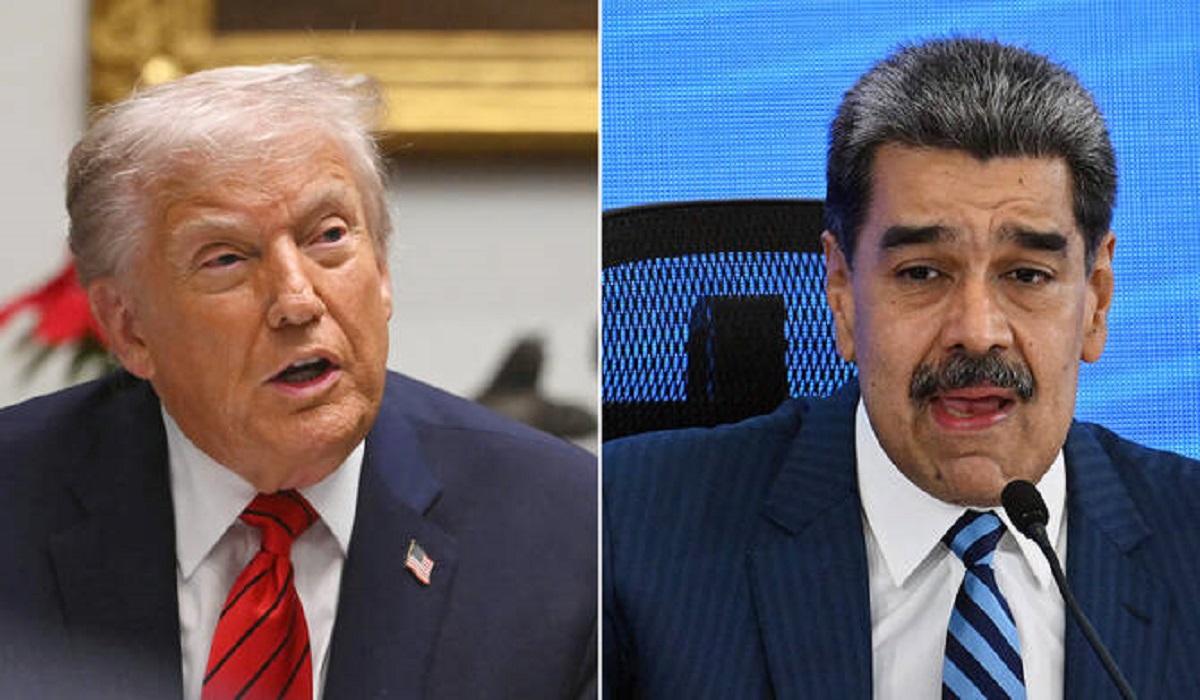
Growing U.S.–Venezuela naval pressure sparks global concern as oil shipments and regional stability come into focus amid renewed sanctions.
Caracas, Venezuela — Star Struck Times
Former U.S. President Donald Trump has issued a renewed warning to Venezuelan President Nicolás Maduro as tensions between Washington and Caracas intensified in early March 2025. The dispute, centered on oil exports, maritime enforcement, and U.S. sanctions, has drawn international attention due to its potential impact on global energy markets and regional security. The developments emerged from Washington and the Caribbean Sea region, where U.S. naval activity has increased. The situation matters because Venezuela remains a major oil producer, and any escalation could affect trade routes, fuel prices, and diplomatic relations across the Americas.

Key Highlights
- Trump issued a warning to President Maduro on March 4, 2025.
- At least three Venezuelan oil tankers have been seized since February.
- U.S. naval activity has increased in the Caribbean Sea.
- Venezuela announced an alternative tanker strategy in response.
- Global energy and shipping industries are monitoring developments closely.
What Sparked the Controversy?
The latest escalation traces back to March 4, 2025, when Donald Trump, speaking during a televised interview on a U.S. conservative news program, warned President Nicolás Maduro against “any form of resistance” to American enforcement actions in the Caribbean. According to AP News, U.S. authorities have expanded efforts to intercept Venezuelan oil tankers suspected of violating long-standing sanctions.
The pressure campaign includes the seizure of at least three oil tankers since February 2025 and increased naval positioning near key shipping lanes north of Venezuela. The U.S. government maintains that these actions are part of enforcing sanctions first imposed in 2019, targeting Venezuela’s oil sector. The measures aim to limit revenue streams linked to the Maduro administration, which Washington continues to recognize as illegitimate following disputed elections.
How Fans and Social Media Reacted
Public reaction has been divided, both within Venezuela and internationally. On social media platforms such as X and Instagram, supporters of stronger U.S. sanctions argue that economic pressure is necessary to force political change in Caracas. Others warn that maritime enforcement risks provoking a broader conflict.
In Venezuela, state-aligned media framed the U.S. actions as an “economic blockade,” while opposition voices expressed concern about the humanitarian impact. Globally, analysts and commentators noted a surge in online discussions related to “U.S.–Venezuela naval blockade,” with trending debates focusing on oil prices, sovereignty, and international law. The general sentiment reflects a mix of support, skepticism, and anxiety over possible escalation.
Why This Story Matters
This development matters because it touches on three critical areas: energy security, regional stability, and international norms. Venezuela possesses the world’s largest proven oil reserves, and disruptions to its exports can influence global markets, particularly for countries still purchasing Venezuelan crude through indirect channels.
From a cultural and political perspective, the renewed rhetoric revives memories of earlier U.S.–Latin America confrontations. For many in the region, naval enforcement evokes historical sensitivities around foreign intervention. Media analysts believe such actions can harden domestic support for embattled governments rather than weaken them.
Industrially, the situation affects shipping companies, insurers, and energy traders, who must now reassess risk in Caribbean waters. The broader picture shows how sanctions enforcement has shifted from financial systems to physical trade routes, signaling a more assertive phase of economic statecraft.

In the long term, the episode underscores how unresolved political disputes can spill into global commerce, reinforcing the interconnected nature of geopolitics and everyday economic realities.
Neutral Analysis
From a journalistic standpoint, the current measures represent a continuation rather than a departure from existing U.S. policy. The enforcement actions align with previous sanctions frameworks, though the maritime focus increases visibility and risk. No direct military engagement has been reported as of March 9, 2025, and both governments have stopped short of declaring hostile intent beyond enforcement and retaliation measures.
Related Developments or Past Incidents
Similar confrontations occurred in 2020, when U.S. naval patrols were increased in the Caribbean under anti-narcotics operations that Venezuela criticized as politically motivated. More recently, temporary sanction relief in 2023 allowed limited oil exports before restrictions were tightened again. These cycles point to a broader industry pattern of fluctuating pressure tied to political negotiations.
Related coverage: /world-politics/
What Happens Next?
Observers expect heightened diplomatic messaging rather than immediate military action. Venezuelan officials have announced a so-called “Plan B” tanker strategy, reported by Axios, involving ship-to-ship transfers and alternative routes to bypass restrictions. Whether this approach succeeds remains uncertain.
The situation may cool if back-channel negotiations resume, but continued tanker seizures could prolong tensions. Any formal response from international bodies or regional organizations could also shape the next phase of the standoff.
FAQs
Q1: Why is the U.S. increasing pressure on Venezuela now?
The U.S. cites ongoing concerns over democratic governance and sanctions enforcement. Officials say recent actions are meant to close loopholes in oil exports that emerged after limited sanction relief expired in early 2025.
Q2: Does this mean a full naval blockade is in place?
No formal blockade has been declared. The U.S. describes its actions as targeted enforcement operations rather than a comprehensive blockade under international law.
Q3: How could this affect oil prices?
Any disruption to Venezuelan exports can tighten supply in certain markets, potentially influencing regional fuel prices, though global impact depends on scale and duration.
Stay informed on global political shifts and their real-world impact. Follow Star Struck Times for verified updates, in-depth analysis, and timely international coverage.
Sources / References / Further Reading
© 2025 Star Struck Times. All rights reserved.