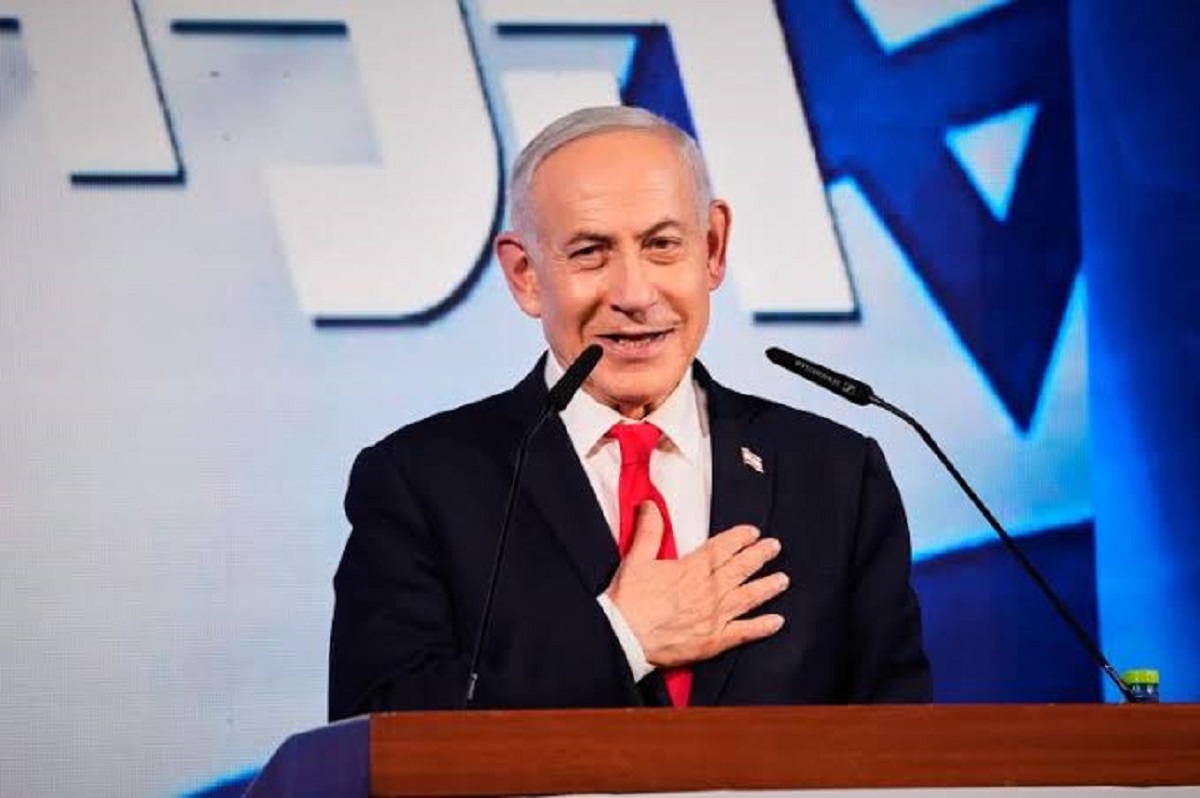
Benjamin Netanyahu’s political bloc is projected to win 53 seats, short of the 61 needed for a parliamentary majority.
The opposition bloc led by Gadi Eisenkot is projected to secure 48 seats.
Arab-led parties are on course to win 19 seats, potentially making them decisive in government formation.
Officials are counting absentee ballots, but the remaining votes are not expected to substantially change the overall picture.
Coalition negotiations could determine whether Israel forms a new government or faces another election.
Israel’s Election Deadlock Leaves Netanyahu in Caretaker Role as Coalition Talks Loom
JERUSALEM, October 29, 2026 — Israeli Prime Minister Benjamin Netanyahu is expected to remain in office as caretaker prime minister while election officials complete the vote count and political leaders prepare for difficult coalition negotiations, after preliminary results left both major political blocs short of a parliamentary majority.
With 91% of votes counted in figures reported by The Guardian on Thursday, Netanyahu’s right-wing bloc was projected to win 53 seats in Israel’s 120-member Knesset, compared with 48 for the opposition grouping led by former military chief Gadi Eisenkot. Arab-led parties were projected to secure 19 seats, placing them in a potentially decisive position in the struggle to form the next government.
A government needs at least 61 seats to command a majority. Neither main bloc has reached that threshold, leaving Israel facing a period of political uncertainty despite Netanyahu’s bloc remaining ahead in the preliminary count.
Why the absentee vote may not resolve the deadlock
Election officials are counting approximately half a million absentee ballots cast by groups including military personnel, diplomats, prisoners and hospital patients. The final tally could confirm the current projections, but early reporting indicates the remaining votes are unlikely to change the overall balance substantially.
That makes coalition negotiations more consequential than the remaining count alone. Netanyahu’s Likud party remains a major force, but its lead over the opposition does not automatically translate into the parliamentary support required to govern.
Arab-led parties emerge as a potential kingmaker
The strongest obstacle facing Netanyahu’s opponents is whether they can agree on a workable partnership with Arab-led parties.
Reuters reported that the two Arab-led groupings were projected to win around 19 seats, nearly twice their previous representation. Their gains could give the opposition a route to a majority, but cooperation remains politically contentious, particularly because several Jewish-led opposition parties have resisted working with Arab parties.
Joint List leader Yousef Jabareen has indicated a willingness to help remove Netanyahu’s government, while saying his party would not join an Eisenkot-led coalition because of its positions on Gaza and Lebanon. Ra’am leader Mansour Abbas, by contrast, has expressed willingness to join a government, according to Reuters.
The distinction matters: support from outside a governing coalition could help an opposition government survive parliamentary votes, but it would not necessarily provide the same stability as a formal coalition agreement.
What happens next?
Israel’s President Isaac Herzog is expected to consult party leaders and select the candidate he believes has the best chance of forming a government once the results are finalized. Under Israel’s system, the designated candidate can have up to 42 days to assemble a coalition. If that effort fails, another candidate may be given an opportunity, and another election remains possible.
Until a new government is formed, Netanyahu remains in office in a caretaker capacity. That means the election has weakened his immediate political position without automatically removing him from power.
The central question is now whether the opposition can overcome its divisions and build a governing majority—or whether Netanyahu can find additional parliamentary support to remain prime minister beyond the caretaker period.
Reporting note: This article reflects preliminary results and reporting available on October 29, 2026. Final seat allocations and the outcome of coalition negotiations remain unconfirmed.
Hello! I'm M Muzamil Shami, the founder and lead editor of Star Struck Times, your trusted source for trending news, entertainment scoops, celebrity gossip, sports highlights, and global headlines.
With a passion for storytelling and journalism, I created this platform to bring you breaking news, viral moments, and deep insights into the worlds of Bollywood, Hollywood, sports, politics, tech, and more — all in one place.