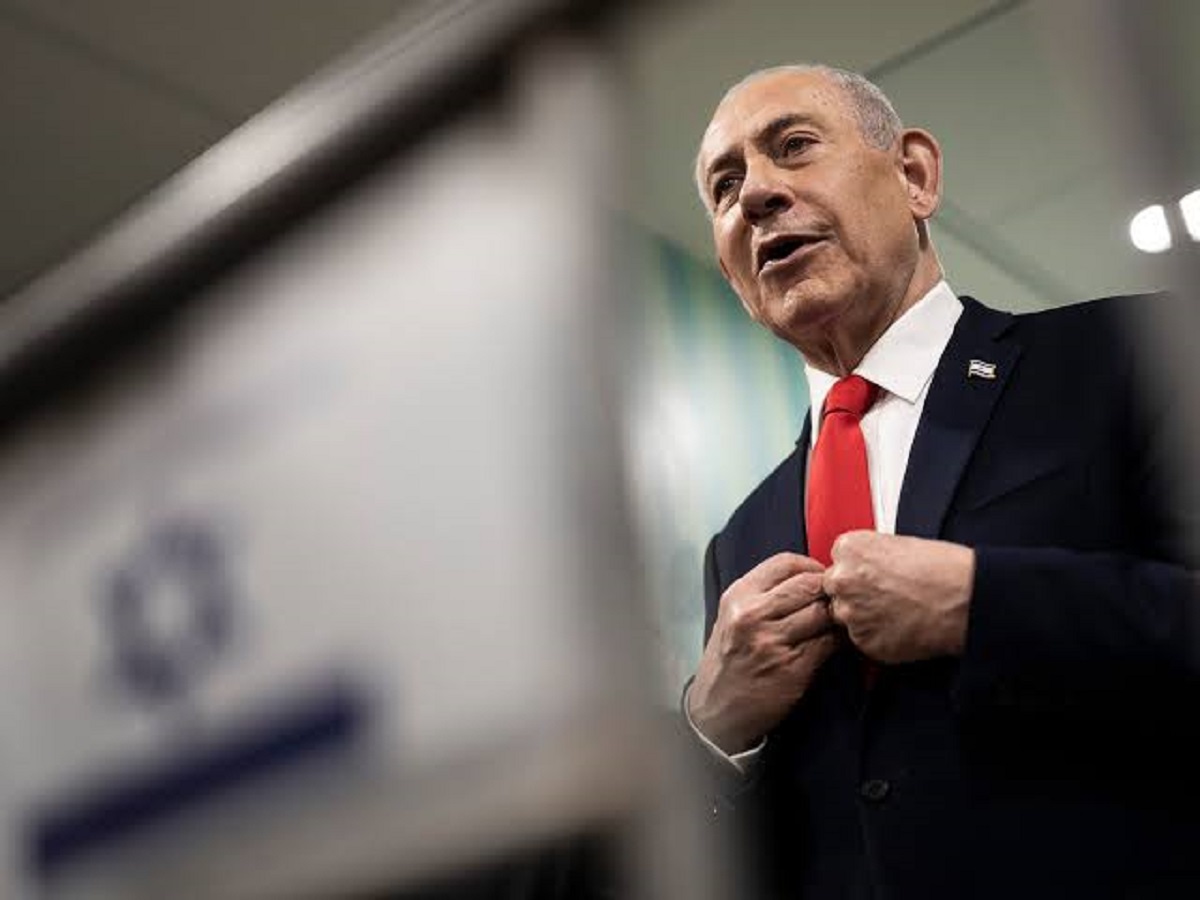
Israel’s election has produced no clear winner, with early vote counts and exit polls showing neither major bloc securing a parliamentary majority.
Benjamin Netanyahu’s Likud party was leading in early counting, but the final balance of power remained uncertain.
Opposition leader Gadi Eisenkot is also seeking a path to government, setting up potentially difficult coalition negotiations.
Arab-led parties are projected to make significant gains, potentially giving them greater influence over who governs.
Voter turnout reached 77.7%, the highest level since 1999, according to Israel’s Central Elections Committee.
JERUSALEM, October 28, 2026 — Israeli Prime Minister Benjamin Netanyahu faces an uncertain battle to retain power after a closely contested general election left no political bloc with a clear route to a parliamentary majority, while a strong projected performance by Arab-led parties could reshape negotiations over the country’s next government.
Early vote counting on Wednesday showed Netanyahu’s Likud party ahead of its main opposition rivals. However, exit polls released by Israeli television networks had indicated a near-deadlock between Netanyahu’s allies and the opposition bloc led by former military chief Gadi Eisenkot. Neither side had clearly secured the 61 seats needed to control Israel’s 120-member parliament, the Knesset.
The distinction between early counting and exit-poll projections is important: the figures do not yet establish who will lead the next government. Even if one bloc finishes ahead, its leader must still secure enough parliamentary support to form a governing coalition.
Netanyahu, Israel’s longest-serving prime minister, has called for a strong right-wing national government. Eisenkot, meanwhile, argued that voters had rejected Netanyahu’s continued leadership and called for political change. Neither man had a decisive victory to claim as the results remained unsettled.
Why Arab-led parties could hold the key
One of the election’s most consequential developments is the projected rise in representation for Arab-led parties, particularly the Joint List and Ra’am.
Exit polls suggested the two parties could collectively win around 18 seats, compared with a combined 10 in the outgoing parliament. If that projection holds, their parliamentary strength could make them pivotal in efforts to assemble a majority.
But a larger seat count does not automatically translate into government power. Some parties in the opposition camp have resisted forming a coalition with Arab-led parties, complicating Eisenkot’s potential route to a majority. Ra’am leader Mansour Abbas has indicated a willingness to engage with political blocs, while the Joint List’s approach to supporting an alternative government differs.
This is the central question beyond which party finishes first: whether politicians who campaigned against one another can reach an agreement that commands enough support in parliament.
Turnout highlights the election’s significance
Overall turnout reached 77.7%, the highest since 1999, according to the Central Elections Committee. Reports also indicated a sharp rise in participation in Arab communities, with some estimates putting turnout among Arab voters at around 80%. Anadolu
The election comes amid deep divisions over Netanyahu’s leadership, the wars following the Hamas-led October 7, 2023, attacks, military service exemptions for ultra-Orthodox Jewish men and concerns over judicial independence. These issues have shaped the political debate and the challenge facing whoever attempts to form the next government.
What happens next?
Netanyahu remains caretaker prime minister while the process of determining who can form a government unfolds. Israel’s president, Isaac Herzog, will play a formal role in selecting the candidate best positioned to assemble a parliamentary majority after consulting political representatives.
If neither major camp can secure sufficient support, negotiations could stretch on for weeks. A party’s lead in the vote count, therefore, is not the same as having the numbers to govern.
For now, the election has left Israel facing two connected uncertainties: whether Netanyahu can retain power and whether the opposition can overcome its coalition challenges. The final results and the choices made by smaller parties will determine which path remains viable.
Hello! I'm M Muzamil Shami, the founder and lead editor of Star Struck Times, your trusted source for trending news, entertainment scoops, celebrity gossip, sports highlights, and global headlines.
With a passion for storytelling and journalism, I created this platform to bring you breaking news, viral moments, and deep insights into the worlds of Bollywood, Hollywood, sports, politics, tech, and more — all in one place.