URDA, Spain — October 28, 2026
At least 68 people have been killed after two high-speed trains collided in central Spain, according to the latest reports from Reuters and The Associated Press on Wednesday, October 28. Rescue teams continued searching the wreckage near Urda, in Toledo province, south of Madrid, while authorities investigated how one train struck another that had stopped on the track. More than 500 passengers were aboard the two trains, according to regional officials and early reports.
Key points
- At least 68 people have died, according to the latest Reuters and AP reporting; casualty figures may change.
- The collision involved trains operated by Spain’s Renfe and Iryo companies.
- More than 500 passengers were travelling on the two services.
- Investigators are examining the circumstances that allowed the collision to occur.
- The crash has disrupted high-speed rail services connecting Madrid with southern Spain.
Rescue Operations Continue After the Collision
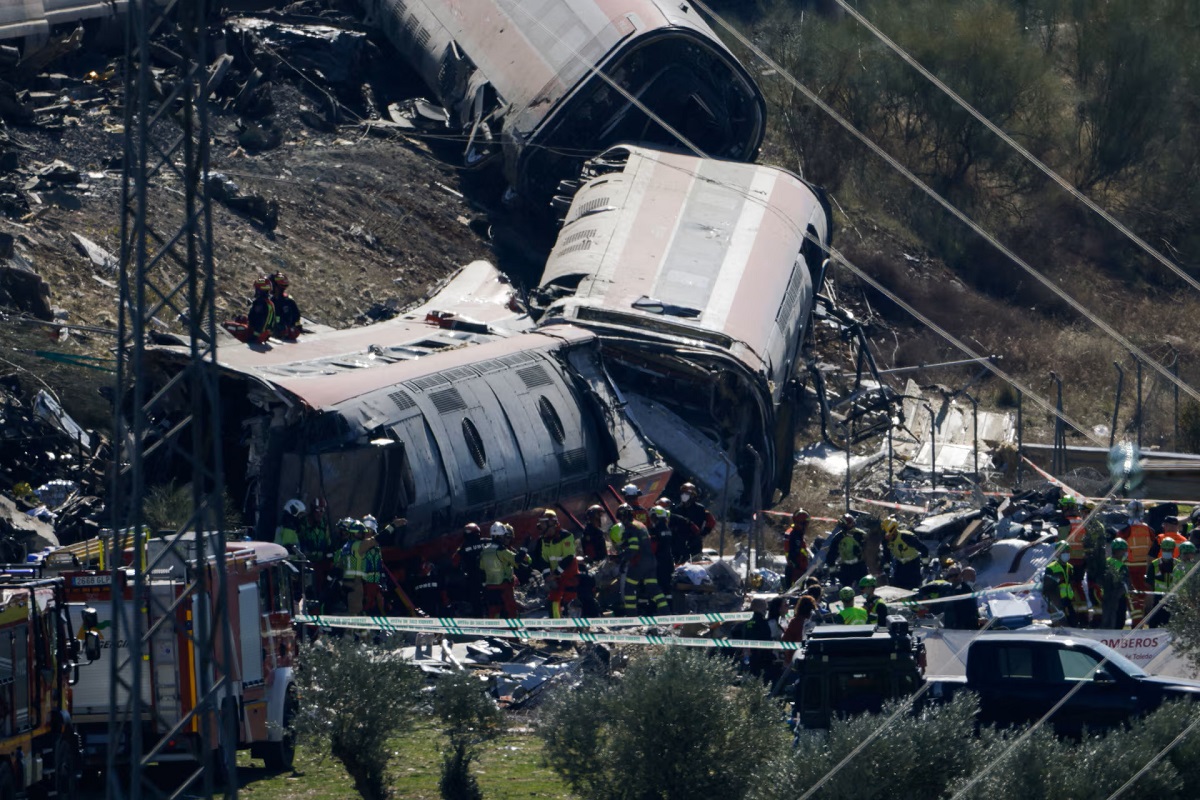
The crash occurred on the high-speed railway connecting Madrid with Seville, one of Spain’s major rail routes. Several carriages derailed, with some wreckage falling down an embankment beside the tracks.

Emergency crews, ambulances and other responders were deployed to the scene. Survivors were evacuated from the damaged trains, while injured passengers were taken for medical treatment. Images and accounts from the site described severely damaged carriages and debris scattered around the railway embankment.
The two trains were operated by Renfe, Spain’s state-owned rail operator, and Iryo, a private rail company. Regional authorities said hundreds of people were travelling on the services when the collision happened.
Investigators Examine How the Trains Collided
The circumstances surrounding the crash have become a central focus of the investigation. Reuters reported that the Iryo train had stopped after instructions from rail infrastructure manager ADIF following a signal fault. The Renfe train subsequently struck it.
Renfe said its train had been authorised to continue travelling, while the Iryo train remained stationary for reasons the operator said it did not know. The company stressed that investigators would need to establish the sequence of events, traffic conditions and circumstances of the impact.
These early accounts do not, by themselves, establish the complete cause of the disaster. Investigators will need to determine how the signalling and traffic-control arrangements operated, what instructions were issued and why the two trains ended up on a collision course.
That distinction matters: identifying the immediate sequence of events is not the same as establishing whether a technical fault, a control-room decision or another factor caused the collision.
Safety Questions Resurface After Earlier Rail Disaster
The latest collision has renewed attention on railway safety in Spain, which experienced another deadly high-speed train accident in January 2026. That crash killed 46 people, according to AP reporting, and raised questions about the safety of the country’s high-speed network.

Spain has built one of the world’s largest high-speed rail networks, and its services connect major cities across the country. The October collision is therefore significant not only because of its immediate human toll but also because the investigation may have implications for signalling, traffic management and the safe operation of trains on busy routes.
Transport Minister Óscar Puente said the October collision followed an order from the central rail control centre to resume train movements after a security-system failure, according to AP. He described the decision as inexplicable and said the train drivers were not to blame. These are the minister’s preliminary findings, and the full investigation remains important to establish the precise circumstances and accountability.
For now, the priority remains the rescue operation, medical treatment for survivors and identification of those who died. Authorities are also working to assess the disruption to rail services between Madrid and southern Spain.
This report reflects information available on October 28, 2026. The death toll, injury figures and findings of the investigation may change as authorities release further updates.