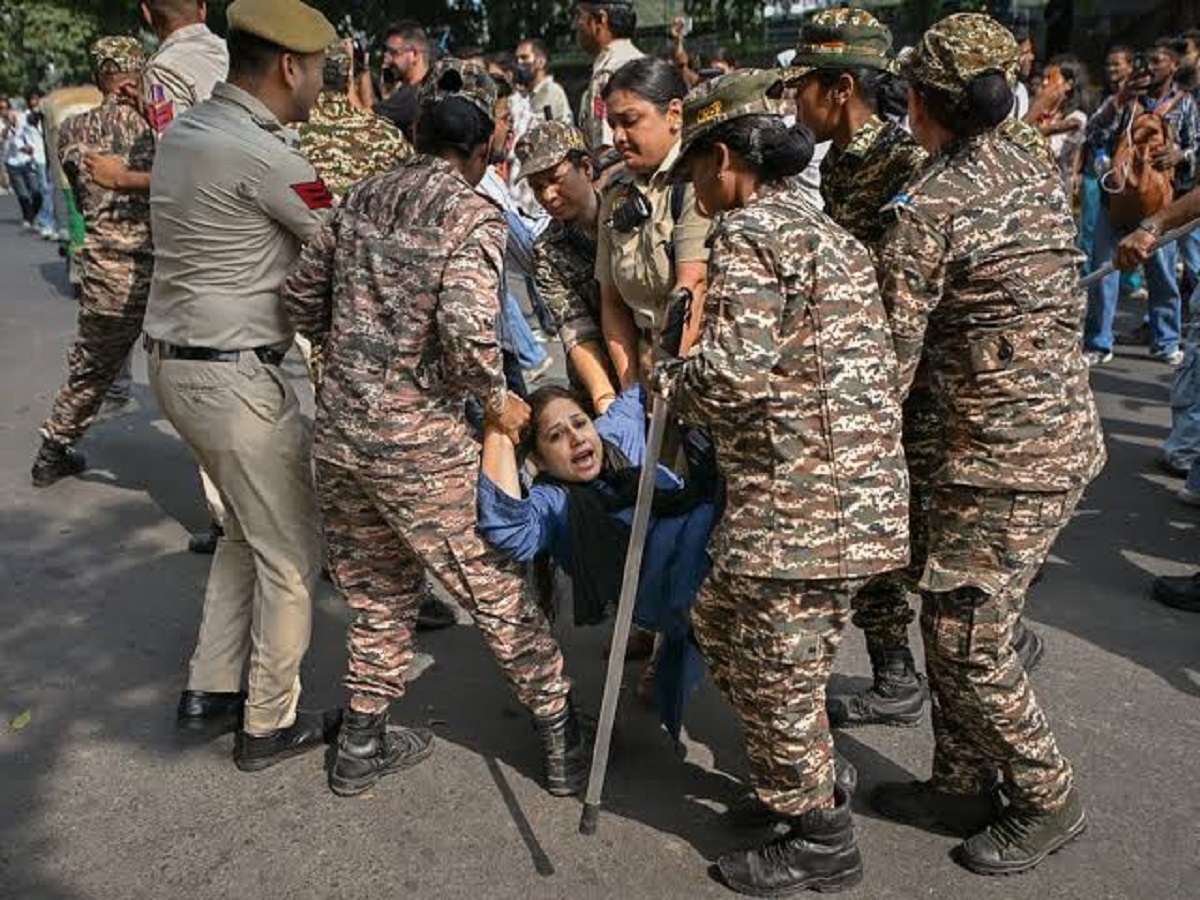
NEW DELHI, October 10, 2026 — Indian authorities detained more than 2,000 protesters in Delhi on Saturday, including leaders of the youth-led Cockroach Janta Party (CJP), as thousands of police and paramilitary personnel moved to prevent a demonstration demanding the resignation of Chief Election Commissioner Gyanesh Kumar over controversial voter-list revisions.
Authorities sealed off the planned protest site at Jantar Mantar, suspended mobile internet services in central business districts and shut dozens of metro stations and markets. The sweeping security measures disrupted movement across the capital as demonstrators and opposition figures challenged the election authorities over changes to voter registration records.
Key Points
- More than 2,000 people were detained in Delhi, according to a Home Ministry official cited by Reuters.
- Cockroach Janta Party founder Abhijeet Dipke and senior leaders Saurav Das and Ashutosh Ranka were detained after arriving at Delhi airport.
- The protest called for Chief Election Commissioner Gyanesh Kumar to resign over disputed voter-list revisions.
- Election Commission data show approximately 130 million voter entries were removed during the verification exercise.
- The Election Commission and the ruling Bharatiya Janata Party (BJP) have denied allegations of wrongdoing.
Cockroach Janta Party Leaders Detained Ahead of Rally
Dipke, Das and Ranka were detained after their flight from Mumbai landed in Delhi, according to a statement from the movement. Television footage showed Dipke challenging officers who approached him aboard the aircraft.

“I have come to be arrested, arrest me … I am not afraid of you guys,” Dipke said, according to footage reported by Reuters.
The movement condemned the detentions, demanded the leaders’ release and said it would continue its campaign. CJP leader Ajinkya Shinde told reporters that demonstrations would continue until Kumar resigned.
Authorities had prohibited the planned gathering, and security forces sealed off Jantar Mantar before the rally could begin. Smaller demonstrations nevertheless took place at other locations in Delhi, including a crafts market and a memorial to Mahatma Gandhi.
The detentions also extended beyond the youth movement. Television channels showed opposition politicians and former chief ministers Mamata Banerjee, Arvind Kejriwal and Pinarayi Vijayan being detained. Journalists covering the demonstrations were also briefly held, Reuters reported.
Why Are Protesters Demanding the Election Chief’s Resignation?
The demonstrations centre on India’s Special Intensive Revision (SIR), an exercise to verify and update electoral rolls.
Election Commission data show that approximately 130 million voter entries were removed during the verification process. The figures include around 63 million entries linked to people who had relocated, 30 million people who could not be traced and 28 million people recorded as deceased.
Opposition parties argue that the scale of the deletions raises serious questions about eligible voters being excluded and whether the changes affected recent state election results that favoured Prime Minister Narendra Modi’s BJP.

However, the number of removed entries does not, by itself, establish that 130 million eligible voters were disenfranchised. The Election Commission says the revisions identified entries requiring removal and maintains that eligible voters whose names were wrongly deleted can re-enrol.
The BJP has also rejected allegations of electoral wrongdoing, arguing that its election victories reflect public support for Modi and the country’s economic performance.
The dispute has intensified following reports that two election commissioners raised objections to aspects of the voter-list revision process. The controversy has placed greater scrutiny on the Election Commission’s handling of voter registration and the safeguards available to people whose names are removed.
Security Restrictions Put Delhi on Alert
Security personnel established checkpoints at major roads and entry points, searched vehicles and inspected buses for protesters. Barricades and concrete blocks disrupted traffic, while anti-riot vehicles equipped with tear-gas launchers guarded key routes.
The restrictions reflected authorities’ determination to prevent a repeat of confrontations during an earlier Cockroach Janta Party march in July.
The movement first gained attention through online satire before developing into a wider youth-led protest campaign. Its latest demonstration has brought the dispute over electoral rolls into sharper public focus, particularly as India approaches a series of important state elections beginning in early 2027.
The immediate question is whether the authorities and election officials can address concerns about voter registration while allowing peaceful political demonstrations to proceed.
For now, the central disagreement remains unresolved: opposition groups are demanding accountability over the revisions, while the Election Commission maintains that the process is intended to improve the accuracy of electoral rolls.