LONDON — September 8, 2026 — Britain has announced sweeping new measures targeting Israeli settlements in the occupied West Bank, triggering an immediate and furious response from Israel that includes plans to close the British consulate in East Jerusalem.
The escalation marks a significant new strain in UK-Israel relations. Britain, France and Canada have moved to restrict trade involving goods produced in Israeli settlements, while the UK says it will develop a broader sanctions regime aimed at settlement expansion and individuals or companies supporting it.
Israeli Foreign Minister Gideon Saar condemned London’s decision and announced a series of counter-measures, including closing the British consulate in East Jerusalem, ending British participation in a US-led Gaza coordination mission and restricting entry for several British officials.

Key Points
- UK sanctions: Britain is targeting goods and activities connected to Israeli settlements in the occupied West Bank.
- Israel retaliates: Israel says it will close the British consulate in East Jerusalem and impose additional measures on British officials.
- E1 at the centre: New settlement construction around E1 is a major reason for international concern.
- France and Canada: Both countries are also moving against settlement-related imports.
- Two-state solution: Britain says settlement expansion threatens the possibility of a viable Palestinian state.
- US position: Washington has indicated it will not adopt Britain’s trade restrictions.
- Diplomatic tensions: The dispute marks another major deterioration in UK-Israel relations.
Why the UK is targeting West Bank settlements
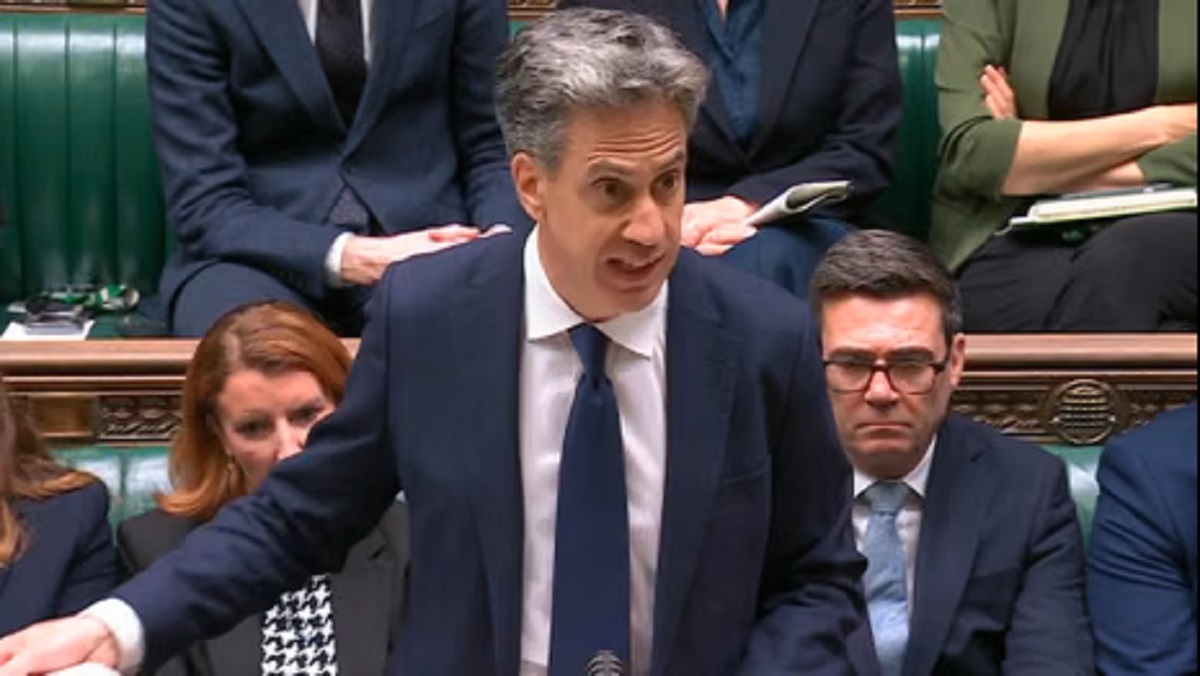
UK Foreign Secretary Ed Miliband told Parliament that Britain could no longer simply condemn what it considers injustice in the West Bank without taking action.
The immediate backdrop is Israel’s plans for new construction in the strategically important E1 area, east of Jerusalem. Critics argue that development there could divide Palestinian areas in the West Bank and make the creation of a geographically viable Palestinian state considerably more difficult.
Reuters reported that Israel has moved forward with plans for around 1,000 new settlement homes in the area, while Western governments have increasingly warned that settlement expansion is undermining prospects for a two-state solution.
Britain says its measures are directed at settlements and settlement expansion rather than Israel’s population or the Israeli state as a whole.
The proposed UK regime is expected to be implemented over the next six to nine months. Britain has also announced measures against extremist settlers and a ban on advertising illegal West Bank settlements in the UK.
Israel responds with diplomatic retaliation
Israel’s response was swift.
Foreign Minister Gideon Saar accused the British government of interfering in Israel’s internal affairs and described Miliband’s comments about the treatment of Palestinians as false and unacceptable.

Israel has announced that the British consulate in East Jerusalem will be closed. The consulate is accredited to the Palestinian Authority and plays a role in Britain’s diplomatic engagement with Palestinians in the West Bank.
Saar also said Britain would no longer participate in a US-led coordination mechanism for Gaza and that British training of Palestinian Authority security forces in the West Bank would end. Some British officials and other nationals will also face entry restrictions.
The timing is especially significant because Israel is approaching elections later this year, and Saar said the British measures amounted to interference in Israel’s political process.
France and Canada join Britain’s move
Britain’s announcement did not come alone.
France and Canada have also announced measures targeting products from Israeli settlements, presenting the action as part of a broader effort to preserve the possibility of a negotiated Palestinian state.
France said the expansion of settlements and increasing violence in the West Bank had pushed the situation toward a dangerous threshold. French Foreign Minister Jean-Noël Barrot described the settlement expansion as a major threat to the prospects for peace.
A wider group of countries has separately reaffirmed support for a two-state settlement and indicated that national measures could be introduced against settlement-related trade.
The moves are significant because European governments have struggled to agree on a unified European Union response. National action allows individual countries to move ahead despite the lack of consensus at EU level.
Why the E1 settlement plan matters
The dispute is about more than individual homes or commercial goods.
The E1 settlement project occupies a strategically sensitive location east of Jerusalem. Palestinians and many governments view the area as important to the territorial continuity of a future Palestinian state.
That is why the project has become a major international flashpoint.
For years, Israel faced international pressure over development plans in E1. The renewed push has now become one of the central reasons Britain and other Western governments are taking tougher positions.
The UK has repeatedly said that settlement expansion threatens the viability of the two-state solution. Reuters reported last week that Miliband was preparing a “comprehensive” response specifically because of concerns that the E1 project could make a Palestinian state unviable.
The economic impact may be limited — but the political message is bigger
The immediate economic effect of settlement trade restrictions is expected to be relatively small.
Agricultural products such as dates, citrus fruits, herbs and wine make up only a small portion of Israel’s overall exports. Reuters described the measures as largely symbolic in direct economic terms, but politically important because they demonstrate growing international opposition to settlement expansion.
That distinction matters.
Britain is not announcing a blanket boycott of Israeli goods. Instead, the focus is on products originating from settlements and on businesses or individuals involved in settlement expansion.
The political signal is therefore much stronger than the likely immediate commercial impact.
The United States is not following Britain
Washington has also made clear that it does not intend to copy the British approach.
US Secretary of State Marco Rubio said the United States would not impose equivalent restrictions on imports from Israeli settlements, while American officials have expressed concern that additional sanctions could destabilise the West Bank.
That creates another layer of tension.
Britain and some European allies are moving toward stronger economic pressure, while Israel retains the backing of its most important international ally on this particular issue.
Jewish leaders in Britain voice concern
The British government’s announcement has also generated criticism inside the UK.
Chief Rabbi Sir Ephraim Mirvis called the development a dark day for British Jews and criticised the sanctions as political posturing. The Board of Deputies of British Jews expressed regret about the government’s decision and urged both London and Jerusalem to avoid allowing political interests to override broader national interests.
The controversy highlights the difficult balance facing the British government: condemning settlement expansion while insisting that its policy is not directed against Israel or British Jews.
Miliband has also publicly referred to his Jewish heritage and his support for Israel’s right to exist as a Jewish homeland.
A rapidly widening diplomatic divide
The latest measures come after years of worsening disagreement between Britain and Israel over settlements, the Gaza war and Palestinian statehood.
The UK recognised a Palestinian state in 2025 as part of a wider effort to support a two-state solution. Israel strongly rejects the idea that Palestinian statehood should be imposed as a precondition for negotiations.
Meanwhile, Israeli settlement construction has continued across the West Bank.
Reuters recently reported on the role of settler networks in expanding unauthorised outposts and documented allegations of displacement and violence affecting Palestinian communities.
The developments suggest that the dispute is moving beyond statements of condemnation and into increasingly concrete diplomatic and economic measures.
What happens next?
The biggest question is whether the UK sanctions remain limited to settlement-related trade or develop into a broader confrontation between London and Jerusalem.
Britain says its comprehensive sanctions regime will take several months to establish. France and Canada are also moving forward with their own restrictions.
Israel, meanwhile, has already demonstrated that it intends to respond diplomatically.
The immediate dispute may be over settlement goods, but the deeper argument concerns the future shape of the West Bank and whether a two-state solution remains politically and geographically possible.
For Palestinians, the measures represent a potentially important shift in international pressure against settlement expansion. For Israel, they are being portrayed as unacceptable interference and an attack on its sovereignty.
Either way, Tuesday’s announcements have pushed an already strained relationship into a new and unusually confrontational phase.
Frequently Asked Questions
Why is the UK sanctioning Israeli settlements?
The UK says settlement expansion in the occupied West Bank undermines the two-state solution and has become serious enough to require economic and diplomatic action.
Is Britain sanctioning Israel as a whole?
No. The announced measures are specifically focused on Israeli settlements, settlement expansion and people or businesses involved in supporting that activity.
Why is E1 important?
E1 is strategically located east of Jerusalem. Critics argue that development there could disrupt territorial continuity needed for a future Palestinian state.
What has Israel done in response?
Israel has announced plans to close Britain’s consulate in East Jerusalem and take additional measures involving British officials, Gaza coordination and Palestinian Authority security training.
Will the US impose similar sanctions?
No. The Trump administration has indicated that Washington will not follow Britain’s approach of blocking imports from Israeli settlements.
The Bottom Line
The UK sanctions represent a significant change in tone: Britain is moving from condemning settlement expansion to imposing concrete economic consequences. Israel’s immediate retaliation shows how seriously it views the decision.
The question now is whether these measures remain a targeted response to West Bank settlements — or become the beginning of a much wider diplomatic rupture.
What do you think: can economic pressure protect the possibility of a two-state solution, or will it only deepen the diplomatic divide?