LA PAZ, Bolivia — Star Struck Times
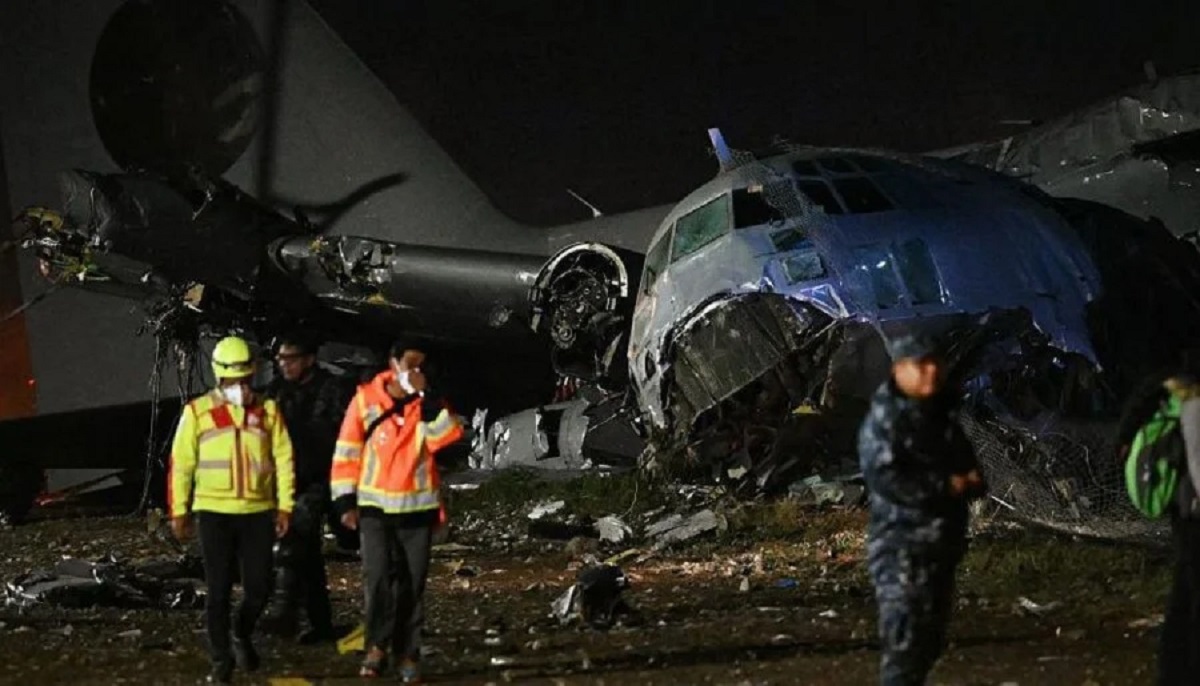
At least 15 people died after a Bolivian Air Force C-130 Hercules cargo plane transporting newly printed banknotes crashed while landing at El Alto International Airport on Friday, March 1, 2026. The military aircraft had departed from Santa Cruz and was carrying currency destined for the Central Bank of Bolivia in La Paz. Authorities confirmed multiple casualties and injuries as the aircraft plunged out of control at approximately 18:15 local time, prompting emergency response operations and the suspension of airport activities.
Key Highlights
- At least 15 fatalities confirmed in Bolivia C-130 plane crash
- Aircraft was transporting newly printed banknotes to La Paz
- Crash occurred at 18:15 local time near El Alto International Airport
- Airport operations suspended following the disaster
- Defense Ministry warns public against collecting scattered currency
- Investigation underway; two crew members initially reported missing
What Happened in the Bolivia C-130 Plane Crash?
The Bolivian Air Force C-130 Hercules cargo plane departed from Santa Cruz earlier on Friday carrying a shipment of newly printed currency intended for distribution by the Central Bank of Bolivia. As the aircraft approached El Alto International Airport, located in the high-altitude city of El Alto near La Paz, it reportedly lost control during landing procedures.

According to the Bolivian Air Navigation and Airports Authority (NAABOL), the aircraft crashed near the airport perimeter while attempting to land. Operations at the airport were temporarily suspended as emergency crews responded to the scene.
Fire chief Pavel Tover confirmed that at least 15 people died in the crash but did not specify whether all fatalities were onboard the aircraft or included civilians in nearby vehicles affected by debris. Local media outlets reported that at least 20 people sustained injuries and were transported to nearby hospitals.
Bolivian Air Force Gen. Sergio Lora stated that two of the six crew members were initially unaccounted for late Friday, and search efforts continued through the night.
Weather conditions were described as “treacherous” at the time of landing, though aviation investigators have not yet determined whether weather was the primary cause.
Official Response and Public Warning Over Banknotes
Bolivia’s Minister of Defense, Marcelo Salinas, addressed the nation shortly after the crash. He issued a firm warning to individuals attempting to collect scattered banknotes from the crash site.
“I want to make it clear to those who are trying to make money from the plane involved in this tragedy that this money has no legal value since it has not been issued by the Central Bank and does not have a serial number, and that attempting to use this money is a crime,” Salinas said.
Authorities emphasized that the banknotes had not yet entered official circulation and lacked valid serial identification, rendering them unusable for legal transactions.
Security forces were deployed to secure the crash area amid reports of bystanders attempting to gather debris and currency fragments. Salinas also urged citizens to “respect the mourning and grief we are experiencing at this difficult time.”

Casualties, Emergency Response, and Airport Disruption
Emergency responders, including firefighters and military personnel, worked into the evening to contain the wreckage and search for survivors. Ambulances transported injured victims to medical facilities in La Paz and El Alto.
NAABOL confirmed that El Alto International Airport suspended operations temporarily to allow rescue teams and investigators full access to the crash site.
Aviation safety experts note that landing at El Alto presents unique challenges due to its elevation of more than 4,000 meters (13,000 feet) above sea level. High-altitude conditions reduce air density, affecting aircraft performance.
A regional aviation analyst told The Guardian that “operations at extreme altitudes require precise approach calculations, especially under adverse weather conditions.”
Witnesses described chaotic scenes. One local resident told Reuters, “We saw smoke and heard a loud explosion. People were running toward the debris.” Another observer said, “It was shocking. Some people were trying to grab pieces of paper money before police arrived.”
Why the Bolivia Military Plane Crash Matters
The Bolivia C-130 plane crash raises concerns about military aviation safety, high-altitude airport operations, and the security of national currency transport.
The C-130 Hercules aircraft is widely used by air forces around the world for cargo transport, humanitarian missions, and logistical operations. While considered a reliable aircraft, accidents involving military cargo planes often prompt comprehensive safety reviews.
Media analysts believe the incident could lead to stricter aviation oversight and review of currency transport protocols in Bolivia.
Additionally, the crash comes at a time of regional weather instability. In neighboring Peru, the government recently declared a state of emergency across multiple districts due to intense rainfall, flooding, and landslides affecting southern regions. Although unrelated, both incidents highlight the impact of severe weather patterns across the region.
For related international coverage, readers can explore our World News section.
Context: Past Aviation Incidents in Bolivia
Bolivia’s mountainous geography and high-altitude airports have historically posed operational challenges. Aviation authorities have implemented strict protocols for landings at El Alto, yet adverse weather can still complicate approach procedures.
The country’s air force has relied on the C-130 fleet for decades for both domestic transport and regional operations. Investigators are expected to examine weather data, aircraft maintenance records, flight logs, and cockpit communications.
NAABOL stated that a formal investigation has begun in coordination with military aviation authorities.
What Happens Next?
Authorities will continue recovery efforts and forensic analysis of the crash site. The Defense Ministry is expected to release updated casualty figures once identities are confirmed and families are notified.
An official investigation report may take several weeks or months to complete. Meanwhile, airport operations are gradually resuming under enhanced safety monitoring.
The Central Bank of Bolivia has not yet issued a public statement regarding the financial implications of the destroyed shipment.
FAQs
1. How many people died in the Bolivia C-130 plane crash?
At least 15 fatalities have been confirmed by fire officials, with additional injuries reported.
2. What was the plane carrying?
The aircraft was transporting newly printed banknotes intended for the Central Bank of Bolivia.
3. Where did the crash occur?
The crash happened near El Alto International Airport while landing from Santa Cruz.
4. Were weather conditions a factor?
Authorities described conditions as treacherous, but the investigation is ongoing.
5. Is the collected money usable?
No. Officials confirmed the scattered banknotes have no legal value and using them would be a crime.
Sources
- Reuters
- The Guardian
- NAABOL (Bolivian Air Navigation and Airports Authority)
- Bolivian Ministry of Defense