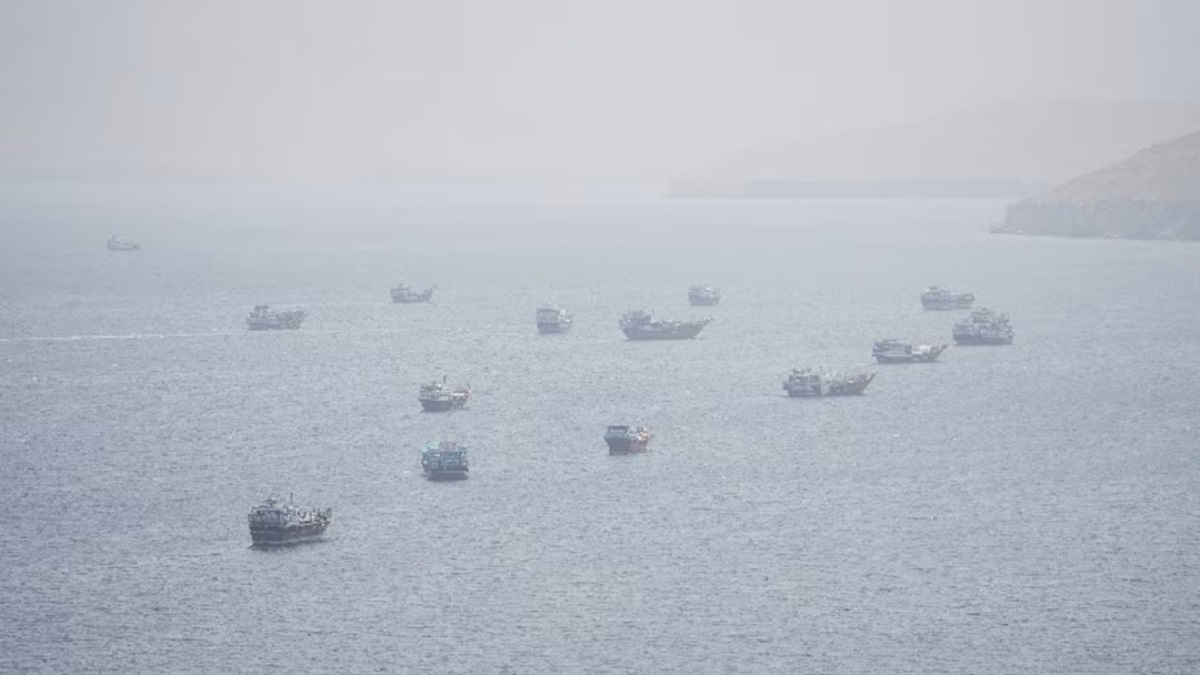
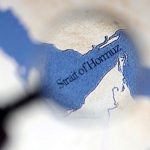
Qeshm Island's strategic location near the Strait of Hormuz puts it at the centre of rising US-Iran tensions.
WASHINGTON, November 3, 2026
The United States has carried out limited military strikes against targets on Iran’s Qeshm Island near the Strait of Hormuz, US officials have confirmed, adding fresh uncertainty to diplomatic efforts aimed at ending the eight-month conflict. The operation was described by American officials as defensive, intended to counter Iranian military threats against US assets, rather than the beginning of a renewed large-scale military campaign.
The strikes took place on Monday, November 2, as President Donald Trump publicly suggested that an agreement with Tehran could still be reached. Iranian state media reported several explosions on Qeshm Island, while reports from Reuters, CNN and other international news organizations cited US officials confirming American military action.
Key Points
US strikes Qeshm Island: American forces carried out limited military strikes against targets on Iran’s strategically important island.
Washington calls operation defensive: US officials described the action as a response to Iranian military threats against American assets.
Strait of Hormuz remains critical: The waterway’s shipping security continues to be a major concern amid regional tensions.
Peace negotiations continue: Diplomatic efforts involving regional mediators are underway, but no final reopening agreement has been confirmed.
Oil markets remain sensitive: Renewed military tensions could affect global energy prices and commercial shipping through the Strait of Hormuz.
Why did the US strike Qeshm Island?
According to US officials cited by Reuters, the operation targeted Iranian forces using surface-to-air missiles against American assets.
CNN separately reported that one US official linked the operation to Iran firing at an American aircraft. Officials characterized the strikes as limited and defensive, emphasizing that they did not represent a return to major combat operations.
The Pentagon referred questions about the operation to US Central Command (CENTCOM), which oversees American military activities in the Middle East. CENTCOM had not publicly responded to the requests for comment reported by Reuters at the time of publication.
Iranian state news agency IRNA reported explosions on the island on Monday evening. However, publicly available information did not establish the full extent of the damage, the number of casualties, or the precise locations hit.
The Wall Street Journal also reported that Monday’s operation was part of a series of smaller US strikes carried out against Iranian targets in recent weeks.
Why Qeshm Island matters to the Strait of Hormuz
Qeshm is strategically positioned in the Strait of Hormuz, the narrow maritime passage connecting the Persian Gulf with the Gulf of Oman.
Its location makes the island particularly important to military operations and maritime security in the region. The surrounding waters are central to international energy transportation, meaning any escalation around Qeshm can have consequences well beyond the immediate confrontation between Washington and Tehran.
The Strait of Hormuz has become one of the most sensitive points in the conflict because restrictions on shipping have disrupted commercial maritime traffic and raised concerns about global oil supplies.
For that reason, the latest strikes are significant not simply because of their military nature, but because they occurred near a waterway whose reopening remains central to negotiations.
Strait of Hormuz reopening talks remain uncertain
The military developments come as Iran continues discussions with regional mediators over a possible arrangement to reopen the Strait of Hormuz.
According to Al Jazeera’s November 1 reporting, Iranian Foreign Minister Abbas Araghchi said discussions involving Qatari mediators had focused on a proposal that could reopen the waterway within two days, subject to Washington addressing Tehran’s demands.
Those demands reportedly include sanctions relief, changes to the US military presence in the region and recognition of shipping arrangements proposed by Iran and Oman.
Pakistan and Qatar have also played important roles in diplomatic efforts to prevent another escalation.
However, no final agreement to reopen the strait had been announced as of November 3. The proposed two-day timeframe should therefore be understood as part of ongoing negotiations, not a confirmed reopening schedule.
Trump signals optimism despite military developments
Trump has continued to present diplomacy as a possible route out of the conflict.
On Monday, Vice President JD Vance told reporters that he and the president felt positive about the prospects for a negotiated settlement after discussions about the situation with Iran.
Trump also suggested that an agreement could happen, while playing down the scale of recent military activity.
The latest strikes nevertheless highlight the difference between diplomatic optimism and the security situation on the ground.
Washington has described its operation as a limited defensive measure, while Tehran has yet to publicly provide a comprehensive account of the reported attack or announce a confirmed response to it.
What the latest strikes mean for oil and shipping
The Strait of Hormuz remains a major concern for energy markets because disruptions to shipping through the passage can affect the movement of crude oil and other energy supplies.
Reuters reported that Brent crude rose 0.5% to $105.25 per barrel in early Asian trading on Tuesday, while US West Texas Intermediate increased 0.5% to $96.93.
The movement followed a sharp decline in oil prices on Monday, when optimism about a possible diplomatic breakthrough had helped ease concerns over prolonged supply disruptions.
The latest price movement illustrates how quickly expectations can change when military developments threaten to undermine negotiations.
For shipping companies, energy producers and importing countries, the central question is not simply whether the United States and Iran can avoid another major confrontation. It is whether a lasting arrangement can restore safe and predictable commercial passage through the Strait of Hormuz.
What happens next?
The immediate outlook depends on whether diplomatic discussions can continue despite the latest military action. A limited US operation does not automatically mean a return to full-scale war, but it also does not establish that the ceasefire or broader security arrangements are stable.
For now, the Strait of Hormuz remains at the centre of the dispute, with reopening negotiations, military activity and uncertainty over commercial shipping continuing to shape the regional crisis.
Hello! I'm M Muzamil Shami, the founder and lead editor of Star Struck Times, your trusted source for trending news, entertainment scoops, celebrity gossip, sports highlights, and global headlines.
With a passion for storytelling and journalism, I created this platform to bring you breaking news, viral moments, and deep insights into the worlds of Bollywood, Hollywood, sports, politics, tech, and more — all in one place.