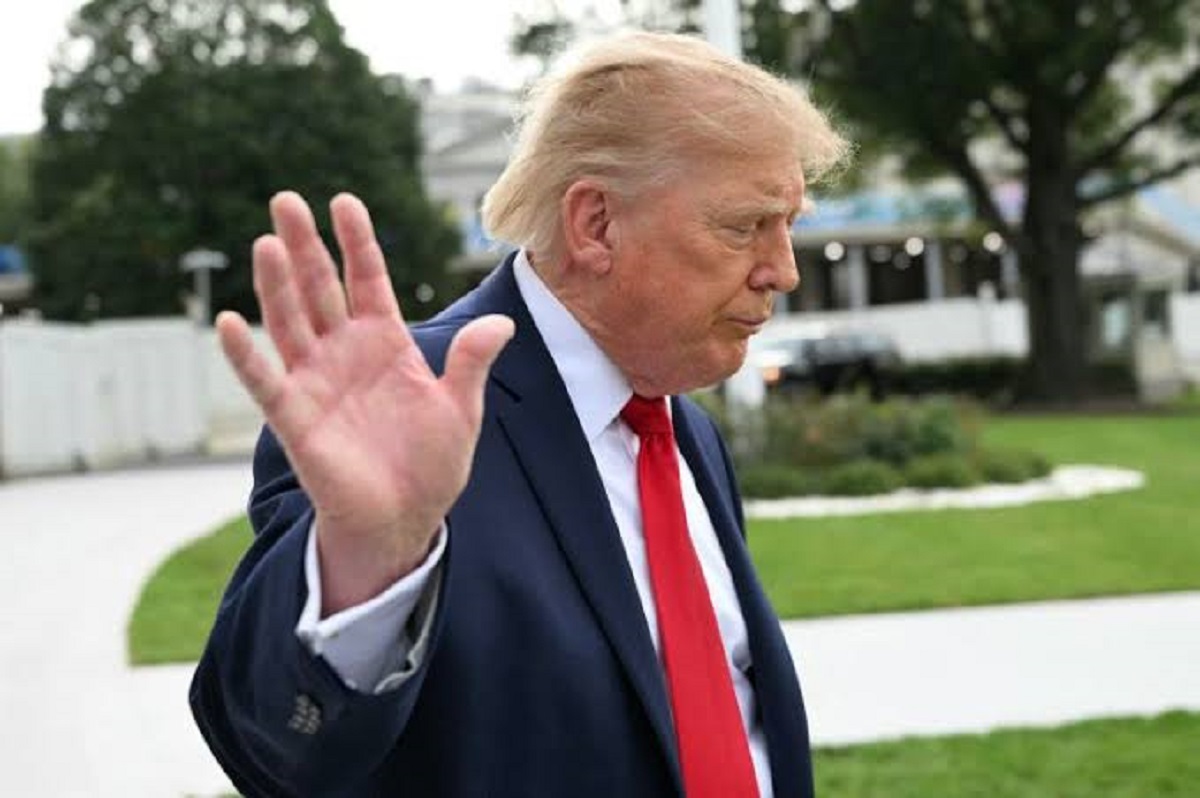
U.S.President Donald Trump has rejected an Iranian proposal that would reopen the Strait of Hormuz within seven days and restart broader negotiations, dealing a setback to the latest diplomatic effort to halt the conflict and restore commercial shipping through the critical waterway. Trump told reporters at the White House on Saturday, “They made a proposal but I reject it.”
Iranian Foreign Minister Abbas Araghchi had presented the proposal at the United Nations in New York, saying Tehran had transmitted a “concrete seven-day plan” to Washington through Qatari mediators. Under the proposal, the timetable would begin once the United States accepted the framework. Iran said the Strait of Hormuz could be reopened by the sixth day, with wider talks beginning on the seventh.
The proposal would require Washington to lift its naval blockade of Iranian ports, ease or waive sanctions affecting Iranian oil sales and observe a ceasefire covering the wider regional conflict. Iran also linked the plan to renewed discussions over its nuclear programme. Araghchi said the measures expected from the United States were already contained in a memorandum of understanding reached by the two countries in June.
Key points
Trump has directly rejected Iran’s proposal to reopen the Strait of Hormuz within seven days.
Iran’s plan was delivered through Qatar, according to Foreign Minister Abbas Araghchi, and was tied to the June memorandum of understanding.
The proposed sequence would restore shipping before broader negotiations, with Iran saying the strait could reopen on the sixth day and talks resume on the seventh.
The dispute has major international energy implications. Before the conflict, roughly one-fifth of the world’s oil and gas trade passed through the Strait of Hormuz. Reuters has reported that vessel traffic has fallen dramatically during the conflict.
Reports of another U.S. bombing campaign remain unconfirmed. The Wall Street Journal, citing unnamed U.S. officials, reported that Trump expected renewed bombing after the November midterm elections. Reuters said it could not immediately independently confirm that report.
Why the proposal mattered
The latest diplomatic push came as the Strait of Hormuz remained heavily disrupted. Reuters reported earlier this week that only a small number of commercial vessels were making the passage compared with normal traffic before the conflict, while some ships have operated with tracking systems switched off.
That disruption has made the waterway a central part of negotiations. Iran’s proposal effectively tied the restoration of normal maritime traffic to reciprocal U.S. steps, rather than agreeing to reopen the strait unconditionally.
The June memorandum is also important because the latest proposal is not being presented by Tehran as an entirely new framework. Araghchi said the measures requested from Washington were already included in that earlier understanding. The UN transcript of his remarks shows Iran portraying the seven-day timetable as an implementation plan rather than a completely new negotiating structure.
At the same time, Washington and Tehran have publicly described the diplomatic situation differently. A U.S. official told Reuters that the two sides had been engaged in “positive and constructive discussions through the mediators,” while reporting from the Wall Street Journal indicated that Trump remained skeptical that Iran would accept his demands.
For now, Trump’s rejection leaves the seven-day timetable without a starting point. Iran has said the clock would begin only after Washington accepts the proposal, meaning the reopening of the Strait of Hormuz and the planned nuclear talks cannot proceed under Tehran’s framework unless the U.S. changes its position.
The immediate consequence is that the diplomatic opening remains unresolved while disruption around one of the world’s most important shipping routes continues.
Hello! I'm M Muzamil Shami, the founder and lead editor of Star Struck Times, your trusted source for trending news, entertainment scoops, celebrity gossip, sports highlights, and global headlines.
With a passion for storytelling and journalism, I created this platform to bring you breaking news, viral moments, and deep insights into the worlds of Bollywood, Hollywood, sports, politics, tech, and more — all in one place.