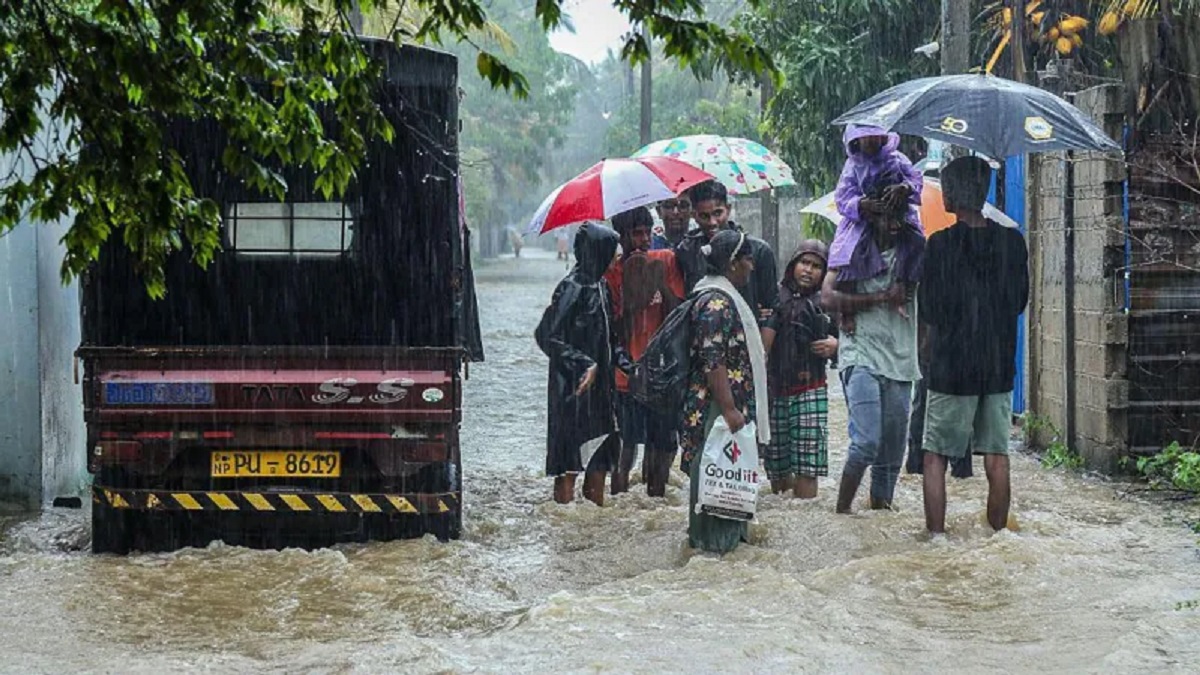
Rising floodwaters engulf a street in Colombo amid severe rains and flooding in Sri Lanka 2025
Torrential rains, landslides and storm surge cut off roads, displace thousands as rescue operations intensify.
As reported by the Disaster Management Centre and multiple news agencies, Sri Lankafloods2025 have killed at least 56 people and left 21 missing after Cyclone Ditwah-linked rains and landslides. Thousands are displaced, rivers are rising and authorities have issued red-alert warnings for low-lying areas while rescue operations intensify.
Key Points
56 dead, 21 missing after torrential rains, floods and landslides across Sri Lanka.
Cyclone Ditwah intensified rainfall, prompting red-level flood warnings for the Kelani River Valley and other low-lying zones.
~44,000 people affected; thousands displaced and dozens of roads and railway services suspended.
Massive rescue mobilization — army troops and relief agencies deployed; A-level exams and public services postponed.
Meteorological offices warn more than 200 mm of rain expected in central/northern areas; public urged to move to higher ground.
COLOMBO (Star Struck Times) — At least 56 people have been killed and 21 remain missing across Sri Lanka after heavy rains, floods and landslides linked to Cyclone Ditwah devastated large swathes of the island this week, the Disaster Management Centre (DMC) reported early Friday.
Flood- and landslide-related casualties were highest in the central tea-growing hills of Badulla District and Nuwara Eliya District, where mountain slopes collapsed onto homes overnight.
Videos circulating on social media show entire towns being battered by floodwaters and houses being washed away, while swollen rivers forced evacuations. The disaster disrupted daily life: the railway service was largely suspended, roads were blocked, and thousands were displaced.
Authorities say more than 43,991 people from over 12,313 families have been affected so far, with many losing homes or being moved to temporary shelters.
The scale of devastation worsened as Ditwah — which began as a tropical depression off Sri Lanka’s eastern coast and intensified into a cyclone this week — brought gale-force winds and torrential rain. The country’s meteorological agencies have issued red-alert flood warnings for low-lying areas, especially along the Kelani River Valley near the capital, Colombo.
Residents in vulnerable zones have been urged to move to higher ground immediately as river levels continue to rise, and more than 200 mm of rainfall is expected in parts of the central and northern provinces over the next 24 hours.
One eyewitness in Badulla told reporters: “We heard a massive rumble before dawn — when we ran outside, mud and water had already swallowed several houses.” Another resident said: “There was no time to save anything. One moment the village was on a hill — the next, it was under floodwater.”
Officials say hundreds of roads and key transport links remain blocked, complicating rescue and relief operations. Railways are largely shut down, and emergency services are mobilizing across the affected districts.
Reflecting the urgency of the situation, the government has suspended nationwide school exams and budget-debate sessions in parliament, while mobilizing the military and relief agencies for rescue efforts and to supply essentials to displaced families.
As river levels keep rising and weather forecasts warn of further downpours and storm surges, authorities have warned the public to stay alert — with the possibility the death toll could rise further.
In this critical hour, Sri Lanka faces one of the deadliest flood disasters in recent history, underscoring the growing danger from extreme weather in the era of climate change.
FAQs
Q: What caused the floods and landslides? A: Torrential rainfall over several days — intensified by Cyclone Ditwah — triggered floods, rising river levels and slope failures particularly in hilly regions like Badulla and Nuwara Eliya.
Q: How many people are affected? A: More than 43,900 people from over 12,300 families have been impacted; hundreds of homes destroyed or damaged.
Q: What’s the government doing? A: Rescue operations are underway; rail and road services suspended in many regions; evacuations ongoing; emergency hotlines activated; schools and exams postponed.
Q: Is the danger over now? A: No. Continued rainfall and rising rivers — especially in low-lying zones and the Kelani River Valley — mean flood and landslide risk remains high.
Q: How can people help or get help? A: Locals should follow official evacuation notices, move to higher ground, heed weather advisories. Support via relief agencies and emergency hotlines is ongoing.
Stay safe. If you live near rivers or hills, evacuate now. Follow official updates and contact emergency services if you need help.
Hello! I'm M Muzamil Shami, the founder and lead editor of Star Struck Times, your trusted source for trending news, entertainment scoops, celebrity gossip, sports highlights, and global headlines.
With a passion for storytelling and journalism, I created this platform to bring you breaking news, viral moments, and deep insights into the worlds of Bollywood, Hollywood, sports, politics, tech, and more — all in one place.
2 thoughts on “Sri Lanka Death Toll Rises to 56 as Cyclone Ditwah-Fueled Floods Wreak Havoc”
Thank you for your sharing. I am worried that I lack creative ideas. It is your article that makes me full of hope. Thank you. But, I have a question, can you help me?
Thank you for your sharing. I am worried that I lack creative ideas. It is your article that makes me full of hope. Thank you. But, I have a question, can you help me?







Thank you for your sharing. I am worried that I lack creative ideas. It is your article that makes me full of hope. Thank you. But, I have a question, can you help me?
Thank you for your sharing. I am worried that I lack creative ideas. It is your article that makes me full of hope. Thank you. But, I have a question, can you help me?